132 minutes of stop motion, 200 puppets, zero digital shortcuts
Laika’s “Wildwood” took 16 years and 200 practical puppets to become the longest stop-motion film ever made.
By The Weekend · · 5 min read
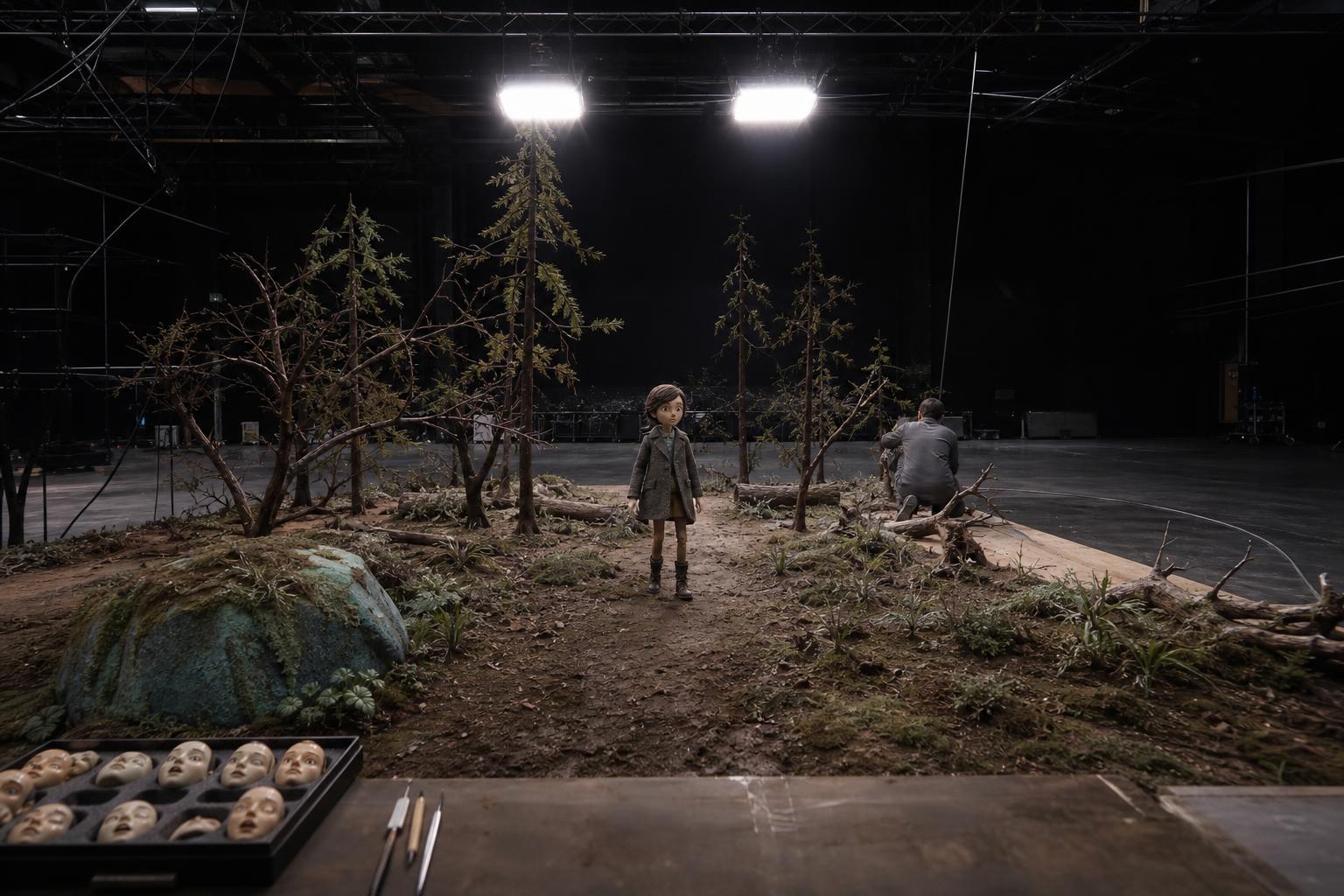
"Wildwood" runs 132 minutes, which makes it the longest stop-motion feature ever released. It took Laika 16 years to get from buying the rights to Colin Meloy's novel to a finished film, five of them in active production, using roughly 200 practical puppets and 130 built sets. No software rendered a single frame of the forest.
That runtime is the number worth sitting with, because stop-motion animation does not scale the way digital animation does. A Pixar film can add fifteen minutes in post without touching a soundstage. A stop-motion film adds fifteen minutes by building more sets, sculpting more puppet replacement faces, and paying animators to move things a fraction of a millimeter at a time, twenty-four times a second, for months. Laika's own prior record-holders — Coraline at 100 minutes, Kubo and the Two Strings at 101 — are the baseline "Wildwood" blew past by nearly a third.
A 16-year gap is the real production line
Laika optioned Meloy and Carson Ellis's book not long after it became a bestseller in 2011, but "Wildwood" didn't enter production until 2021. A decade of that gap is ordinary studio development — scripts, directors, financing — but the back half is the part that explains the film's scale. Chris Butler, who wrote ParaNorman and Missing Link, built a screenplay around a teenage girl, Prue, chasing crows that kidnap her baby brother into a parallel forest kingdom outside Portland, Oregon. Travis Knight, Laika's CEO and lead animator, directed it himself, setting the story in his own hometown.
The six-time Oscar-nominated cinematographer Caleb Deschanel shot it — his first stop-motion production, after shooting the photorealistic digital "Lion King" remake. That hire matters more than it looks: stop-motion sets are lit and shot like live action, frame by frame, which is part of why 130 physical sets were needed rather than a handful of digital environments reused with camera tricks.
Why four-for-four Oscar nominations is smaller than it sounds
Laika's first four features — Coraline, ParaNorman, Missing Link, Kubo and the Two Strings — each earned a Best Animated Feature nomination. A clean streak sounds like dominance. It is really a measure of a very small field: the category typically draws five nominees from a pool where two or three slots go to Disney, Pixar or DreamWorks output every year, leaving two or three places open to everyone else working in animation worldwide. Laika has filled one of those remaining slots four times running, which says the branch likes handmade craft — not that Laika is winning against the big studios. None of the four films won.
Early reviews out of the London Film Festival split along a predictable line. The Hollywood Reporter and Deadline both called the film a visual and emotional achievement; IndieWire called it a technical wonder that loses its own thread between reality and imagination, and the Guardian's review, while warm, noted the villain's motive doesn't land as cleanly as the real scares in Coraline did. That's three positive-to-mixed reviews and one more skeptical one — not a consensus, but not a flop either.
The counter-argument: bigger isn't Laika's strength
The strongest case against "Wildwood" isn't about craft — nobody disputes the puppets or the sets — it's about scale fighting the studio's own instincts. Coraline worked at 100 minutes because dread compounds in a tight space. "Wildwood" spreads its story across an entire invented kingdom: an Avian Principality led by a giant eagle (Angela Bassett), a bandit camp led by Mahershala Ali's Brendan, a coyote army under Tom Waits' Maksim, a wise elder voiced by Tantoo Cardinal, a rat sidekick voiced by Awkwafina. That's a sprawling ensemble built for a two-hour-plus runtime, and IndieWire's critique is essentially that spreading warmth across that many characters costs the film the sharper fear Coraline delivered in a smaller cast and a shorter clock.
It's a fair point and it's checkable against the numbers: the longest Laika film by 30 minutes is also, by the trade reviews' own account, its least focused villain motivation. Carey Mulligan's dowager governess Alexandra, whose grief over a dead son curdles into child abduction and an attempted mechanical replacement, is praised by Deadline and Hollywood Reporter as more than a cartoon villain — but the Guardian's review flags the same plot as under-motivated. Length bought scope. It didn't automatically buy clarity.
What 200 puppets cost, and who's paying it back
Stop-motion's economics are the quiet story behind every review. A puppet isn't reused the way a digital character model is — faces are often swapped frame-by-frame using replacement parts printed or sculpted individually, multiplied across hundreds of expressions per character. Two hundred puppets across 130 sets, sustained over roughly five years of production, is a cost structure closer to a prestige television series than a typical animated film, and it's one only a small number of studios attempt at all: Laika, Aardman, and occasional one-off digital hybrids are close to the entire field working at this scale.
Laika doesn't release production budgets, so there's no clean dollar figure to put against the $100-million-plus range typical of a studio animated tentpole. What's measurable is distribution: a London Film Festival world premiere on October 11, followed by AFI Fest as its North American premiere later the same month, is the platform-festival route a studio uses when it wants awards-conversation reviews in before a wide release — the same route Laika used for Missing Link, which won the Golden Globe for Best Animated Feature but still underperformed at the box office against its budget.
The runtime record is the easy headline. The box office is the actual test.
A 132-minute stop-motion film is a statement about what Laika is willing to spend in time and puppets to tell a story without a digital shortcut. It is not, on its own, evidence that audience economics have changed. Missing Link's Oscar win didn't translate into ticket sales, and Laika's prior films have built a reputation for craft that critics reward more reliably than audiences do. "Wildwood" enters wide release carrying the same question every Laika film has carried: whether a PG-13 rating, a 132-minute runtime, and a cast led by names like Mulligan, Ali and Waits can pull a family audience into a stop-motion film that is, by design, slower and stranger than the digital alternative sitting next to it in the multiplex.