CC now needs six family logins to plan one dinner
Google’s household AI agent works only for adults 18+, locking out the teens whose schedules it was built to track
By The Signal · · 5 min read
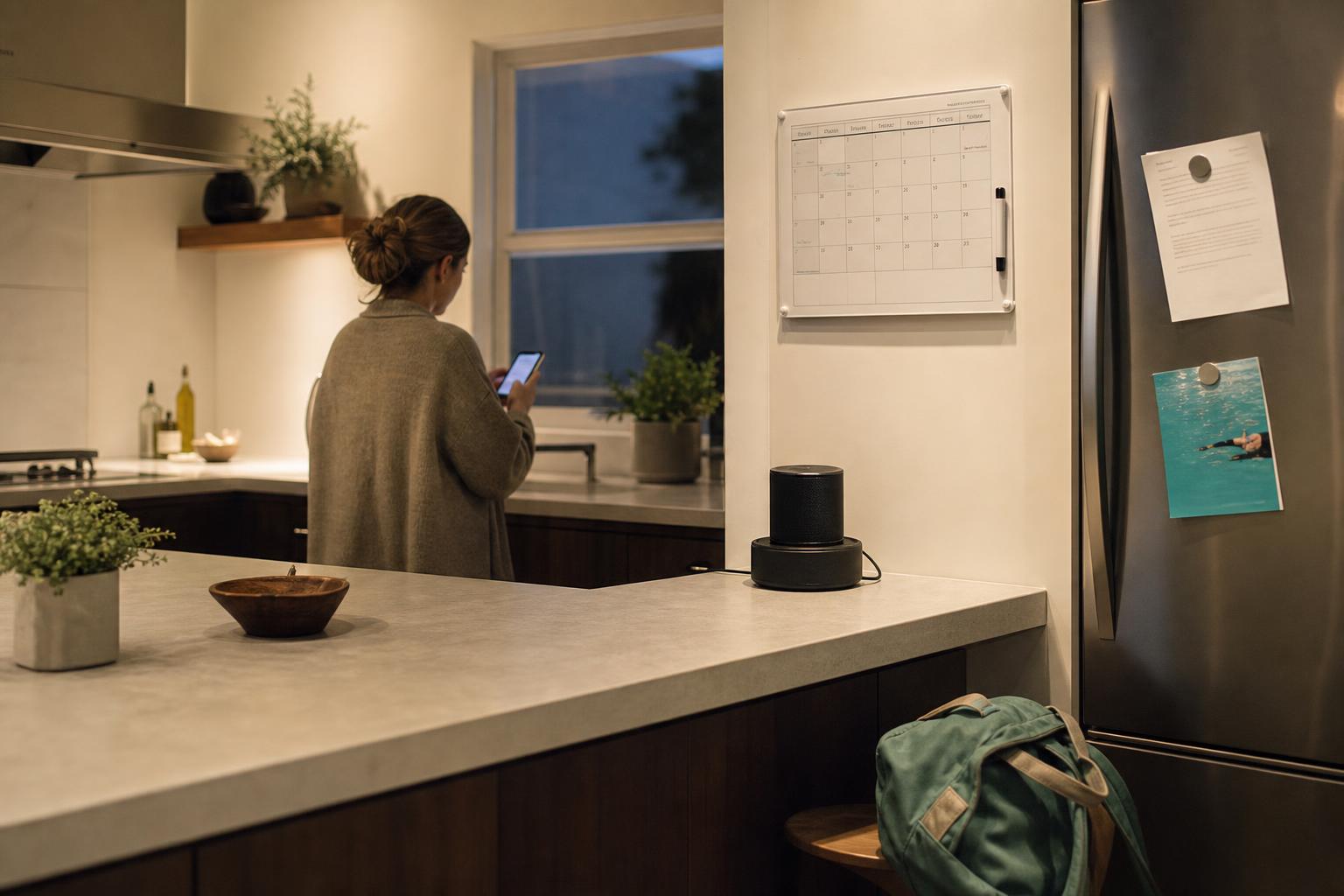
Google's household assistant now runs on its own Google account, with its own inbox, so that up to six family members can feed it permission slips and practice schedules without handing over their personal email passwords. The catch, disclosed in Google's own announcement on September 18, 2026, is the age gate: only users 18 and older can join, which means the teenagers whose orthodontist appointments and school forms the tool exists to track cannot use it themselves.
Six accounts is the whole ceiling
The number that matters here is six — the maximum family members CC can currently coordinate, according to Google Labs' own post. That's not a technical limit born of server capacity; it's a product decision about what "household" means. A nuclear family of two parents and two kids fits inside it with room to spare. A household that also includes a grandparent doing school pickup, a nanny, or an adult child who never moved out starts to press against the edge. Google frames this expansion explicitly around exactly those larger, multigenerational arrangements — but caps the group at a size that a single blended family with in-laws visiting could exceed on a bad Tuesday.
CC began, in Google's telling, as a solo productivity agent connected to Gmail, Calendar, and Drive, delivering a "Your Day Ahead" briefing each morning. That single-user version migrated into the Gemini app in May 2026 as Daily Brief. The family version is a fork of that same underlying system — Gemini models running on what Google calls an isolated cloud computer, orchestrated by its agentic harness, Antigravity — reassigned from managing one person's inbox to managing the traffic between several.
How the sharing actually works
CC gets its own Google account and its own email address, separate from any family member's personal account. That's the mechanism worth sitting with, because it's the part that makes the privacy model legible: nothing reaches CC by default. A parent forwards a school email to CC's address, or designates specific senders — a swim school, a pediatrician's office, a Scout troop — as always-shared, so future messages from that sender route to CC automatically. Google says CC will also suggest new senders to whitelist on a weekly basis, learning which addresses keep showing up with soccer schedules or dentist reminders. Once CC has that information, it can write it to a shared calendar or task list, draft a permission slip, build a shopping list from a week of dinner plans, or estimate drive times between two kids' practices that overlap by twenty minutes. Google describes this as maintaining a "group memory" — CC asks for missing details when it needs them, then retains the answer so it doesn't ask again. That's the plumbing: a single account with narrow, opt-in pipes running into it from each family member's inbox, rather than one login with a master key to everyone's data.
The people generating the data can't touch the system
The age restriction is where the design runs into its own premise. CC is limited to users 18 and older with a personal Gmail account — no G Suite for Education accounts, no under-18 profiles, according to both TechCrunch's and Ars Technica's reporting on the rollout. A teenager whose track meet CC is tracking, whose permission slip CC is filling out, cannot open CC and check what it has stored, correct an error, or add an event themselves. The tool's entire value proposition is reducing coordination overhead for households where "school schedules, sports practices, bills, meal plans" pile up — Google's own list, from its Labs post — and a meaningful share of that logistics traffic originates from the school-issued, Google Workspace-run accounts that many US teenagers already use daily, because their districts standardized on Chromebooks years ago. CC can ingest a forwarded email about a teacher workday. It cannot ingest anything sent directly from the student's own inbox, because that inbox doesn't qualify. This isn't a minor rollout gap that closes next quarter by default; age-verification and data-handling for minors under US law (COPPA, and its extensions to services marketed at families) carries real compliance weight, and Google has historically kept under-18 products in separate, more constrained tracks — Family Link, YouTube Kids — rather than folding them into adult-tier agentic tools. Extending CC to actual children is a different regulatory project, not a toggle.
The case that six adults is enough
The strongest objection to treating the cap and the age gate as flaws is that CC isn't pitched as a tool for children to manage their own lives — it's pitched as a coordination layer between the adults responsible for those children. Under that reading, a 14-year-old was never the customer; the parent juggling four family members' calendars against each other was. Google's own examples — filling out a registration PDF, planning meals, tracking an orthodontist's confirmation email — are adult administrative tasks, not things a young teenager would do unsupervised regardless of account access. Competing family-tools like Ollie and Fambot, both cited in TechCrunch's coverage as parallel bets in this space, similarly orient around the parent as operator. Six adult accounts might genuinely cover the operational core of most households, with kids as data subjects rather than data sources — the same asymmetry that exists in a family calendar app today, where a ten-year-old doesn't need write access to know practice is at 4pm.
What the cap does next
Google says existing CC users will get upgrade invitations "in the coming days," with new users joining a waitlist — a staged rollout, not a general release. That sequencing matters because it's the mechanism by which Google will decide whether six accounts and an 18-plus floor hold up under real households, or whether the company quietly raises the ceiling once usage data comes back. The experiment is confined to the US, to personal Gmail accounts, an intentionally narrow test bed. If Google wants CC's household-logistics pitch to work for the families it explicitly names — those with grandparents, caregivers, and adult children living at home — the next visible change won't be a new feature. It will be whether six stays six, and whether "18 and up" survives contact with the households the product was announced for.