Ten million dollars became twenty because one donor doubled it
Olivia Rodrigo’s festival raised $10 million; Melinda French Gates matched it, sending $20 million to women’s charities.
By The Weekend · · 5 min read
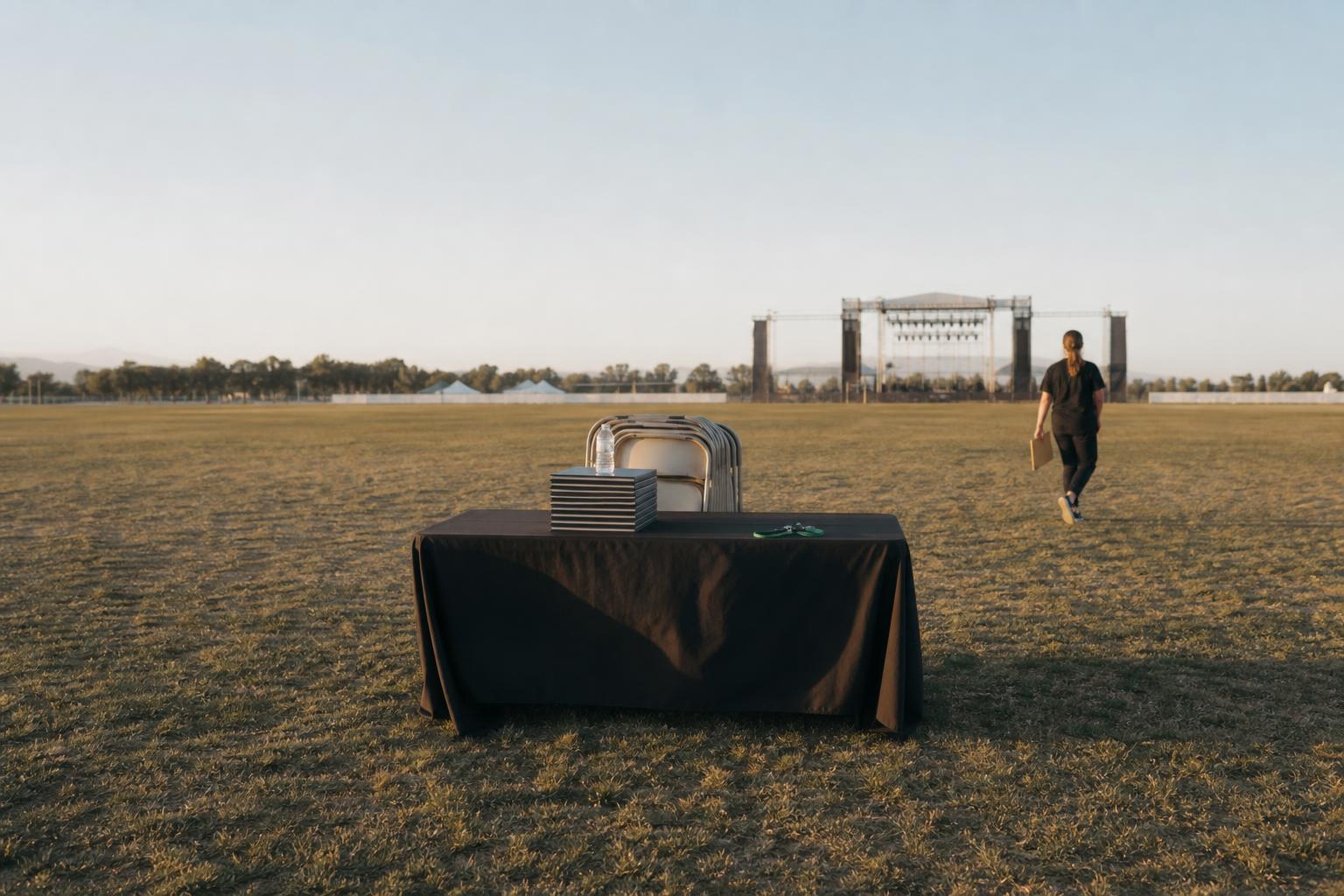
Olivia Rodrigo's first Daisy Chain Fields festival sold tickets that raised $10 million for ten nonprofit partners. Philanthropist Melinda French Gates then matched it dollar for dollar, turning the total into $20 million. The doubling, not the lineup, is the actual news.
The festival happened at the Great Park in Irvine, California, with an all-female bill — Chappell Roan, Doechii, Rachel Chinouriri, Mitski, and surprise sets from Sarah McLachlan, Alanis Morissette and Stevie Nicks. That's the part that fills column inches. The part that changes what nonprofits can do with their year is the match.
A ticket bought two things, and only one of them was a concert
Rodrigo told the assembled press that she called each of the ten nonprofit partners herself before the show existed — before there was a stage, a date, or a lineup to sell. That's a founder-led fundraising model, closer to how a gala works than how a festival usually does: the ask comes first, the entertainment is the delivery mechanism. Ticket revenue went directly to the ten organizations, no intermediary foundation named in the reporting, no multi-year pledge structure — a single-event transfer of $10 million.
Gates's match brought no new fans, no new bands, no new production budget. It bought exactly one thing: a second $10 million, contingent entirely on the first being raised. That's the mechanical detail worth sitting with. A matching gift isn't generosity plus generosity — it's a bet that the recipient can do the harder job of moving ticket buyers, and the matcher's money only materializes if that bet pays off. Rodrigo's team cleared the harder job. Gates's contribution was, in a narrow financial sense, the cheaper half of the $20 million: contingent capital that cost nothing if the festival had flopped.
Philanthropy has run this play before, just never from a stage
Matching gifts are a standard fundraising instrument — employers do it for workplace giving campaigns, telethons do it for pledge drives, and major donors do it to unlock smaller ones, because a 1:1 match reliably increases how much other people give. The psychology is documented: donors give more when told their gift will be doubled, even when the underlying cause hasn't changed. What's less common is applying that instrument to a concert's box office rather than a phone bank or an email list, and doing it at a scale — $10 million matched — that rivals what a mid-sized foundation distributes in a year.
Gates has spent the years since her 2021 divorce from Bill Gates building an independent philanthropic identity focused on women and girls, moving billions through Pivotal Ventures into reproductive health, economic mobility and political representation for women. A festival match fits that mandate cleanly, but it's also a visibility play in a sector where visibility is currency: a young pop star's Instagram post crediting Gates by name reaches an audience most foundation press releases never touch. The exchange is legible on both sides — Rodrigo gets a doubled donation and cultural cover for the exercise of turning a concert into a checkbook; Gates gets association with an 18-to-30 audience that doesn't read foundation annual reports.
The $20 million lands on ten organizations, not one cause
What the money actually reaches matters more than the round number suggests. Ten nonprofit partners split the pool, which means each organization's share, even distributed evenly, would land near $2 million — a meaningful single-year gift for a mid-sized women's charity, the kind of sum that can fund a program for several years rather than a single grant cycle. Neither source names the ten groups or confirms the split isn't even, which is the first thing a nonprofit's own donors would want disclosed: even distribution treats a $500,000-budget crisis line the same as an $8 million-budget legal fund, and those are very different amounts of leverage.
The number that doesn't get repeated: this was one event, not a fund
The catch is durability. A one-time festival with a one-time match produces a one-time transfer. Nothing in the reporting describes an endowment, a recurring pledge, or a structure that survives past this single show — no indication Daisy Chain Fields becomes an annual fixture with a standing match attached, though Rodrigo's own sign-off ("until next yearrrrr") gestures at one. If it doesn't recur, the ten nonprofits received a windfall year, not a funding base, and will be back to their ordinary revenue mix — grants, individual donors, government contracts — within twelve months. Matching-gift campaigns of any kind share this weakness: they're excellent at moving a single large sum and poor at building the kind of predictable, multi-year revenue that lets a nonprofit hire staff or commit to a program past one fiscal year.
What isn't in either account, and probably should be
Neither source names the ten nonprofits, states whether the $20 million is unrestricted or earmarked for specific programs, or says when the money actually transfers — pledged-at-event and disbursed-in-account are not the same thing, and the gap between them has swallowed charitable pledges before. A number that big deserves a public accounting of where it went, and that accounting doesn't yet exist in what's been reported.
The one honest question: does the model scale, or was this a Rodrigo-specific trick
The open question is whether this structure — artist calls nonprofits directly, sells tickets, donor matches the gate — works without an artist of Rodrigo's specific commercial pull and an available matcher with Gates's specific mandate and checkbook. A festival that can't fill a venue produces a small number to match; a matcher without Gates's post-divorce interest in funding women's causes at visible scale has no reason to show up. The model may be less a template than a coincidence of two people whose incentives happened to align once, in one field, in one August.