Touch, sound, light: 19 trials, one confident number
Multisensory stimulation may add hospital weight gain in preemies, but survival and development data stay uncertain.
By The Weekend · · 5 min read
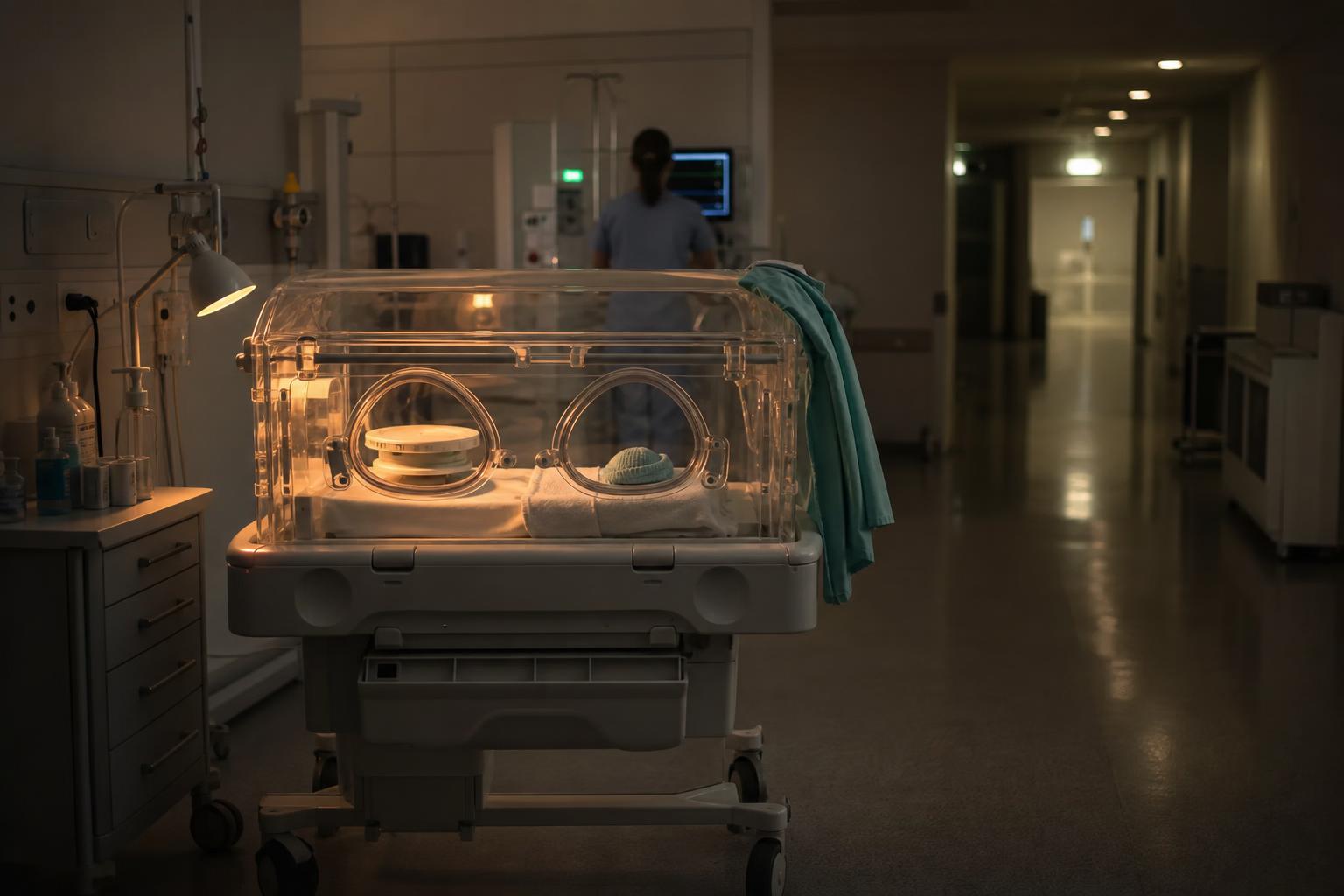
Nineteen trials. 1,544 premature babies. One confident result: giving preemies coordinated sensory input — soft cycled light, touch, sound, sometimes taste — may help them gain a bit more weight before they leave the hospital. Whether it changes anything that matters after discharge, including survival, remains unknown.
That is the finding of a new Cochrane review, the research consortium whose reviews carry no drug-company or device-industry funding and whose standard output is a shrug delivered with academic rigor. This one pools results across two decades of neonatal intensive care trials to answer a question that sounds almost too simple to need 19 studies: does stimulating more than one sense at once help a baby born too soon?
The claim shrank on the way to the evidence
Multisensory stimulation, as practiced in NICUs, means layering sensory experiences that a baby would otherwise get in the womb or in the first months at home — soft lighting cycled to mimic day and night, gentle massage, recorded voices or heartbeat sounds, sometimes flavor cues before oral feeding begins. The theory has real biology behind it: the newborn brain, especially a preterm one, is laying down enormous amounts of neural architecture in exactly this window, and animal and early human studies suggested that patterned input during this period could support memory, emotional regulation and learning.
Eighteen of the 19 included trials compared multisensory stimulation against standard hospital care. One compared it against touch alone. Ten of the eighteen were built to measure brain and behavioral development directly. The other nine measured more mechanical outcomes — weight gain, NICU length of stay, total hospital stay, time to full oral feeding, days needing breathing support.
The headline result, stripped of the optimism that usually attaches to interventions this gentle-sounding, is this: none of the trials comparing multisensory stimulation with no intervention reported the outcome that actually matters most to parents and doctors — major developmental disability at 18 to 24 months corrected age. Not one, across 19 studies and two decades of research. One small study looked at a related but narrower marker, cerebral palsy at 12 months, and its evidence was rated very uncertain because the study was too small to draw a reliable conclusion.
Weight moved. Everything downstream of it did not, provably
What the evidence does support, with reasonable confidence, is a small increase in total weight gain before hospital discharge among stimulated infants. The review is explicit that the effect is small and its clinical significance — whether it translates into a baby who does meaningfully better, not just marginally heavier — remains uncertain. A few extra grams on a hospital scale is not the same claim as a healthier developmental trajectory, and the review does not make that leap, which is itself the story: this is a rare case of a Cochrane summary declining to inflate a modest finding into a bigger one.
Death before hospital discharge showed little or no difference between stimulated and unstimulated infants, though this comes from only one large study, meaning the confidence interval around that "no difference" is wide enough to drive a NICU bassinet through. When researchers compared multisensory stimulation against touch alone — the single study that tried this head-to-head test — they could not tell whether the multisensory version helped babies gain more weight during the actual intervention period, and that study didn't report on developmental outcomes at all.
Who pays, and for what exactly
The practical cost of multisensory stimulation programs is mostly staff time and training, not equipment: cycled lighting systems, recorded sound loops, and massage protocols are inexpensive relative to almost anything else that happens in a NICU. That low cost is precisely why the intervention has spread through neonatal units over the past two decades even as the evidence supporting it stayed thin — there was little downside to trying, and plausible upside in the form of small weight gains that shorten hospital stays, which do carry real cost savings for hospitals and insurers.
The people who gain the least clarity from this review are the parents asking the only question that matters to them: will my baby develop normally? The review's answer, stated as plainly as its methodology allows, is that nobody yet knows, because the studies that could answer it were not designed to.
The gap is in the timeline, not the theory
The mechanism reviewers describe is genuinely plausible — early, patterned sensory experience shaping a rapidly developing brain is not a fringe idea, it's consistent with basic neuroscience. The problem is that plausibility and proof sit on different timelines. Weight gain shows up before discharge, typically within weeks. Developmental disability is assessed at 18 to 24 months, which requires long-term follow-up, funding that outlasts a single grant cycle, and researchers willing to track infants long after the intervention itself has ended and the paper on short-term outcomes has already been published and cited.
Nine of the trials chased the easier, faster outcomes — weight, feeding time, length of stay — because those are cheaper and quicker to measure. Ten chased development directly, but even those, pooled together, produced evidence the reviewers rate as too limited and too uncertain to support a real answer. The gap in the literature is not a mystery; it is a predictable consequence of what gets funded and what gets measured when a trial has to report results before the babies in it can walk.
What would actually settle this
The review's authors point to 13 ongoing studies and four already completed but not yet fully assessed, which is where any real answer will come from, if it comes. A trial that would move this from uncertain to known needs three things the past 19 studies mostly lacked together: enough enrolled infants to detect a modest effect, standardized developmental assessment at 18 to 24 months across every site, and follow-through funding that survives past the point where the easy numbers are already in hand.
Until one of those trials reports, the honest clinical position is the one the review states: multisensory stimulation is cheap, plausible, and appears to modestly help babies gain weight in the hospital. It has not been shown to change whether they survive or how they develop. Those are different claims, and only one of them currently has evidence behind it.