A 1936 law just fined a distributor for a geography problem
Southern Glazer’s charged different prices a few blocks apart; the FTC’s fix pays double for repeat offenses.
By The Signal · · 5 min read
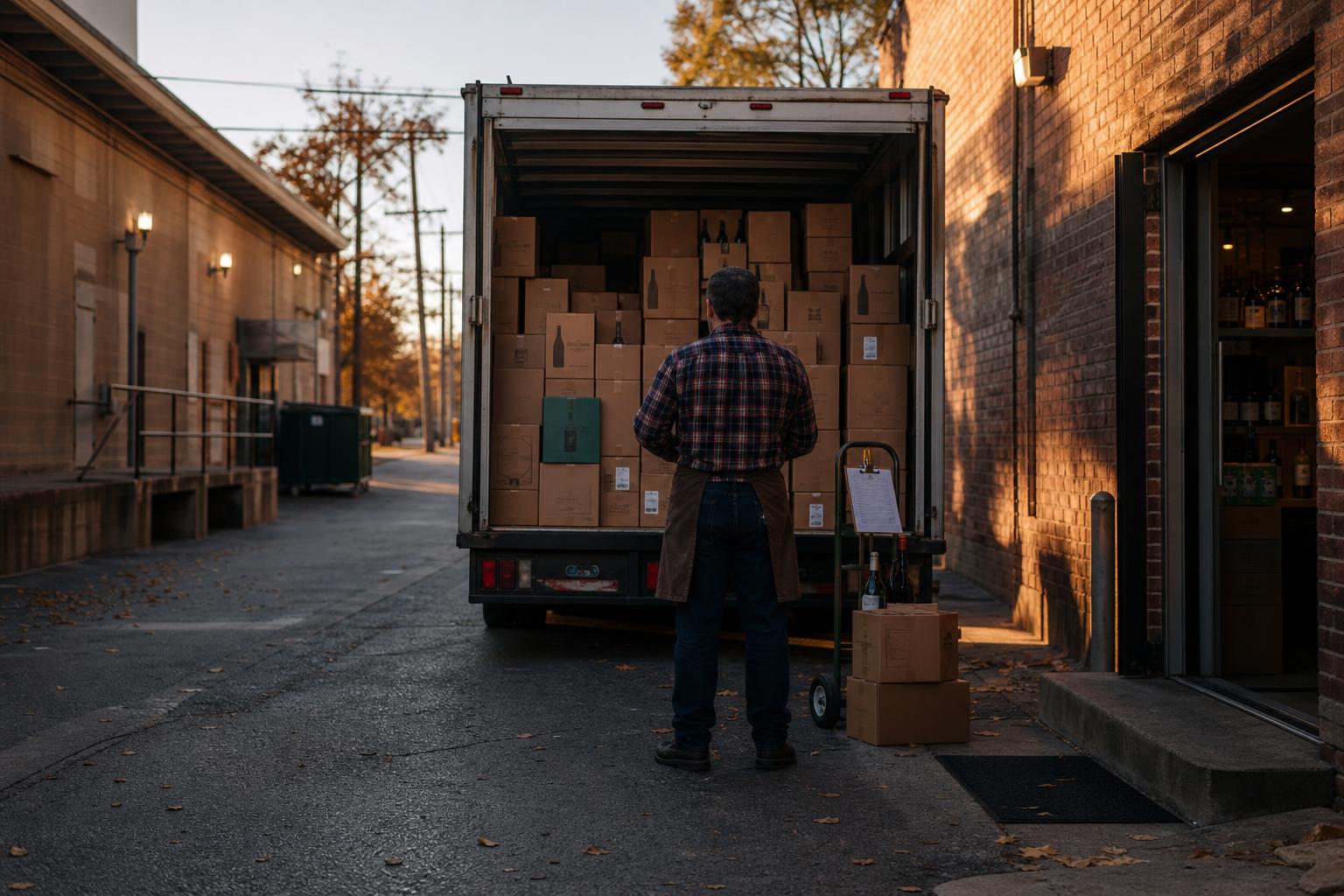
Southern Glazer's Wine and Spirits sold the same bottle, during the same week, to a Total Wine store and an independent liquor shop a few blocks away — at two different prices. The Federal Trade Commission's settlement, announced in October 2026, is the agency's first enforcement win under the Robinson-Patman Act in roughly a generation. The mechanism it revives is older than most of the stores it's meant to protect: a 1936 law written to stop exactly this kind of price gap.
Picture the owner of a corner liquor store in, say, Ohio. He orders a case of bourbon from Southern Glazer's — the largest wine and spirits distributor in the country — and pays one price. A mile away, a Kroger orders the identical case from the identical distributor and pays less, sometimes significantly less, not because it buys more per truckload in a way that lowers Southern's costs, but because Southern offered Kroger a rebate program the corner store was never offered. The FTC's 2024 complaint alleged this wasn't an isolated accommodation. It was systematic, covering sales to five of the largest retail chains — named in the complaint as including Total Wine, Walmart and Kroger — across 26 states, for years.
The law Congress wrote to stop A&P, used on a liquor aisle
The Robinson-Patman Act dates to 1936, passed in response to the rise of A&P and other chain grocers that used volume to extract secret price concessions from suppliers, then undercut independent grocers who had no such leverage. The law made it generally illegal for a seller to charge different prices to different buyers for goods of "like grade and quality," where that difference harms competition — unless the price gap reflects a genuine difference in the cost of serving each buyer. A distributor can charge a store across town less if it's cheaper to deliver there. It can't charge less just because the buyer is big enough to demand it.
For most of the last forty years, the law sat mostly unused. Antitrust enforcement in the US shifted toward a near-exclusive focus on consumer prices — if shoppers paid less, regulators tended to look away, even if the savings came at the expense of smaller competitors being squeezed out. Robinson-Patman cases require proving injury to competition between retailers, a harder and less headline-friendly case than proving injury to shoppers at checkout. The FTC's Bureau of Competition, under director Daniel Guarnera, treated the Southern Glazer's case as a test of whether the statute could still function as written, rather than as a historical curiosity cited in law school casebooks.
The redress math: 1.5x now, 2x if the FTC has to sue again
The settlement doesn't ban price variation outright — distributors can still charge less where costs justify it. What it targets specifically are "paired transactions": instances where Southern sells an identical product to a chain retailer at one price while, in the same window, selling the same product to a nearby independent retailer at a substantially higher price, with no cost justification. Where that pattern meets the order's specifications, Southern has two options. It can voluntarily pay the harmed independent retailer 1.5 times the aggregated price difference. If it doesn't, and the FTC has to bring a fresh enforcement action and wins, the penalty doubles to 2 times the differential.
That structure is the quiet mechanism worth noticing: it's not a fine paid to the government, but a payment to the retailer who was overcharged, with an independent monitor empowered to find violations over the six-year life of the order. The incentive is built to make self-correction cheaper than getting caught — a plumbing fix, not a courtroom spectacle. Southern settles by paying the smaller retailer directly, at a markup, rather than paying the FTC and leaving the retailer with nothing recovered.
What the order doesn't reach
The settlement covers Southern Glazer's — one company, albeit the largest in its industry — and only its sales to the five largest chains in 26 states. It does not reach every distributor selling wine and spirits, and it does not reach every category of goods where chain buying power creates the same price gap: grocery staples, hardware, pharmaceuticals. The Robinson-Patman Act applies across industries, but reviving it as an enforcement tool in one sector doesn't automatically extend its reach to others. Each case still requires the FTC to build a complaint, prove the paired transactions, and negotiate or litigate a remedy — a slow, case-by-case process, not a blanket rule change.
There's also a quieter limit inside the order itself: distributors can still justify different pricing with cost differences, and "cost to serve" is a flexible enough concept that it can absorb a fair amount of what looks, from outside, like preferential treatment. The order constrains the clearest cases — paired transactions with no plausible cost rationale — but leaves room for arrangements dressed up as logistics even when the underlying motive is simply rewarding scale.
Does this change prices for shoppers?
Not directly — the order protects independent retailers' purchase prices from distributors, not what either type of store charges customers at the register.
Does this apply to distributors besides Southern Glazer's?
No — this settlement binds only Southern Glazer's; other distributors face no new legal obligation unless the FTC brings separate cases against them.
The honest question the case leaves open is whether the FTC treats this as a template or a one-off. A single settlement against the largest player in one industry establishes that the Robinson-Patman Act still has teeth. Whether smaller distributors, or distributors in other consumer goods categories, now adjust their own pricing in anticipation of similar scrutiny — or whether they wait to see if the agency actually brings a second case — is a question the next eighteen months will answer, not this settlement.