A box unchanged since 2019 costs $100 more this month
Nvidia raised Shield TV Pro’s price to $299.99, blaming memory costs, with no hardware changes since 2019.
By The Signal · · 5 min read
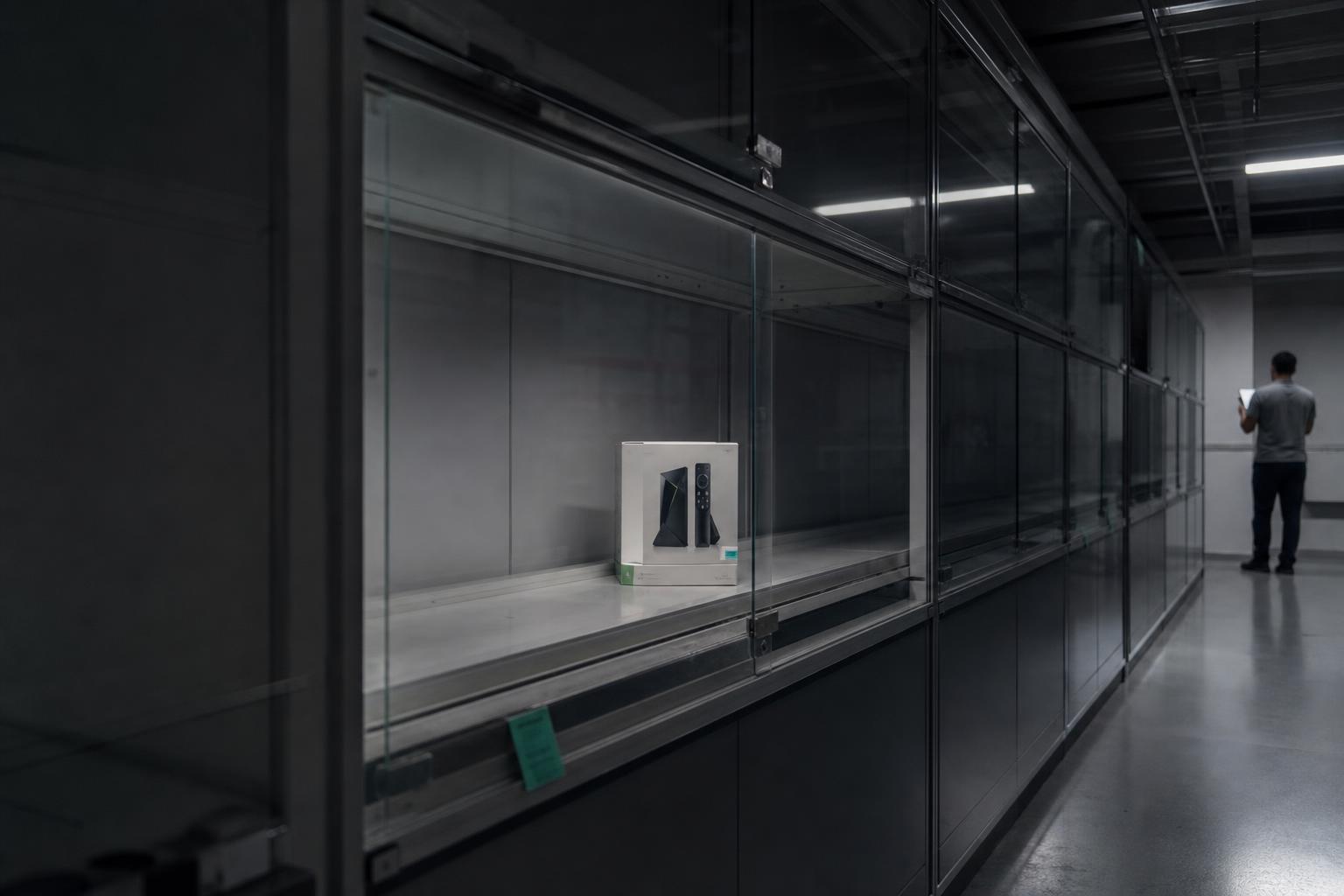
Nvidia's Shield TV Pro has not been redesigned since 2019. It still runs a Tegra X1+ chip that was dated when it launched. As of October 2, 2026, it costs $299.99 — $100 more than it did a week earlier, and $150 more than its original $149.99 starting price. Nothing inside the box changed. The memory market around it did.
The device is identical. The invoice behind it is not.
Nvidia's statement to Ars Technica was brief and specific: "Starting October 2, SHIELD Pro will be priced at $299. The cost of components, including memory, has increased substantially across the industry." That's the whole explanation, and it's an unusually honest one for a consumer electronics price hike — no mention of new features, no bundled software, no "enhanced experience." Just a company admitting that the thing it sells costs more to build than it did a year ago, and someone has to absorb that.
The Shield TV Pro has had three prices in its life: $199.99 at launch in 2019, a long stretch flat at that number, and now $299.99. A cheaper non-Pro variant, originally $149.99, has already been discontinued. Nvidia's Andrew Bell told Ars earlier this year that the company treats the Shield line as something close to a passion project — a low-volume device it keeps making because enthusiasts want it, not because it moves the needle on Nvidia's revenue. But passion projects still buy memory chips on the same spot market as everything else, and that market has moved sharply against them.
Nvidia is the buyer here, not just the seller
The detail worth sitting with is who is actually paying more and why. Nvidia is simultaneously one of the primary forces driving memory prices up — through its own demand for high-bandwidth memory in AI accelerators like the H100 and Blackwell lines — and a company now forced to pay those higher prices for the ordinary DRAM and flash storage that goes into a $300 streaming box. It is, in effect, competing with its own supply chain for memory capacity. DRAM and NAND fabs that could be making commodity chips for set-top boxes are instead prioritizing the far more profitable HBM stacks that go into data center GPUs, and the remaining commodity supply has gotten more expensive as a result.
That's the mechanism, and it's worth stating plainly because it explains why an unchanged product gets a new price tag: memory manufacturing capacity is fungible between a $300 TV box and a $30,000 AI accelerator, and fabs will always route that capacity toward whichever buyer pays more per wafer. Think of it like a flour mill that makes both sandwich bread and high-end pastry flour from the same wheat supply — when pastry margins spike, the mill shifts capacity there, and sandwich bread gets scarcer and pricier even though nobody changed the recipe. The Shield TV Pro is sandwich bread in a pastry-flour market.
Nvidia isn't the victim of this price cycle — it set it in motion
It would be easy to read the Shield price hike as Nvidia getting squeezed by forces outside its control. That's not quite right. Nvidia's AI accelerator business is what pulled global memory demand upward in the first place; the company's data center revenue has made it one of the most valuable firms on earth precisely because its GPUs consume enormous quantities of high-bandwidth memory. The Shield price increase is a downstream consequence of a market Nvidia itself reshaped. The company isn't absorbing an external shock — it's passing along a cost increase that its own product line helped create, in a much smaller, much less profitable corner of its business.
The pattern extends well past one streaming box
The Shield isn't an isolated case, and that's the real story. Sony raised the PS5 Pro's price from $699.99 at its 2024 launch to $899.99 today — a $200 increase on a console that's barely two years old. Nintendo and Microsoft have both adjusted pricing on current-generation hardware within their own product cycles, something console makers historically avoided because consoles are usually sold near cost or at a loss, with margin made back on software. When the input costs for memory rise this much, that math stops working, and companies that once treated console pricing as fixed for a generation are revising it mid-cycle instead.
Nvidia's Shield Tube model — a smaller sibling to the Pro — quietly went out of stock months before this price change, with Nvidia declining to comment on future availability. Android Authority's reporting suggests that silence was itself informative: a product that's merely paused for restocking usually gets a public timeline, while one that's become uneconomical to build at its old price point just disappears. The Shield TV Pro survived that same pressure by getting more expensive instead of getting discontinued, which is arguably the better outcome for anyone who actually wants one — but it's a signal that Nvidia judged $200 no longer sustainable for a 2019-spec device with no stockpile of pre-AI components to draw down.
Who actually still buys this, at $300
The honest answer is: a narrow, specific audience. The Shield TV Pro's remaining advantages — 64-bit Android for gaming and emulation, broad codec support, Plex server capability — matter to people running home media servers or using Android TV boxes for emulation, not to someone who wants to stream Netflix. At $199.99, the Shield was already a premium product aimed past the mainstream streaming-box buyer who's well served by a $30 Roku or Chromecast. At $299.99, that gap widens further, and Nvidia is explicitly betting that the people who need the Shield's specific feature set will pay the new price rather than migrate to a Google TV Streamer or a budget 4K box that can't run the same software.
What happens next is testable within a quarter or two. If Nvidia can sell through its current inventory at $299.99 without a volume collapse, the price holds and becomes the new baseline — the way the PS5 Pro's increase has simply become the price of that console rather than a temporary spike. If sell-through stalls, watch for either a quiet price reduction once memory costs ease, or a second disappearance like the Shield Tube's: no announcement, just an empty product page and a company that declines to say why. The memory market, not Nvidia's marketing, will decide which of those happens.