An 88-year-old director wants one more Alien movie than the fans do
Scott is developing a third Covenant film while two rival Alien projects already outperform his recent entries.
By The Weekend · · 5 min read
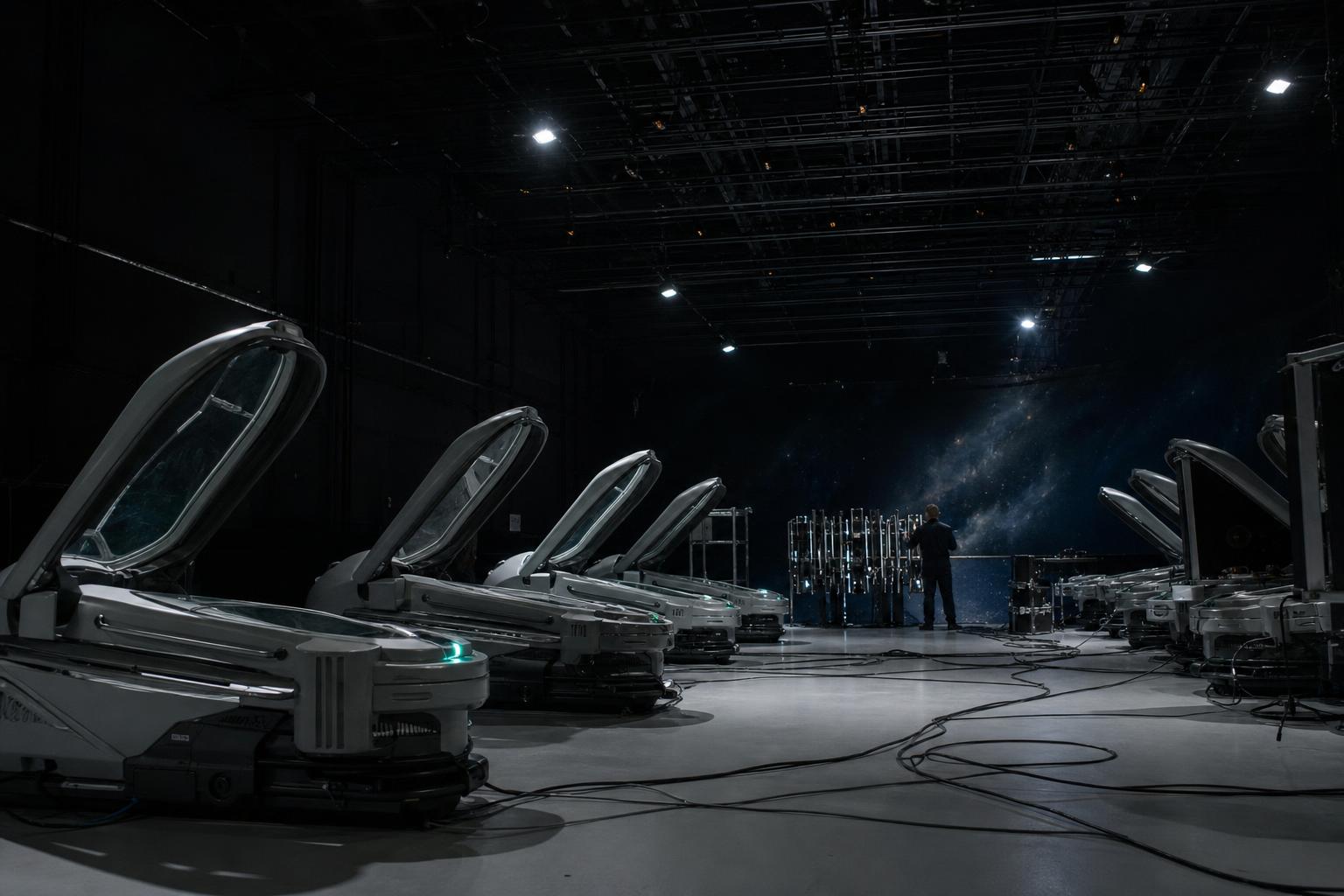
Ridley Scott is developing a follow-up to "Alien: Covenant," the 2017 film that made $240 million worldwide against a $97 million budget and satisfied almost no one. Meanwhile, two other people's Alien projects — a film and a TV series he didn't direct — are the ones audiences actually want more of.
The figure this story turns on is three: three separate Alien futures now in active development at once. Fede Álvarez's "Alien: Romulus" (2024) took $350.9 million worldwide against a $80 million budget, and its sequel script is already finished, with Álvarez producing and another director set to shoot it. Noah Hawley's television series "Alien: Earth" launched in 2025 to some of the best reviews the franchise has had since the 1980s and is already renewed for a second season. Scott's contribution to this moment is a new script continuing the story of David, the android played by Michael Fassbender, last seen flying a colony ship full of sleeping humans into deep space at the end of "Covenant."
Two hours of screen time have already answered the question a third film would ask again
Scott has said the new film will show David building, in his own words, "a brave new world for himself." That is not a new idea. "Prometheus" (2012) and "Covenant" (2017) already spent close to four and a half hours combined on David's slow transformation from service android to self-appointed god of a dead planet, engineering the black goo and the proto-xenomorphs that eventually become the creature from the original 1979 film. The two films made a combined $687 million worldwide, respectable but well short of blockbuster math once marketing spend is counted, and critical reception cooled sharply between them — "Prometheus" holds a 73% approval score on Rotten Tomatoes, "Covenant" a 66%. Both numbers describe audiences who watched, absorbed the theology, and did not ask for a third installment.
Scott has form here. During the press run for "Covenant" in 2017, he said a sequel script already existed and that shooting would start within 14 months. He also floated as many as six prequels stretching back to bridge the gap to the original "Alien." Eight years passed. No prequel arrived. In 2019 Scott said he had "done enough" with the franchise and hoped it would continue without him. The current announcement reverses that position without explaining what changed his mind, beyond noting, as he put it, that artificial intelligence "can go off" and is "like a bomb" — an observation better suited to a 2025 panel discussion than a plot summary.
The counter-argument: David is genuinely the best thing in two mediocre films
The strongest case for another David chapter isn't nostalgia, it's craft. Fassbender's performance — cold, curious, quoting Byron's "Ozymandias" while explaining his plans to no one in particular — is the reason "Prometheus" and "Covenant" have any critical defenders left. An antagonist that interesting arguably earns more runway than the two films gave him. The counter to the counter is one of format, not merit: if the audience wants to see how David's story ends, eight hours of prestige television — the kind Hawley just proved works for this franchise — completes an arc with more room than a two-hour theatrical release, without asking ticket-buyers to fund a third theatrical outing for a character whose two previous films underperformed relative to "Alien: Romulus," a film that cost less and made more with a simpler premise: xenomorphs, corridors, people trying not to die.
The corridor beat "Romulus" nearly $351 million. The theology beat "Covenant" a lukewarm 66%
The pattern across four decades of Alien films is consistent enough to function as a controlled experiment. Films that returned to the franchise's original formula — a small crew, a confined space, a creature that wants to kill everyone before the credits roll — have performed better with both critics and audiences than films that expanded the mythology. "Alien" (1979) and "Aliens" (1986) both hold above 90% critical approval. "Alien: Romulus," which deliberately stripped the franchise back to survival horror, was the best-reviewed live-action entry since James Cameron's 1986 sequel. The mythology-expanding films — "Alien 3," "Alien: Resurrection," "Prometheus," "Covenant" — cluster lower, both in review scores and in the box-office return relative to their budgets. Scott's new film sits squarely in the second category, doubling down on the theological reading of the franchise at the exact moment the studio's other two active projects have proven the first category is what people want to buy tickets, or a subscription, for.
None of this means Scott's film will be bad. He is 88 years old, still shooting with the multi-camera setup he developed after "Thelma & Louise" and refined on "Black Hawk Down," still arriving on set with pre-drawn sketches of every shot before anyone else has had coffee. That discipline produced "The Martian" and, this year, "The Dog Stars," an adaptation praised for restraint rather than spectacle. The question was never whether Scott can direct. It's whether a third David film answers a question the audience has already stopped asking, while "Romulus 2" and "Alien: Earth" season two — projects built on the version of this franchise people actually rewatch — are the ones with a finished script and a green light.
What happens to the release calendar now
With three Alien projects moving simultaneously — Hawley's series, Álvarez's sequel, and Scott's continuation — the franchise faces a scheduling problem it hasn't had since the 1990s, when "Alien 3" and "Alien Resurrection" arrived four years apart and each underperformed the one before. Whichever project reaches audiences first will set the tone the others are compared against. Given that "Alien: Earth" is already renewed and "Romulus 2" has a finished script with no director yet attached, Scott's film — still in development, with no cast, no start date, and a director who has previously promised this exact sequel and not delivered it — is the one most likely to arrive last, if it arrives at all.