Apple cut Vision Pro’s gaming team the same week its old name resurfaced
Apple laid off 100 Vision Pro staff and shelved gaming plans as smart glasses became the priority.
By The Signal · · 6 min read
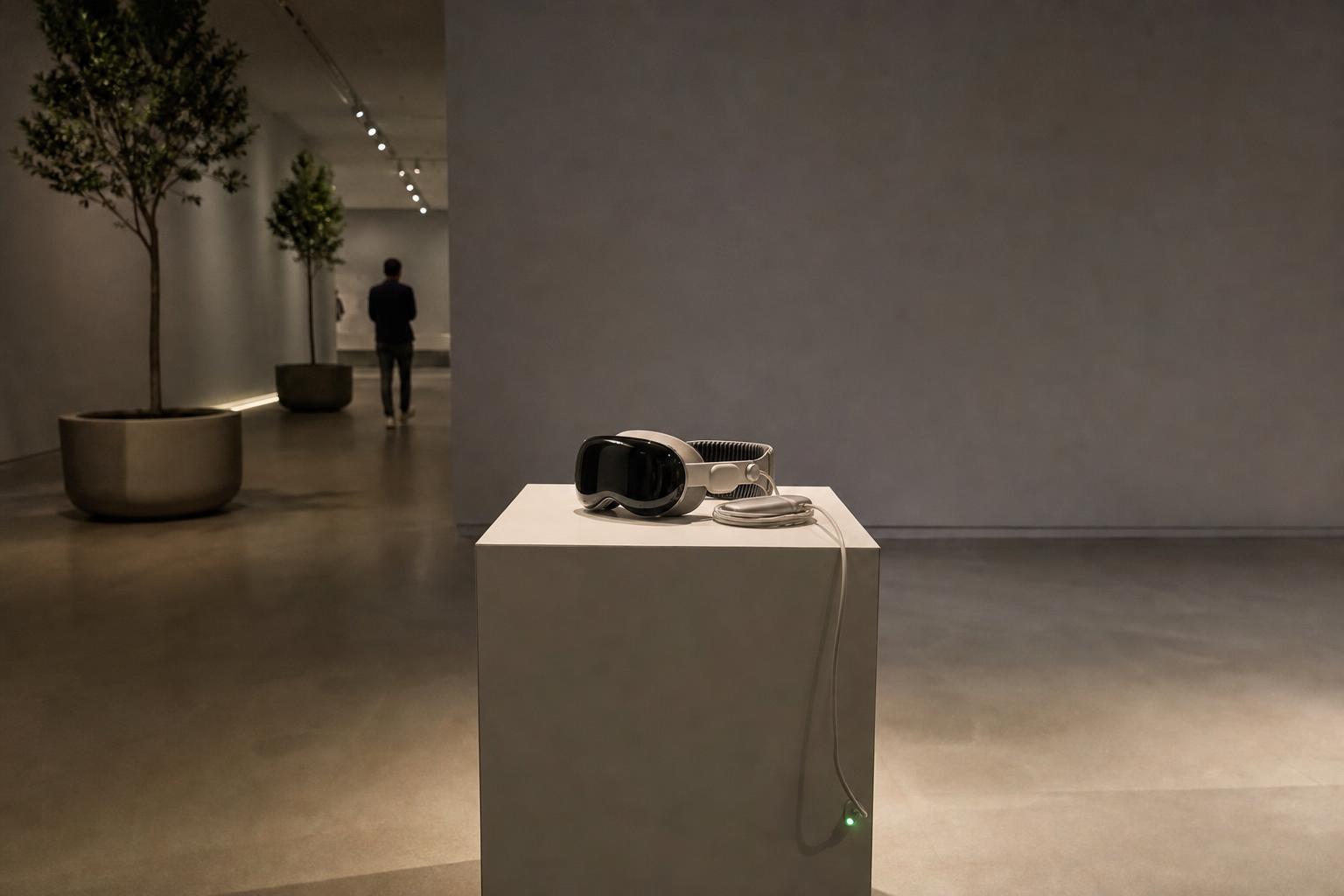
Apple Vision Pro nearly launched under a different name — internal build strings still read "realityprorealityosdev," a leftover from when the device was called Reality Pro deep into its development. The trivia surfaced this week from a prototype collector on August 22, 2026. Four days earlier, Bloomberg reported that Apple had cut roughly 100 jobs from the Vision Pro team and largely dissolved the unit that built its games.
The two facts belong together, and not because one is charming and the other grim. A product's internal name is the last thing to change before a launch is locked. Apple ran two names, at least four operating-system code names, and multiple trademark shells — realityOS, xrOS, xrProOS, Reality Pro, Reality One — before settling on Vision Pro and visionOS in 2023. That kind of naming churn signals a project still finding its shape late into engineering. Three years later, Apple appears to be doing the same thing again, this time with the org chart instead of the branding.
The cut is about 200 people, and about half of them made Vision Pro's software
Bloomberg's Mark Gurman put the total layoffs at more than 200: around 100 from the Vision Products Group, and another 100 split between the Siri team and a group called Intelligent Systems Experience, which builds AI features into Apple's operating systems. AppleInsider had separately reported 60 cuts inside the Vision group a day earlier — Gurman's later figure of 100 appears to supersede that count, folding in additional departures as the full scope became public.
What actually got cut matters more than the headcount. Apple is "largely shutting down" the Vision Pro team that built games for the headset, and shrinking the group that produces Immersive Video — the Apple-shot short films meant to showcase the display's resolution. Apple told employees it will keep making "a smaller number" of immersive videos in-house and lean on third parties for the rest. Vision Pro and visionOS are not being discontinued, according to internal statements relayed to Bloomberg, but the resources that made the headset feel like a platform rather than a demo are the ones being pulled.
Apple's public statement, given to Bloomberg and repeated to TechCrunch and 9to5Mac, was the standard language for this kind of announcement: the company is moving "to evolve our business to deliver the best experiences for our users," and will "create new roles" while affecting "a limited number of existing roles." That phrasing describes every layoff Apple has run for a decade. It does not describe what's actually happening here, which is a reallocation away from a $3,499 headset and toward the smart glasses Apple has not yet shipped.
Vision Pro buyers paid full price for a platform that peaked at launch
Vision Pro launched in the United States in February 2024 at $3,499, a price that assumed a growing library of exclusive content would justify it over time. Instead, Apple has canceled both a redesigned Vision Pro 2 and a cheaper "Vision Air" model that would have brought the headset closer to mass-market pricing, according to prior Bloomberg reporting cited in this week's coverage. Bloomberg says Apple is still weighing a new Vision Pro model as early as the end of 2028 — two full years from now, and conditional.
The people who bought a Vision Pro in 2024 are the ones absorbing the consequence directly: fewer new games, a shrinking slate of exclusive immersive video, and no confirmed successor for at least two years. Apple isn't refunding anyone or discontinuing the hardware. It's declining to keep staffing the parts of the product that made the price tag feel like an investment in a growing library, rather than a one-time purchase of a very good, very expensive screen.
Apple gains flexibility. The 100 or so engineers freed from Vision Pro gaming and immersive video, plus the 100 cut from Siri and Intelligent Systems Experience, represent capacity Apple can now point at smart glasses and at Siri's rebuilt AI architecture — the same restructuring effort Bloomberg has tied to Apple's broader attempt to catch up on generative AI after a visibly delayed Siri overhaul. Apple is also currently suing OpenAI over alleged trade theft, a detail TechCrunch's report placed in the same paragraph as the layoffs — a reminder that Apple's AI ambitions are being pursued on multiple fronts simultaneously, and none of them cheaply.
A headset is a bet on a library. A pair of glasses is a bet on a battery
The mechanism here is closer to shipping freight than software. A cargo line that invests in a large, specialized vessel is betting that a specific route stays profitable for the vessel's working life — twenty, thirty years. If demand on that route stalls, the operator doesn't scrap the ship immediately; it reduces crew, cuts speculative new services on that route, and starts building capacity for a different one. That's what's happening to Vision Pro's software teams. The hardware isn't being scrapped. The speculative cargo — original games, in-house immersive films meant to make the case for buying a second unit — is being cut because the volume never justified the crew.
Smart glasses are the new route. They require none of the compute, weight, or cost that made Vision Pro a niche, expensive product; they trade Vision Pro's spatial computing ambitions for something closer to what Meta's Ray-Ban glasses have already proven has a buyer base. Apple reallocating engineers from Vision Pro gaming to a smart glasses program isn't a pivot dressed up in euphemism — it's the same company reading the same signal Meta read years earlier: a $3,499 headset is a research platform, and a $300 pair of glasses is a product category.
The trademark Apple kept could outlive the product it names
One detail from the naming history matters beyond trivia. Apple reportedly still holds the "Reality Pro" and "Reality One" trademarks it filed in 2022 through the shell company Immersive Health Solutions LLC. Gurman has noted these could resurface in markets where "Vision Pro" isn't available as a trademark — notably China, where Huawei holds a ten-year license to the Vision Pro name through 2031. If Apple ever needs to sell a headset in China under different branding, the name it almost shipped with in 2023 is sitting in a filing cabinet, unused and legally clean.
What would prove this wrong
The claim that Vision Pro is being quietly wound down, rather than restructured, is falsifiable within two years. Bloomberg's own reporting places a potential new Vision Pro model at "as early as the end of 2028." If that date slips further, or if Apple never staffs immersive video and gaming back up once smart glasses ship, the "still committed" language in this week's internal messaging will have been the corporate equivalent of the old realityOS strings still sitting in the build — a name kept alive in the system long after the thing it described stopped being where the company was headed.