Arm cycling helped hearts in spinal cord injury. Nobody measured if life got easier
Cochrane reviewed 17 trials of exercise after spinal cord injury; fitness rose, but daily function stayed unmeasured well.
By The Weekend · · 5 min read
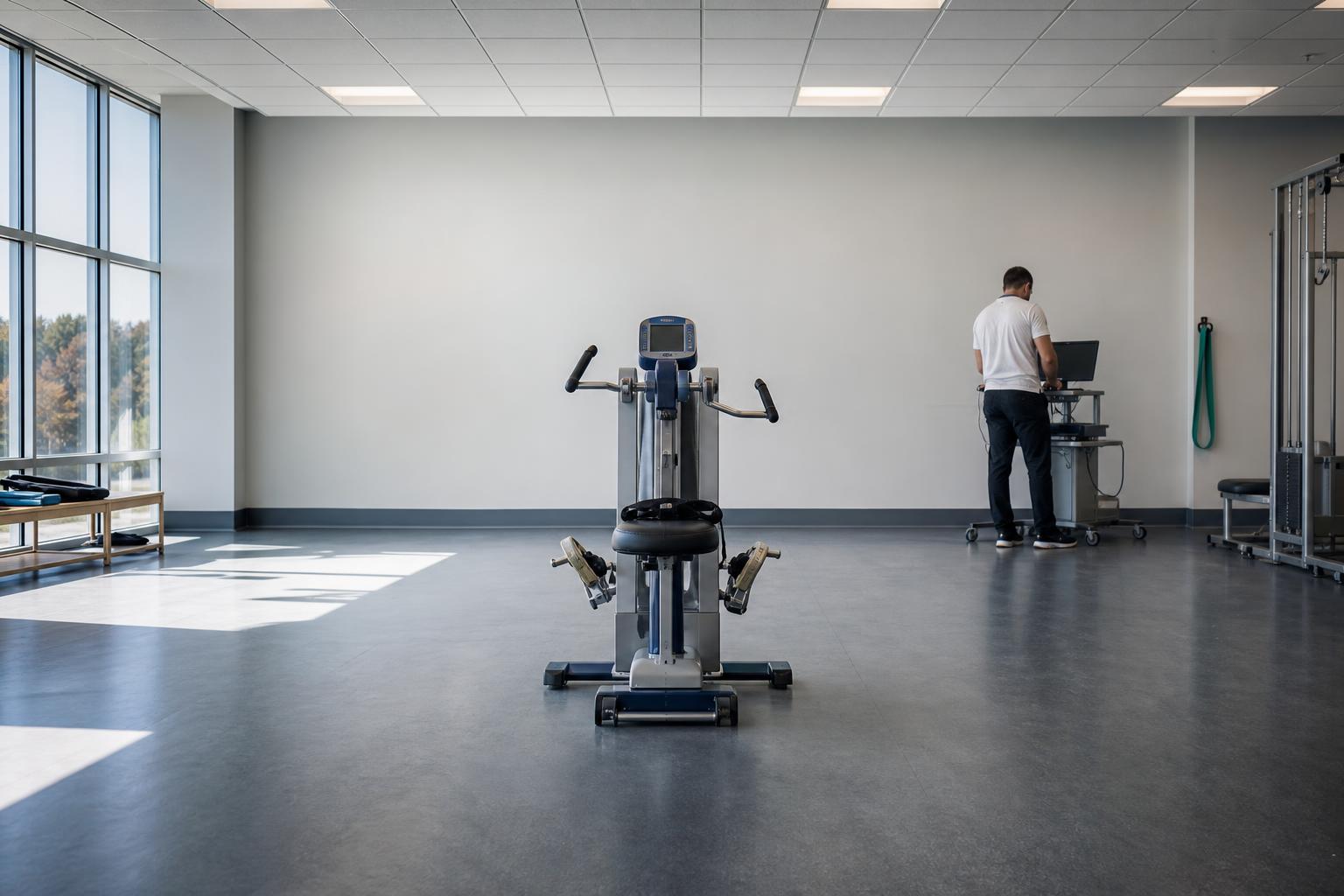
Seventeen trials, 505 people, and one clear result: structured exercise raises cardiorespiratory fitness in people with spinal cord injury, measurably, for up to six weeks after training stops. What it does for the thing most people actually care about — pushing a wheelchair further, feeling less exhausted by Tuesday — the evidence cannot say. Not because the effect isn't there. Because almost nobody measured it properly.
The fitness number moved. The function number wasn't collected right
The review, published by Cochrane, pooled 17 studies run mostly in Europe and North America between the 1980s and recent years. Sample sizes ranged from 10 to 68 people per trial — small by any clinical standard, and small enough that no single study could carry the weight the field has asked of it. Participants were 27 to 57 years old on average, 71% men, with a mix of neck injuries (which can affect the whole body) and lower spinal injuries (which mostly affect trunk and legs). Training took the form of arm ergometry — a stationary bike worked by hand — plus rowing, wheelchair propulsion, and robotic gait training, a machine that supports and guides walking.
Fifteen of the 17 studies, covering 337 participants, found that this training improved cardiorespiratory fitness in the short term, defined as up to six weeks after the program ended. That is the headline, and it is a real one: fitness, in the sense of how efficiently the heart, lungs and blood vessels deliver oxygen during effort, responded to structured training in a population long assumed to have limited capacity for it.
What happened to functional fitness — the ability to wheel a chair a set distance, transfer in and out of a car, manage a flight of steps in a manual chair — is, in the review's own words, unclear. Only one study followed anyone past six weeks. Unwanted effects — falls, cardiac events, injury from training — went largely unreported or under-reported across the set. The review does not say exercise is unsafe. It says almost no one built a trial capable of telling you either way.
Who funds a trial with 20 participants, and why nobody bigger has tried
Cochrane reviews compile publicly registered trials rather than accepting a single funded program's framing, and this one draws no conclusions about industry money because there is no product to sell — no device, no drug, no supplement. That absence is itself informative. Spinal cord injury affects roughly 296,000 people in the United States alone, most from trauma; the market for rehabilitation research is thin compared to conditions with a pharmaceutical answer waiting at the end of it. Small university-run trials, often with 10 to 30 participants, are what a field without a commercial sponsor tends to produce. Nobody is currently paying to find out whether arm-cycling three times a week actually gets someone home from the grocery store with less pain, because there is no patent at the end of that answer.
The people who pay are the participants and the physical therapists running programs on inference rather than evidence. The people who might gain are the roughly 17,700 new spinal cord injury cases diagnosed each year in the US, plus the far larger number living with injuries from years or decades past, all currently making exercise decisions based on a fitness marker that Cochrane rates as low-to-very-low confidence.
Confidence, in Cochrane's language, is a number too
"Low or very low confidence" is not a hedge — it is a specific verdict on trial design. The review flags four recurring failures across the 17 studies: incomplete reporting of collected data, no pre-registered analysis plan (meaning researchers could choose which results to emphasize after seeing them), high dropout, and, in most cases, no measurement of the outcomes people with spinal cord injury say matter most to them — independence, mood, daily function — beyond the exercise physiology lab.
This is the mechanism worth sitting with: cardiorespiratory fitness is measurable with a single test — peak oxygen uptake during a graded exercise challenge — administered in one session, in a controlled setting, with a clean before-and-after number. Functional independence is not. It requires tracking someone's actual week, their transfers, their fatigue at 4pm, their falls at home, over months, with a comparison group that isn't training. That is a harder, slower, more expensive study to run, and the funding to run it — again, in the absence of a drug company — has not consistently arrived. Researchers measured what was easy to measure well. They gestured at what was hard to measure at all.
What "up to six weeks" actually means for someone deciding whether to start
Translate the headline finding into a daily-life outcome and it holds up, cautiously: someone with spinal cord injury who takes up structured arm-cycling or wheelchair-propulsion training for a period of weeks can expect their aerobic capacity to improve, and that improvement to persist for roughly six weeks after they stop. Whether that translates into being able to push further, tire less, or feel meaningfully different day to day is the part the current literature simply does not answer — not because the answer is negative, but because it was not asked with enough rigor to answer either way.
That is a real result and a modest one, and the two are not in tension. The review's authors are explicit that the field's next move should be larger, better-designed trials that track outcomes participants have said they want tracked — not more small studies confirming the same fitness number.
The falsifiable version
If a large, well-designed trial — likely needing several hundred participants across sites, with pre-registered analysis plans and functional outcome tracking beyond six weeks — is run in the next five years and finds no meaningful gain in daily function despite a fitness improvement, that would be a real and useful negative result, closing a question that has stayed open by default rather than by evidence. If instead the funding gap persists and the field keeps producing 20-to-60-person trials measuring peak oxygen uptake and little else, the honest answer in another decade will be the same as today's: fitness improves, and the rest is still unclear. The uncertainty here isn't a verdict against exercise. It's a bill for research nobody has paid yet.