Google’s $1,099 Pixel has a $105 floor if you stack the paperwork
The Pixel 11 Pro lists at $1,099, but trade-in, coupon and cashback stacking can drop it near $105.
By The Signal · · 6 min read
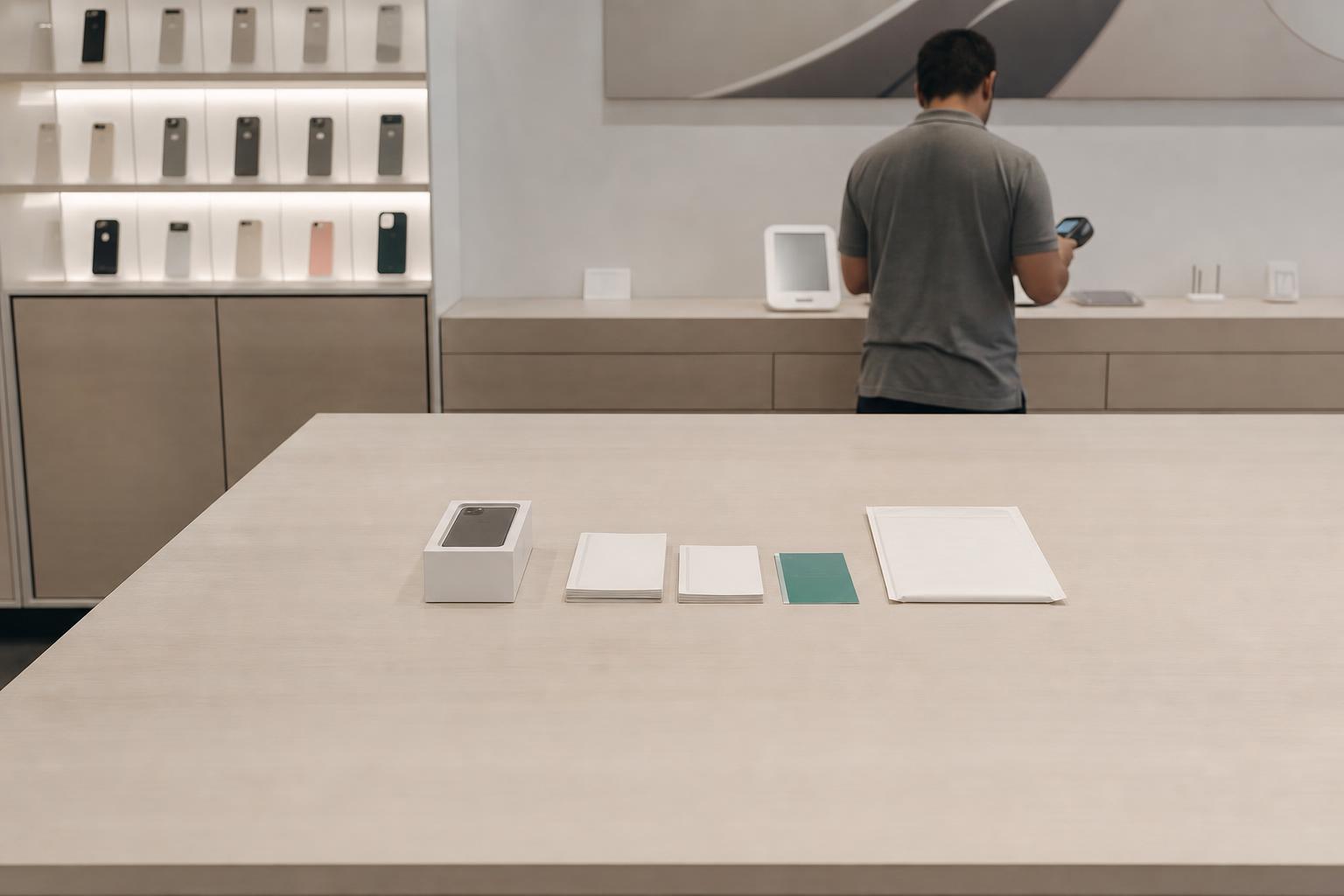
Google's Pixel 11 Pro carries a sticker price of $1,099, $100 more than last year's Pixel 10 Pro despite shipping with less RAM. Stack four separate promotions — a trade-in credit, an email coupon, a store-credit offer, and a loyalty rebate — and the same phone can cost as little as $105 before tax. Both prices are real. Neither is what most buyers will actually pay.
The list price went up while the discount stack got deeper
Every phone in the Pixel 11 lineup costs $100 more at launch than its Pixel 10 counterpart, and the Pro and Pro XL models ship with less RAM than the phones they replace. WIRED's review of the base Pixel 11 calls the year-over-year jump "not technically a price bump," since the $899 starting price matches what a 256GB Pixel 10 already cost — Google simply made 256GB the new baseline rather than lowering the entry price for less storage. That's an accounting distinction, not a discount.
At the same time, Google's retail arm has built a promotional stack that can outrun the sticker increase. A buyer working through the Google Store in August 2025 could combine an inflated trade-in value (up to $600 off a Pixel 11 Pro), a $150 coupon code distributed by email or through Play Points, a $200 store-credit offer normally pitched alongside a Pixel Watch 5 bundle, and a 10% Google One member rebate paid back as store credit. None of these promotions are hidden. All four are stackable at checkout, which is the part retailers rarely advertise together.
Who actually gets to $105, and who pays full freight
The math only works for a specific buyer: someone with a trade-in device Google values highly, a coupon code either sent directly or sourced from a tech outlet's promo pool, an active Google One subscription, and the patience to redeem store credit rather than take an instant discount. One Android Authority writer traded in a partner's iPhone 17 with 256GB of storage for $550 off, applied a $150 coupon to bring the phone to $399, then collected $200 in store credit plus a $94.38 Google One rebate — netting $294.38 in credit against that $399 purchase. After tax, the effective out-of-pocket cost landed at $159.08, with the pre-tax floor at $104.62.
That buyer is not typical. The trade-in value assumes a phone worth trading — an iPhone 17 with meaningful resale value, not a five-year-old handset. The coupon assumes either a Google Store email list membership or a contact at a tech publication with spare codes to hand out. The Google One rebate assumes an existing paid subscription. Strip out any one leg, and the price climbs fast: without the trade-in, the phone sits at $949; without the coupon, at $549; without the store credit and rebate, the buyer is paying real cash rather than deferred credit. Most people buying a Pixel 11 Pro at a carrier store or a general retailer will see none of these stacked, and will pay something close to the $1,099 list.
Google gains regardless. The trade-in device becomes refurbished inventory it resells or recycles. The store credit isn't cash out the door — it's a balance that has to be spent inside Google's own retail ecosystem, on accessories, a case, or the next device cycle. The coupon distributed to press and newsletter subscribers functions as targeted marketing spend dressed as a gift. None of the four promotions cost Google the full face value they appear to represent.
The discount stack works like a freight rebate program, not a sale
The closest working analogy is freight shipping rebates, where a shipper never pays the printed tariff rate. A carrier posts a base rate, then layers volume discounts, fuel surcharge credits, and loyalty rebates that only apply if the shipper meets specific conditions — a minimum tonnage, a preferred route, an account in good standing. The printed rate exists mainly as a reference point and a ceiling for the buyer who doesn't ask. Everyone with leverage pays less, and the gap between list and actual price is the entire negotiating surface.
Google's retail pricing works the same way. The $1,099 MSRP is the ceiling for whoever walks in with no trade-in, no coupon, and no subscription history. Every promotion beneath it is conditional: the trade-in requires a device with resale value, the coupon requires being on the right list, the store credit requires choosing credit over cash, and the Google One rebate requires an existing subscription relationship. Each condition filters out a slice of buyers. The $105 price isn't a discount available to the market — it's the rate available to a buyer who satisfies every filter simultaneously, which is a much smaller population than the marketing implies.
The features underneath the price are catching up to accessibility, not excitement
The pricing story sits next to a smaller, more specific one: a sign-to-text feature built into the Pixel 11's Gboard toolbar, developed with input from Deaf community members, that translates American Sign Language into written English in real time using a model trained to read hand shape, facial expression, and body movement together. It supports one- and two-handed signing and surfaces translated text on the phone's outer display through Live Transcribe. This is a narrower, more traceable claim than most AI feature announcements — Google names the model type (a multilingual sign-language-to-text system) and the population it was built with, rather than gesturing at general capability.
WIRED's review frames the rest of the phone as expected refinement: a Tensor G6 chip claiming 20% better power efficiency and 25% faster browsing over the Pixel 10, a 6.3-inch OLED display unchanged in resolution and peak brightness, and a thinner camera bump as the visible design change. None of that explains the $100 price increase on its own — the review notes the base Pixel 11 gained no reduction in starting price despite comparable specs, and the Pro models lost RAM. The gap between what improved and what got more expensive is exactly where the promotional stack does its work: absorbing a list-price increase that the hardware alone doesn't justify.
What breaks the stack, and when it will
The $150 coupon distributed to press contacts and newsletter subscribers is finite by design — Google controls how many codes exist and when they expire, typically tied to a launch window measured in weeks, not months. The elevated trade-in values are similarly time-boxed promotions, not permanent policy, and they move with whatever device generation Google is trying to clear off the used-market ledger. The Google One rebate and store-credit offer are the most durable of the four, since they're structural to the membership program rather than launch marketing.
The falsifiable test is straightforward: check the Google Store's Pixel 11 Pro trade-in values and coupon availability in six months. If the $600 trade-in ceiling and equivalent coupon value are gone, the $105 price was a launch-window artifact, not a standing offer, and next year's Pixel 12 launch will produce the same headline with a different, equally temporary stack underneath it.