Hollywood’s new writers room is sixty seconds long
Vertical microdramas are pulling TikTok money into scripted content, and studios are chasing a format built for phones, not screens.
By The Weekend · · 5 min read
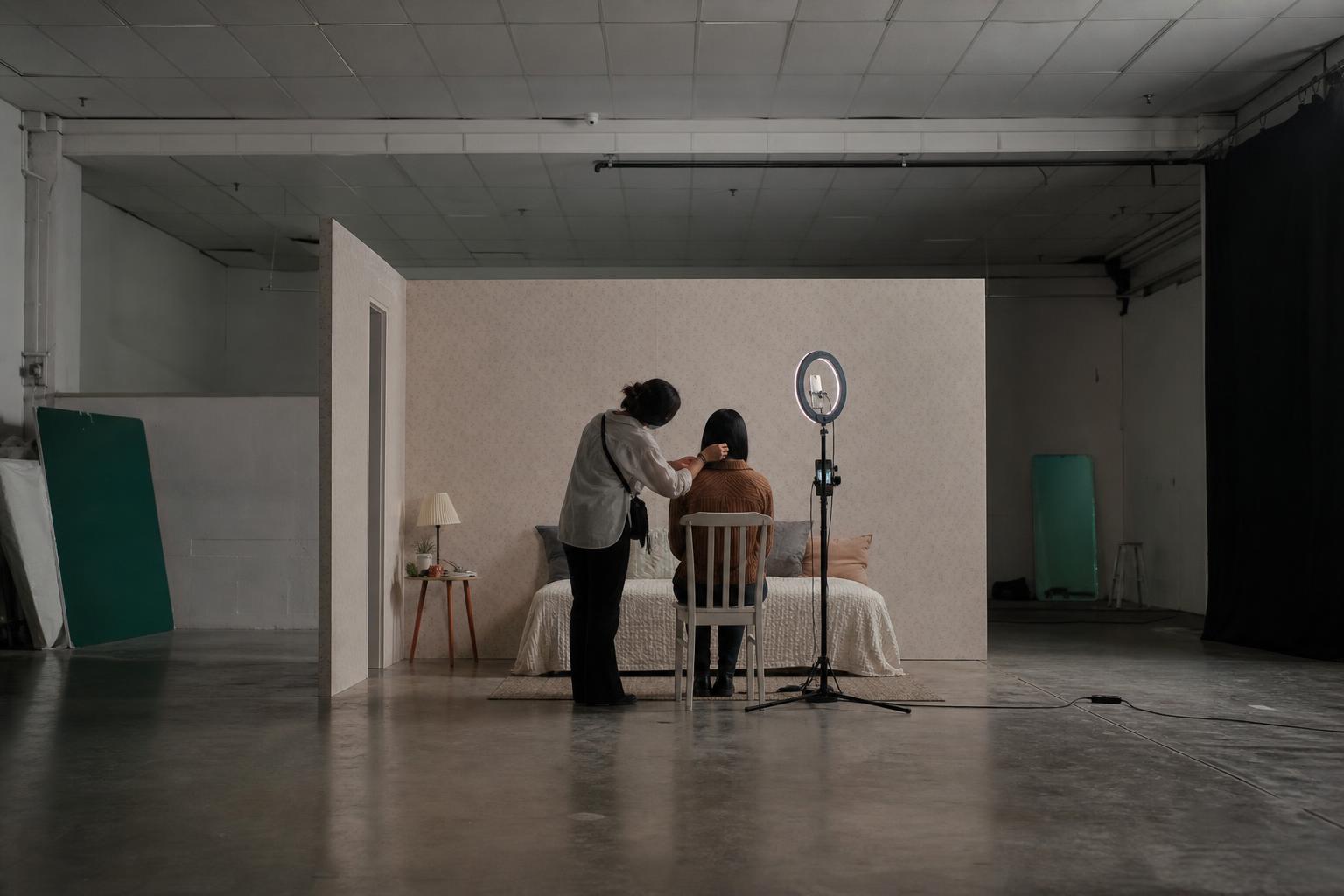
A microdrama runs 90 seconds to two minutes an episode, shoots vertically for a phone screen, and gets released in batches of 60 to 100 episodes. ReelShort and DramaBox, the two apps leading the format, have each pulled in tens of millions of downloads in the past year. Traditional studios, watching their own release slates shrink, are now buying in.
What actually happened
Microdramas started in China around 2022, where the format is called duanju, and the market there was already worth an estimated $6.9 billion in 2024, according to industry tracking cited by trade press covering the sector. The Chinese boom translated fast to the U.S. app stores: ReelShort and DramaBox, both spun out of Chinese parent companies, have spent 2024 and 2025 trading places at the top of entertainment-app download charts, ahead of Netflix's own app in some weeks.
The pitch to viewers is simple and the format is engineered for it: a cliffhanger every 90 seconds, a paywall after the first few free episodes, and titles built for maximum plot velocity — secret billionaires, fake marriages, revenge arcs compressed into a week of releases instead of a season. The pitch to Hollywood is different. Studios facing production slowdowns, actors and writers with thinner schedules since the 2023 strikes, and a straightforward question: can the same soundstages and the same union talent pools produce content for a format that costs a fraction of what a streaming series costs to make?
That's the actual news. It isn't that phones are eating movies — it's that a production model built for $1 million-to-$5 million episodes is being tested against one built for $100,000-to-$300,000 for an entire season, according to figures reported by trade outlets covering the format's U.S. production costs. Studios aren't abandoning film. They're running a parallel, cheaper assembly line to see if it holds an audience long enough to hold advertisers.
Who pays, who gains
Viewers pay per unlock or by subscription — DramaBox and ReelShort both use a freemium model where the first five to ten episodes are free and the rest cost coin bundles, often totaling $10 to $50 for a full series. That's a meaningfully different unit economics than a $15.49-a-month Netflix subscription: the microdrama apps are selling per-story completion, not a monthly all-you-can-watch pass, which means a viewer who finishes three series in a week can spend more than a month of a traditional streaming bill.
On the production side, the gain flows to whoever can shoot fast and cheap. A microdrama season shoots in five to ten days, compared to weeks or months for a scripted TV episode, because sets are minimal, crews are small, and scripts are frequently AI-assisted or templated across a shared universe of tropes. That cost structure is why U.S. production companies — some newly formed specifically for this format, others existing indie shops pivoting — are the ones actually profiting from the boom, not the major studios themselves, most of which are still in a licensing or content-supply role rather than owning the platforms.
The apps themselves are the biggest beneficiaries of scale: ReelShort's parent company, COL Group, and DramaBox's operator, both benefit from a model where marginal cost per additional viewer is near zero once a series is produced, and where a single hit series can be repackaged across markets with dubbing rather than reshoots.
The mechanism
The vertical format isn't cosmetic — it's the entire commercial logic. A horizontal show optimized for a TV or laptop screen assumes a viewer who has chosen to sit down. A vertical microdrama assumes a viewer scrolling between other things, which means every episode has to justify the next ten seconds of attention or lose the viewer to whatever else is on the feed. That reshapes the writing: cliffhangers aren't a season finale device, they're a per-episode requirement, which is why story engines for the format now build entire narrative bibles around a rhythm of reveal-shock-reveal rather than slow character work.
This is also why the format travels so easily across borders. A duanju built in China around tropes like the secretly wealthy husband or the wronged heiress translates into an American genre landscape that already runs on similar daytime-soap DNA — the format didn't need cultural adaptation so much as localization of casting and dialogue. That's a lower bar than adapting a two-hour film for a different market, and it's part of why the apps scaled internationally faster than traditional streaming libraries typically do.
The advertising layer underneath is the part studios are actually betting on. In-app purchases are the primary revenue line now, but both leading apps have begun testing ad-supported tiers, following the exact playbook that took Hulu, Peacock and eventually Netflix from ad-free premium products to hybrid models once subscriber growth slowed. If microdramas follow that curve, the audience-buying opportunity — cheap CPMs against a highly engaged, binge-prone viewer — is the real prize being chased, not the $10 unlock fees.
What happens next
Watch for union involvement as the clearest signal of whether this becomes a real Hollywood business line rather than an adjacent one. SAG-AFTRA and the WGA have not yet issued specific microdrama contract frameworks, and until they do, most U.S. microdrama production runs non-union, which keeps costs low but caps the format's ability to use recognizable film and TV talent at scale. If a studio-backed microdrama arm signs a union deal in the next 12 months, that's the tell that the format is being treated as durable infrastructure, not an experiment.
The other falsifiable marker is retention data. Freemium apps live or die on whether free-episode viewers convert to paying unlockers at a rate that beats customer acquisition cost — public app-store revenue estimates put ReelShort's and DramaBox's monthly U.S. revenue in the low tens of millions of dollars each as of mid-2025, but neither company publishes retention or churn figures. Without that number, it's not possible to say whether this is a stable business or a downloads spike that ages the way short-video fads usually do.
FAQ
Are microdramas replacing TV shows? No — they're a separate, cheaper production category aimed at mobile-first viewing sessions, not a substitute for hour-long dramas or two-hour films, which still command different budgets, casts and distribution deals.
Why is this happening now specifically? U.S. scripted production volume has been down since the 2023 strikes disrupted development pipelines, leaving crews, writers and soundstage capacity available for cheaper formats precisely when Chinese apps were proving the model's download numbers abroad.
Do actors get paid the same as on a normal show? Generally no — most current microdrama production in the U.S. is non-union, meaning pay scales, residuals and working-condition protections that apply to SAG-AFTRA productions don't automatically apply here, which is a large part of why the cost per episode is so low.