One screen made $86,000. A thousand couldn’t buy that
NAZA earned $86k from one New York screen; theater capacity, not demand, is the limit.
By The Weekend · · 5 min read
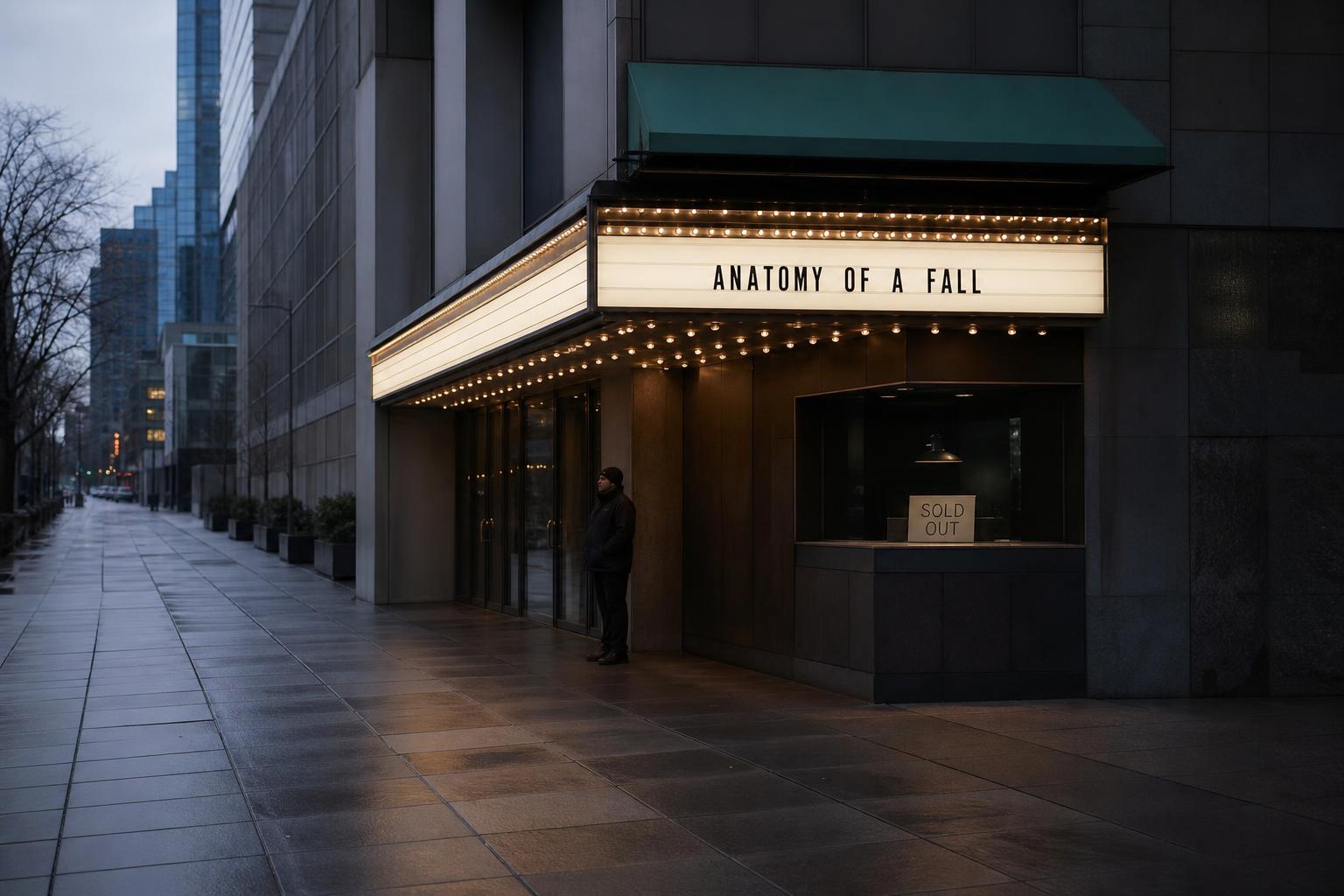
NAZA, a documentary made in secret by two directors who've received death threats for their work, opened on exactly one screen in New York and made $86,000 in five days. Its distributor says the number isn't a ceiling on interest — it's a ceiling on seats. Meanwhile, John Wilson's "The History of Concrete" crossed $1.2 million after three weeks on up to 160 screens, becoming the highest-grossing platform-release documentary of the year. Both numbers describe the same market. They describe very different films, and very different risks.
One theater, no Q&As, and a film that had to be finished quietly
NAZA comes from Yuval Abraham and Rachel Szor, two of the Oscar-winning directors behind "No Other Land." For this one, they interviewed Israeli intelligence officers and soldiers — faces concealed, voices digitally altered — on rooftops in Tel Aviv, asking about the civilian death toll in Gaza. The film won the Special Jury Prize at Venice. It was made in secret. There were no public Q&As at its IFC Center debut because the directors have been threatened. The film's backers include The Guardian and MK2 as producers, with mTuckman Media running the U.S. rollout independently — no studio distributor, no marketing budget to speak of, just a single screen and a five-day gross that mTuckman says was capped by the room, not the audience. Next week it adds exclusive engagements in more than 30 markets, expanding through October. That's the test: whether word of mouth can do what screen count usually does.
A Hallmark parody about concrete outsold almost every documentary this year
"The History of Concrete" is a different kind of improbability. John Wilson, the creator of HBO's cult series "How To with John Wilson," made an absurdist history of concrete shot in the style of a Hallmark movie — premiered at Sundance, picked up by Magnolia Pictures, rolled out one city at a time rather than opening wide. Sixteen days after release it passed $1 million. By its third week, on 160 screens, it had grossed just over $450,000 for the weekend alone and a cumulative total above $1.2 million — enough to make it, as both Deadline and IndieWire confirm, the top-grossing platform-release documentary of 2026. At the IFC Center it became the venue's second-highest-grossing opening ever, behind only "Parasite." In Chicago's Music Box it took $47,510 in a single week; in Brooklyn's BAM, $34,534; in a small San Francisco neighborhood house, the Balboa, $24,653. Wilson's own Queens theater, Low Cinema, has sold out every showing through the end of October.
The platform-release strategy — opening small, adding screens only where demand proves itself, rather than going wide on day one — has a specific logic for documentaries. It lets distributors chase the audience instead of guessing where it is, and it keeps marketing spend proportional to ticket sales rather than front-loaded against a hopeful opening weekend. It's cheap insurance against the thing that kills most documentaries: a wide release nobody shows up for. The contrast with "Melania," Brett Ratner's documentary on the First Lady, is instructive. Amazon MGM Studios paid $40 million to acquire that film and spent tens of millions more marketing it across 1,778 screens, and it grossed $16.7 million domestically — a result that looks strong until you count what it cost to produce. Trump later said he and his wife made $10.71 million in licensing fees from the deal. Wilson's film, platformed patiently onto 160 screens over three weeks, needed none of that spending to clear a million dollars and keep climbing.
Capacity isn't a metaphor here — it's the entire ceiling
The catch in both stories is the same word: capacity. For "The History of Concrete," capacity is a choice — Magnolia is expanding screens deliberately, matching supply to proven demand, which is why the film's trajectory looks like a slow climb rather than a single opening spike. For NAZA, capacity is a constraint, and not an administrative one. A film whose directors can't safely hold a Q&A, whose distributor is an improvised coalition of a newspaper and a French distribution house rather than a studio, doesn't get to simply book more screens next week because people want to see it. Theatrical exhibition in the U.S. runs on relationships — with chains, with programmers, with marketing co-op money that mainstream studios have and independent political documentaries generally don't. mTuckman's plan to add more than 30 markets next week is the test of whether a film this exposed can scale through goodwill and press coverage alone, without the infrastructure that turned Wilson's concrete joke into a box-office record.
What nobody says plainly is that "top-grossing platform documentary of the year" is a title decided as much by distribution math as by how many people wanted to see the film. Kino Lorber's "Mary Oliver: Saved by the Beauty of the World" made $773,430 this year in the same release style; "Steal This Story, Please!" made $750,077; Watermelon Pictures' "American Doctor" made $556,703. All of those are real audiences turning out for nonfiction film in theaters that could have stayed home and streamed something. The "record" belongs to whichever film got the right number of screens at the right pace — which is a distribution skill as much as a measure of audience appetite.
The honest question neither number answers
Would NAZA's five-day total look different on 160 screens instead of one? Nobody can say, because nobody is offering it 160 screens — not because exhibitors have rejected it, but because a film built this carefully in secret, with its creators under threat, doesn't move through distribution the way a Sundance comedy does. The $86,000 figure measures what one room, at capacity, for five days, produces. Whether it has an audience the size of Wilson's remains the one number this cluster doesn't contain.
Two things worth knowing before you go looking for a ticket
Is NAZA playing near you yet? Check IFC Center listings directly — the planned 30-market expansion begins next week, market by market, not all at once.
Is "The History of Concrete" still expanding? Yes — Magnolia has kept adding screens through its third week, and Low Cinema in Queens is sold out through the end of October.