SpaceX wants $40 billion in debt to buy chips it doesn’t yet own
SpaceX is in talks to raise $40 billion in debt, one of the largest AI financings ever recorded.
By The Ledger · · 5 min read
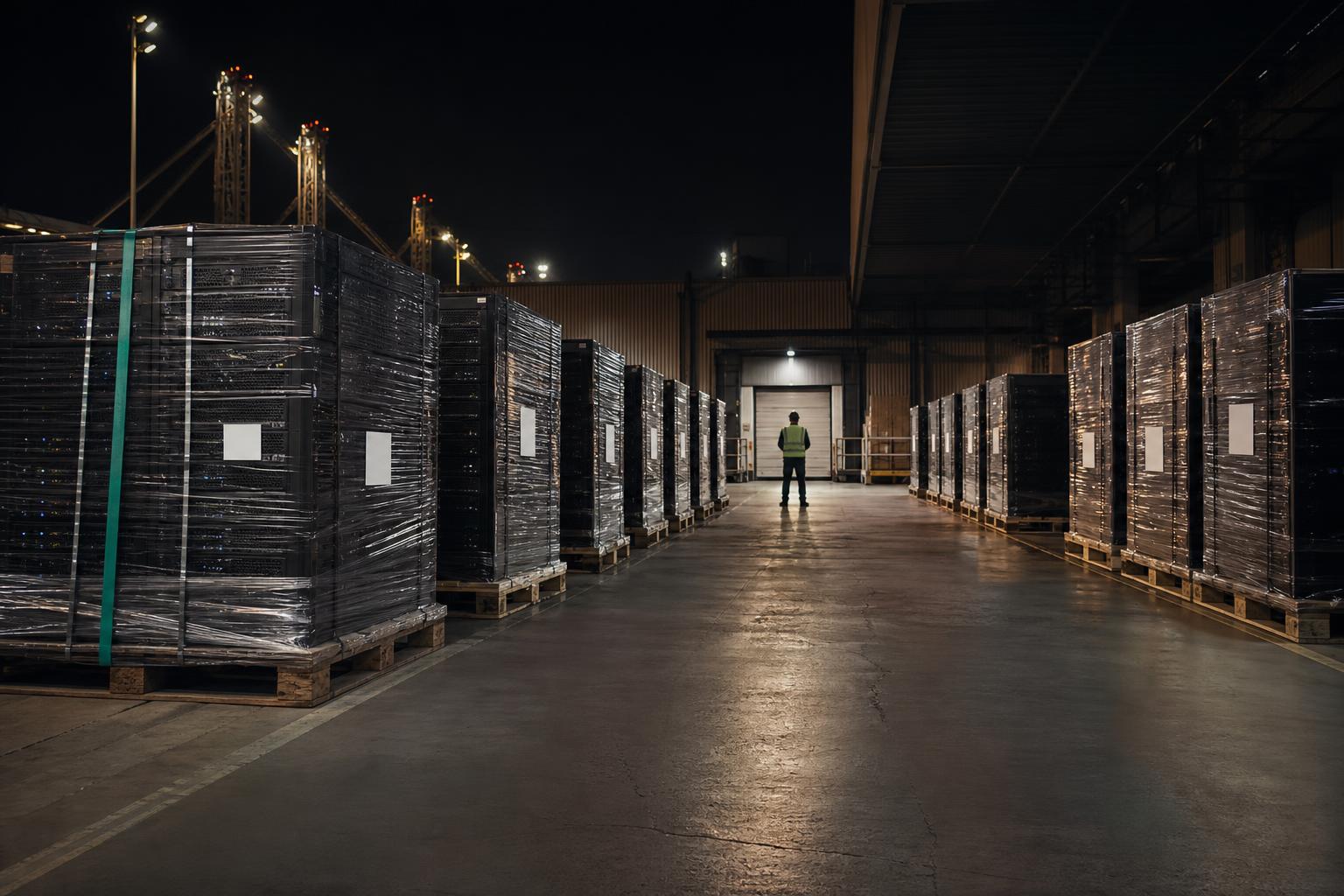
SpaceX is talking to banks and investors about raising $40 billion in debt. The money would buy Nvidia chips, not rockets or satellites. If it closes, this becomes one of the largest debt-financed purchases in the history of the AI buildout.
No single company pays that $40 billion back by itself. Debt of this size gets syndicated — spread across banks, private credit funds, and institutional investors who each take a slice of the risk and a slice of the interest. The lenders are betting that SpaceX's satellite and launch business generates enough cash, or that the chips themselves generate enough value, to service a loan roughly four times the size of SpaceX's most recent full-year revenue estimate from private market trackers.
A rocket company borrowing like a data center
SpaceX makes money launching things into orbit and selling Starlink internet connections. Neither business obviously needs tens of thousands of Nvidia chips. The chips are for compute — training and running AI models — which puts SpaceX in the same queue as Microsoft, Meta, and Oracle, companies that have also leaned on debt rather than cash reserves to buy Nvidia's hardware before it depreciates in value or gets outpaced by the next chip generation.
The shift matters because it changes who is exposed if the AI buildout slows. A company buying chips with retained earnings loses money if demand disappears. A company buying chips with $40 billion in borrowed money owes that $40 billion regardless of whether the chips ever turn a profit. The lenders inherit that risk, priced into the interest rate SpaceX will pay — a rate not yet disclosed, because the talks are not yet finalized.
The last three years taught lenders to treat chips as collateral
Debt-financed chip purchases became common only after 2023, when Nvidia's data-center revenue crossed $47.5 billion for its fiscal year, a fivefold jump from the year before, according to the company's own filings. That growth convinced lenders that Nvidia GPUs hold resale value comparable to aircraft or shipping containers — assets with a market even if the original buyer defaults. Microsoft and CoreWeave both arranged multibillion-dollar chip-backed financings in 2024 and 2025, using the hardware itself as partial security.
SpaceX's situation differs in one respect: it is privately held, run by Elon Musk, and does not publish quarterly results the way Microsoft or Oracle must. Lenders evaluating a $40 billion exposure to a private company are relying on SpaceX's own disclosures and whatever audited figures its investment bankers choose to share, a narrower information set than a public filing would require. Two people familiar with the talks told Bloomberg and the Financial Times that discussions are ongoing with both banks and private credit investors, but neither outlet reported a term sheet or a closing date, meaning the $40 billion is a target, not a signed commitment.
Who actually holds the risk if the chips sit idle
The arithmetic nobody states plainly: $40 billion in debt, at even a conservative 6% annual interest rate, costs roughly $2.4 billion a year before a single chip computes anything. That is a fixed cost against a market — AI compute demand — that has no guaranteed floor. If enterprise demand for AI training and inference plateaus, as some forecasters already flag given slowing growth in large-model development budgets, SpaceX still owes the coupon payments. The chips themselves lose value fast; Nvidia's own roadmap points to a new architecture roughly every 12 to 18 months, which means collateral purchased today could be two generations behind before the loan reaches its midpoint.
This is the catch embedded in every debt-financed AI infrastructure deal so far: the hardware depreciates on a technology timeline, but the loan amortizes on a banking timeline. Those two clocks rarely match. When they don't, either the lender absorbs a writedown on the collateral, or the borrower refinances at worse terms, or — in the scenarios credit analysts model but rarely publish — the borrower defaults and the chips get resold into a market that may be flooded with other companies' surplus GPUs at the same time.
The Strait of Hormuz story that pushed this one off the front page
The SpaceX talks surfaced the same day oil prices rose on reports of increased Iranian attacks on vessels in the Strait of Hormuz, a chokepoint through which roughly a fifth of global oil consumption passes according to US Energy Information Administration estimates. The two stories share no mechanism, but they share a reader: someone watching equity futures slip after the S&P 500 touched a record the day before. Energy risk and AI financing risk are both quietly repricing the same market, from opposite ends, on the same morning — one through tanker insurance premiums, the other through corporate credit spreads.
Nvidia itself benefits either way. A $40 billion order, even spread across quarters, represents a meaningful addition to the company's data-center backlog, which already exceeds $100 billion in disclosed commitments from major customers as of its most recent earnings call. Nvidia does not take on SpaceX's repayment risk. It collects payment for the chips upfront or on delivery, leaving the financing risk entirely with the banks and investors structuring SpaceX's debt.
What happens if the deal doesn't close at $40 billion
Financing talks of this size often settle for less than the headline figure, staged across multiple tranches rather than one lump sum. SpaceX could end up borrowing $25 billion now and returning for more once early AI infrastructure investments show returns — a pattern Oracle followed in its own multibillion-dollar compute buildout.
Does Musk personally guarantee any of this debt
Neither Bloomberg nor the Financial Times reported personal guarantees from Musk, and SpaceX's corporate structure typically isolates shareholder liability from company debt, standard for US corporations of this size.
The open question is simple and unresolved: does SpaceX's underlying business generate enough independent cash flow to service $40 billion in new debt if AI compute demand cools before the loan matures. Nobody involved in the talks has answered that in public. The banks writing the terms will answer it privately, in the interest rate they attach to the money. Whoever lends it is the one who finds out first whether the bet was right.