The Walk of Fame star costs $75,000. Who pays?
Lea Salonga's Walk of Fame star, the first for a Filipina performer, comes with a specific price tag and sponsor.
By The Weekend · · 5 min read
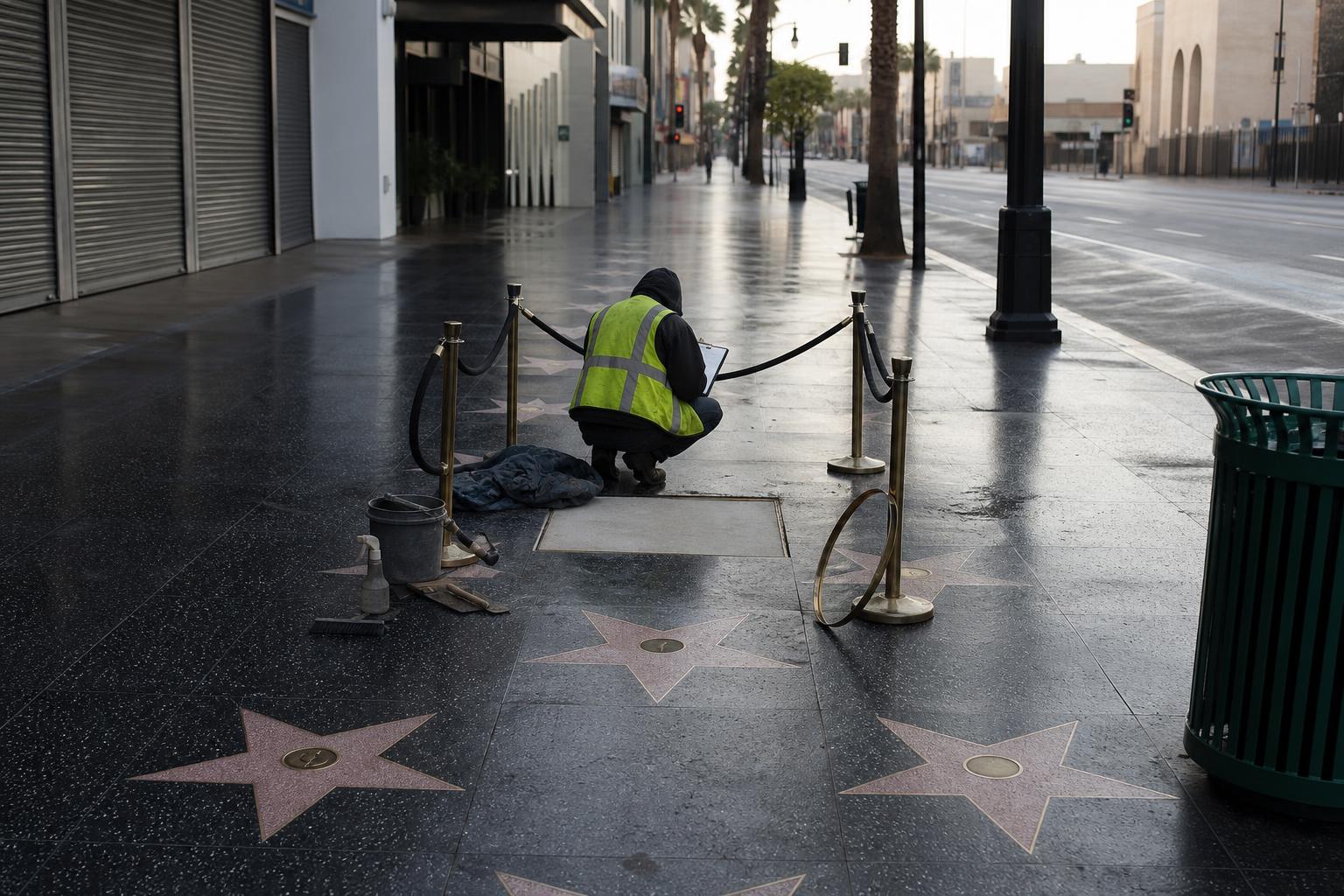
The Hollywood Chamber of Commerce will install a star for Lea Salonga on the Walk of Fame, making her the first Filipina performer to receive one in the sidewalk's 68-year history. The honor itself is symbolic. The mechanism behind it is not: a Walk of Fame star costs $75,000, paid by the honoree or their sponsor, and the selection committee that approves nominees meets once a year to work through a backlog that runs into the hundreds.
What actually happened
The Hollywood Chamber of Commerce announced Salonga's star as part of its 2026 class, recognizing a career that spans the original Broadway and West End productions of "Miss Saigon," the singing voice of Disney's Jasmine and Mulan, and a Tony Award in 1991. She becomes the first Filipina to receive a Walk of Fame star in the program's history, which dates to 1958 and has awarded roughly 2,800 stars since.
The announcement reads as a straightforward honor. Underneath it is an application and funding process the Chamber runs like what it is: a real estate and licensing operation tied to Hollywood Boulevard's tourism economy, not a merit badge dispensed by the industry at large.
Who pays, who gains
Nominations for a Walk of Fame star can come from anyone — a studio, a fan club, an agent — but the nominee or a sponsoring entity pays the $75,000 fee if the nomination is approved. That money funds the star's manufacture and installation and goes toward maintenance of the sidewalk itself, according to the Chamber's own published guidelines. It is not a stipend to the honoree; it is closer to a permit fee for placing a piece of terrazzo and brass on a public sidewalk the Chamber controls under an agreement with the City of Los Angeles.
The Chamber gains on two fronts. Each new star is a press cycle — free coverage of Hollywood Boulevard that reinforces its status as a destination, which matters because the boulevard's retail and tourism economy is the Chamber's actual business. The honoree gains a permanent fixture in a tourist circuit that draws roughly 10 million visitors a year, by the Chamber's own estimate, plus the kind of institutional recognition that outlasts any single film or show's box office run.
Who doesn't pay: the studios. Despite the Hollywood branding, no major studio funds or votes on Walk of Fame selections. The program is entirely a Chamber of Commerce initiative — a distinction that matters when people assume a star reflects an industry consensus rather than a nonprofit business association's calendar.
The mechanism
The Walk of Fame selection committee meets once annually, reviews nominations across five categories — film, television, recording, radio, and live theater/performance — and approves a limited slate for the following year. Getting approved does not guarantee a fast placement; backlogs of two to five years between announcement and the actual sidewalk ceremony are common, driven by scheduling around the honoree's availability and the Chamber's own installation calendar.
That gap is the part of the story people skip. When a star is "announced," it typically means a committee vote has cleared, not that a ceremony date exists. Salonga's ceremony date had not been set as of the announcement, consistent with how the program has operated for decades.
The categorization matters too. Salonga's career is built on stage and voice work — Broadway, the West End, animated film. The Walk of Fame's live theater/performance category exists specifically because so much of entertainment history happens off-camera from the Hollywood sign, and the Chamber has had to expand its own criteria over the decades to keep the sidewalk relevant to an industry that no longer maps neatly onto film. A star recognizing stage and voice work is itself a small admission that "Hollywood," as a brand, has stretched well past its geographic and medium-specific origins.
What happens next
Expect a ceremony date within the next 12 to 24 months, based on typical Chamber turnaround, with the event drawing the predictable mix of collaborators and press that accompanies every induction. The more durable effect is representational: Salonga's star becomes a reference point in ongoing conversations about how few Filipino and Southeast Asian performers appear across the Walk of Fame's roughly 2,800 honorees, a gap advocacy groups have flagged for years without a formal Chamber response beyond individual approvals like this one.
Watch whether this accelerates additional nominations from within the Filipino entertainment community — agents and fan organizations often use a first honoree as leverage for subsequent ones, a pattern that played out after other "first" designations on the Walk of Fame in the past decade. If a second Filipino honoree is announced within two or three years, that is the sign the door opened rather than a single exception being made.
FAQ
Does the $75,000 fee mean stars can be bought regardless of career merit?
No — the fee is charged only after the selection committee approves a nomination based on career achievement. It funds installation and maintenance, not the vote itself. But it does mean an approved nominee without a sponsor willing to pay can, in practice, delay or forfeit a star, which is why sponsorship (studios, record labels, fan campaigns) plays a real role in who actually gets placed versus who is merely approved.
Is the Walk of Fame run by a Hollywood studio or industry guild?
No. It's administered entirely by the Hollywood Chamber of Commerce, a local business association, under an agreement with the City of Los Angeles for use of the sidewalk. No studio, network, or guild has a vote in the selection process.
How rare is it for a performer to be a "first" for their nationality this far into the program's history?
Rare enough to be notable, but not unprecedented — the Walk of Fame has added first-time national or ethnic representation almost every few years as its selection committee has diversified its nominee pool since the 2000s. Salonga's case stands out because Filipino performers have had an outsized presence in American musical theater and voice acting for decades without a corresponding star until now.