Your fitness tracker may be stressing you out
A new survey links constant health tracking to anxiety. The data on why is more specific than the headline.
By The Weekend · · 5 min read
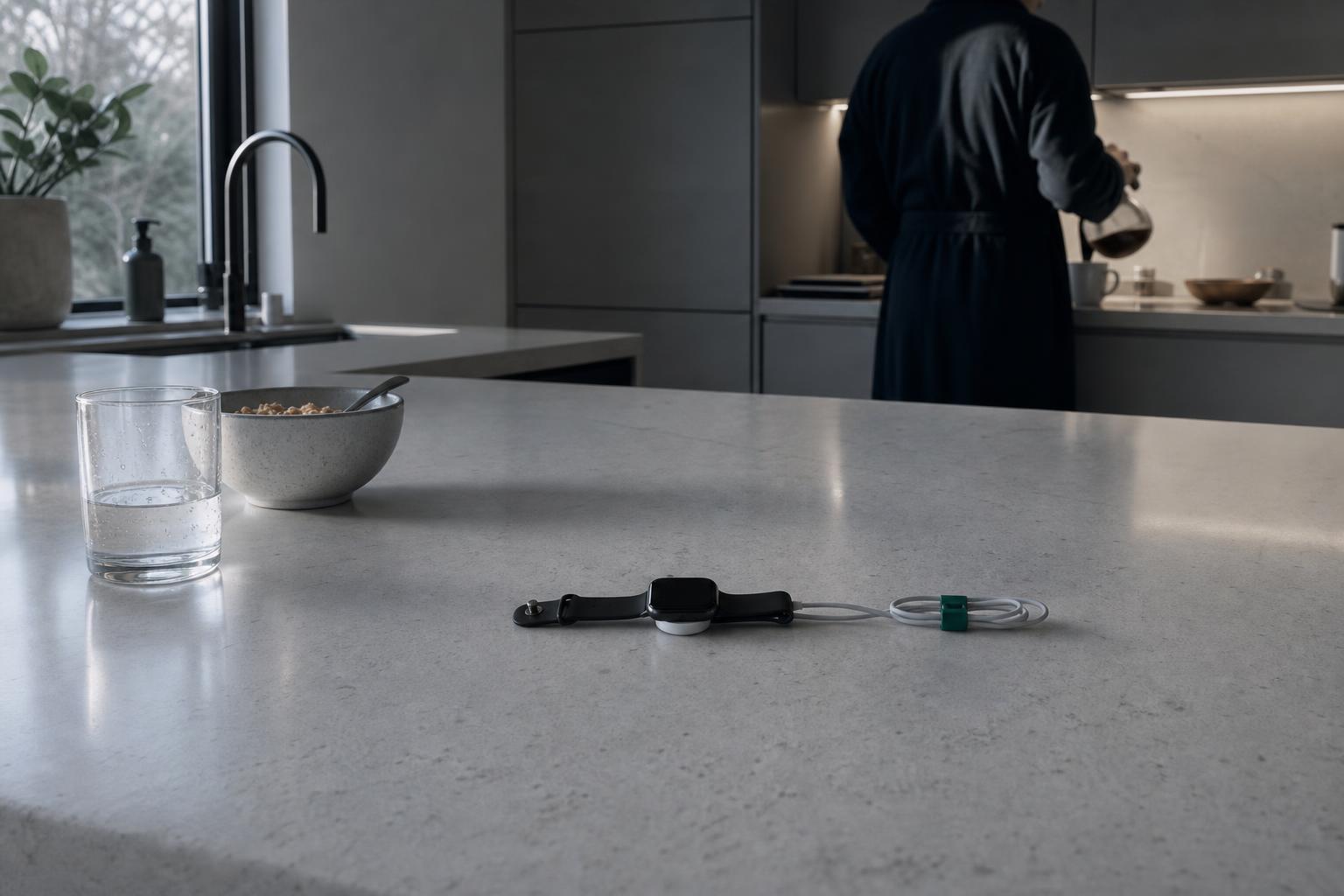
Wearable devices now sit on roughly one in three American wrists, and a growing body of survey data says the numbers on the screen are doing something the marketing never mentioned: making some users more anxious about their health, not less. The Well News reported this month on a survey finding that health tracking can fuel anxiety and what researchers are calling "wellness burnout" — a specific, measurable reaction, not a mood.
What actually happened
The survey in question adds to a pattern that's been building in behavioral research since wearables went mainstream around 2015: people who track sleep, steps, heart rate variability, and calories obsessively report higher rates of health-related anxiety than people who don't track at all, or who check their data only occasionally. This isn't a single alarming finding — it's a replication of what smaller clinical samples have shown for years, now surfacing in broader survey data as device adoption climbs.
The mechanism being described isn't exotic. It's a feedback loop. A device generates a data point — a sleep score of 62, a resting heart rate that ticked up three beats overnight — and the user interprets that number as a verdict on their body, sometimes independent of how they actually feel. Researchers studying this call it "orthosomnia" when it's specific to sleep tracking: anxiety about sleep quality driven by the tracker's assessment rather than the sleeper's own experience of rest.
Who pays, who gains
The wearable market itself is not shrinking because of this. Global shipments of smartwatches and fitness bands were estimated near 500 million units in 2024, and the device makers gain regardless of whether the data makes users calmer or more anxious — engagement is engagement, and a user checking their app five times a day is a retained user by any product metric.
The cost lands on the user, and unevenly. People with pre-existing anxiety disorders or a history of disordered eating are disproportionately represented in the burnout data — tracking apps that quantify calories and exercise can reproduce the exact obsessive-checking patterns that eating-disorder treatment tries to unwind. That's a clinical concern, not a marketing footnote, and it's one reason some eating-disorder treatment centers now advise patients to remove tracking apps entirely during recovery.
Employers and insurers gain too, in a quieter way. Corporate wellness programs that tie premium discounts to step counts or biometric screenings have pushed adoption among people who wouldn't otherwise buy a tracker. Whether that's coercion or convenience depends on whether opting out costs you money — for many employees, it does.
The mechanism
Anxiety research distinguishes between information and rumination, and wearables are built to deliver the first while accidentally triggering the second. A single data point — last night's sleep score — is information. Checking it four times before 9 a.m., recalculating the day around it, and feeling the number as a referendum on your competence as a person is rumination. The device doesn't know the difference, and most apps aren't designed to discourage the second behavior because the second behavior is what keeps people opening the app.
There's also a validity problem underneath the anxiety problem. Consumer sleep trackers have been validated against clinical polysomnography in several peer-reviewed comparisons, and the agreement is moderate at best — accuracy for distinguishing light from deep sleep stages often lands below 70%, meaning a meaningful share of "poor sleep" alerts may be measurement noise rather than a real physiological event. Users are having genuine anxiety reactions to numbers that carry real error bars the product never discloses. That's the detail that turns a wellness feature into what researchers are now willing to call a burnout risk: not that data is bad, but that unvalidated data delivered with false precision reads as more certain than it is.
The heart-rate variability metrics popular in recovery-tracking apps have a similar issue — HRV is genuinely informative in controlled clinical settings but highly sensitive to alcohol, caffeine, sleep position, and measurement timing in consumer devices, producing day-to-day swings that look like health signals but are often just noise the algorithm didn't filter.
What happens next
Expect two divergent moves from the industry. Some manufacturers are already testing "quiet mode" features that reduce notification frequency and hide daily scores behind weekly summaries — an implicit admission that constant feedback was the problem, not the data itself. Whether that ships broadly depends on whether it hurts daily active user numbers, which is the metric that actually matters to a device company's revenue.
The more durable shift will likely come from clinicians, not companies. Eating-disorder and anxiety treatment guidelines are starting to include specific screening questions about wearable use, the way they long have for social media. If that becomes standard intake practice — asking not just "do you track your food" but "what does checking your ring in the morning do to your mood" — it will surface a burnout population that current survey data almost certainly undercounts, since most surveys ask about anxiety and tracking as separate topics rather than asking whether one causes the other.
FAQ
Does this mean fitness trackers are bad for you?
No — the evidence points to a usage pattern, not a device flaw. People who check data occasionally and use it to spot real trends report benefit; people who check compulsively and treat every fluctuation as urgent report the anxiety effect. The device is neutral; the checking frequency isn't.
Who funded the research behind this?
Survey-based findings on tracking and anxiety have come from a mix of academic psychology departments and, in some cases, market-research firms with wellness-industry clients — a distinction worth checking before treating any single survey as definitive, since methodology and sample size vary widely across this literature.
Should I stop tracking my sleep or steps?
Not necessarily. The practical guidance emerging from clinicians is narrower: if checking the data makes you feel worse rather than informed, that's the signal to reduce frequency or turn off notifications — not evidence that tracking itself is the enemy.