20,000 salmon came back. The river still runs at a deficit.
Two years after dam removal, 20,000 chinook returned to the Klamath, but recovery still lacks funding.
By The Ledger · · 4 min read
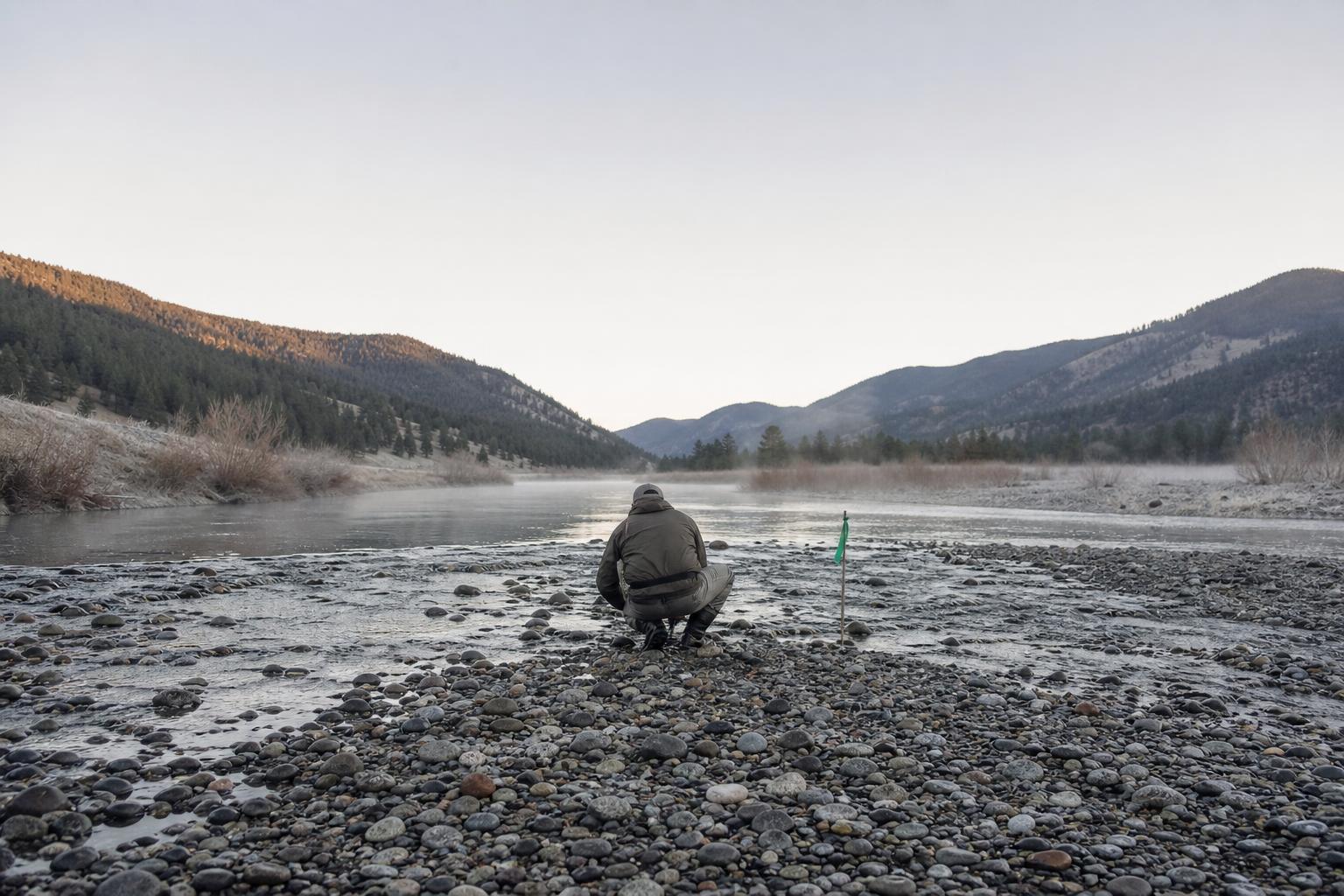
Chinook salmon returned to the upper Klamath River for the first time in over a century. New research published Thursday counts more than 20,000 fish above the sites of four dams removed by 2024. The number is real. The recovery it's supposed to prove is not yet paid for.
The Klamath dam removal, completed in California and Oregon in August 2024, was the largest such project in US history. Four hydroelectric dams came down: Iron Gate, Copco No. 1, Copco No. 2, and J.C. Boyle. They had blocked salmon from roughly 400 miles of historic habitat since the early 1900s. The last excavation crews left the riverbed in 2024. Fish moved upstream within months.
The count is the easy part. The habitat is the argument.
Researchers tracking the return found chinook spawning in tributaries salmon hadn't reached in generations. That is the headline figure: 20,000 fish, two years, one river reopened. But a return count measures presence, not survival to reproduction, not water temperature tolerance, not disease load. The Klamath basin still carries the conditions that made the dams politically easier to remove than the water problem underneath them.
The river's flow is allocated across competing claims: irrigation for the Klamath Reclamation Project's roughly 200,000 acres of farmland, tribal water rights held by the Yurok, Karuk and Klamath Tribes, and instream flows for fish. None of those allocations changed when the concrete came out. The dams were a physical barrier. The water rights fight is a legal one, and it predates the dams by decades.
Who paid to take the dams down, and who pays to keep the fish alive
Removing the four dams cost roughly $450 million, funded through a mix of California bond money and a surcharge on PacifiCorp customers' electricity bills across Oregon and California. PacifiCorp, the utility that owned the dams, capped its contribution at $200 million; ratepayers and California's Proposition 1 water bond covered the rest.
That was the capital cost of demolition. It is not the cost of what comes after. Post-removal habitat restoration, including revegetation of the exposed reservoir beds and monitoring of water quality, falls to a mix of state agencies, tribal fisheries programs and nonprofit partners, with funding renewed year to year rather than guaranteed for the decade or more that ecologists say full recovery will take.
The Yurok Tribe, whose reservation sits at the river's mouth and whose commercial and subsistence fishing rights depend on chinook runs, has pushed for permanent funding tied to the restoration rather than annual appropriations. That funding does not yet exist at the scale the tribe has asked for. The dams are gone. The line item for what replaces them is still being negotiated year by year.
The mechanism: a river can be reopened faster than it can be rebuilt
Dam removal is a single, dramatic, well-funded event. Watershed recovery is a slow, underfunded process with no comparable political moment attached to it. That mismatch is the story underneath the fish count.
Salmon returned quickly because chinook are opportunistic; they will colonize newly accessible habitat within one to two spawning cycles if water quality is adequate. The 20,000 figure reflects that biological readiness, not restored habitat quality. Sediment released during dam removal — an estimated 2 to 5 million cubic yards moved downstream — altered spawning gravel in ways researchers are still measuring. Water temperature in the newly accessible reaches, no longer moderated by reservoir storage, now swings closer to conditions that stress juvenile salmon in summer months.
None of that shows up in a return count. A fish swimming upstream to spawn is not the same measurement as a fish population sustaining itself across multiple generations in water that gets warmer as the region's summers lengthen. The research published Thursday is explicit that early returns are encouraging and that population viability over the next decade remains the open question.
What happens next, and how to know if it worked
The next test is not another return count. It's juvenile survival data over the next three to five spawning cycles, and whether the tributaries now open to salmon can hold water cool enough in July and August for eggs to survive. Oregon and California fish agencies are expected to publish combined monitoring data through 2027, when the first cohort of dam-removal-era salmon reaches spawning age themselves. The bill for that monitoring, and for the habitat work meant to support it, has not been fixed at a number comparable to the $450 million spent tearing the dams out. Until it is, the 20,000 fish are a start, not a verdict. The reader who wants an actual signal should watch what agencies commit to spend on temperature and habitat work in the next state budget cycle, not how many fish show up this fall. The river is open. Whether it stays livable for a chinook run large enough to matter is a question with a price tag nobody has yet written down.