21 million tonnes of coal, 98% of it someone else’s problem
Australia’s high court ruled scope 3 emissions must be weighed before coalmines expand — and HVO is next.
By The Ledger · · 5 min read
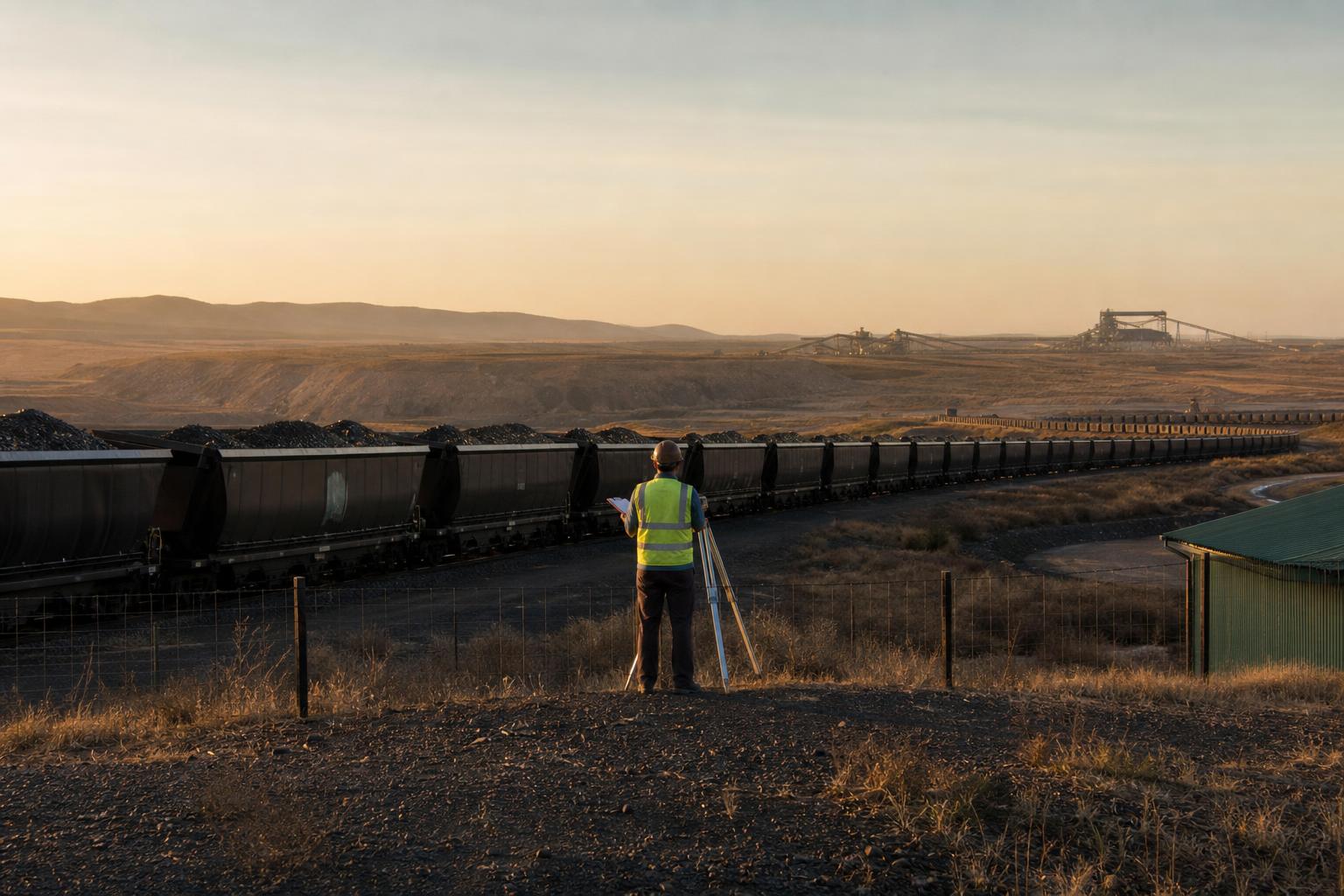
Australia's high court split 3-2 on October 7, 2026, and invalidated the approval of a coalmine expansion that would have doubled output to 21 million tonnes a year. The decision turned on a single number: 98 percent of the Mount Pleasant mine's projected emissions happen overseas, after the coal is sold and burnt. The court ruled that number cannot be ignored by the planning body that approves the mine.
A mine in Muswellbrook just changed what "approval" means
MACH Energy wanted to expand Mount Pleasant, its coalmine near Muswellbrook in the Hunter Valley, from roughly 10.5 million tonnes a year to 21 million tonnes, extending operations to 2048. New South Wales's Independent Planning Commission approved it. A community group called Dams Heg — the Denman Aberdeen Muswellbrook Scone Healthy Environment Group, led by retired science teacher Wendy Wales — fought that approval for more than four years, through the land and environment court, the NSW court of appeal, and finally the high court.
The legal question was narrow: does an Australian planning commission have to consider emissions generated when exported coal is burned elsewhere? These are called scope 3 emissions — the carbon released not by the mine itself, but by whoever eventually sets fire to what it dug up. For Mount Pleasant, that is 98 percent of the project's total climate footprint. The commission had not required MACH Energy to minimise those emissions. The high court's majority said that omission made the approval invalid.
Who pays: everyone who already filed an environmental impact statement without this math
The immediate cost lands on MACH Energy, which now has an invalid approval and a stalled expansion. But the bigger bill arrives for other projects already in the pipeline. NSW Greens MP Sue Higginson pointed to the Hunter Valley Operations extension — the largest coalmine expansion in the state's history, approved by the same Independent Planning Commission one week before the high court's ruling. HVO's emissions profile matches Mount Pleasant almost exactly: 98 percent scope 3. Its environmental impact statement, according to Higginson, did not account for scope 3 emissions at all.
That gap is now a legal liability, not a paperwork omission. Lawyer Elaine Johnson, who represented Dams Heg, said the ruling confirms that Australian governments must weigh emissions from coal burned overseas when they approve the mines that export it. Australia is the world's second-largest coal exporter. Every mine approval written without a scope 3 assessment is now exposed to the same challenge that took down Mount Pleasant.
Communities near future mine sites gain a legal lever they did not have four years ago. Coal companies gain nothing — they lose a planning shortcut that let scope 3 emissions sit outside the approval process entirely, treated as someone else's accounting problem once the ship left port.
The mechanism: a commission has to weigh a number it used to wave past
Before this ruling, NSW's planning commission treated a coalmine's local emissions — digging, trucking, processing — as the relevant climate cost. What happened to the coal after export sat outside the frame, attributed instead to whichever country burned it. The high court rejected that division. A majority ruled the commission must consider conditions to minimise scope 3 emissions "to the greatest extent possible" before approving a project, not after.
That is a narrow legal point with wide reach, because scope 3 emissions dominate the arithmetic of export-driven coalmines. A mine that burns 2 percent of its own coal on-site but ships out the rest for someone else to burn was, until this ruling, judged almost entirely on that 2 percent. Now the 98 percent is back in the room. Any planning authority skipping that calculation hands future litigants the same opening Dams Heg used.
The ruling does not ban coal exports or set an emissions cap. It requires a documented attempt to minimise them — a bureaucratic step, but one that changes what evidence a commission must produce before signing off. Approvals that lack that evidence are now vulnerable, regardless of how long ago they were granted or how large the project.
A parallel fight in Washington asks the same question with different plaintiffs
The same week, the US Supreme Court heard arguments in Boulder v. Suncor and Exxon Mobil, a case asking a different version of the same question: who answers for climate damage once the product has left the company's hands? Boulder, Colorado, wants compensation for costs the city says it now carries because of decades of alleged deception by oil companies about their products' climate harm. The case does not ask companies to stop selling oil. It asks them to pay for having told the public something false about what burning it would do.
Eight justices heard the case on October 5, 2026; Justice Samuel Alito recused himself. Justice Elena Kagan compared it to the 1990s tobacco settlements, where companies paid not for selling cigarettes but for marketing that concealed known harm. Justice Brett Kavanaugh raised the opposite concern: that letting one state court assign damages for global emissions could let any state, anywhere, tax any company for any contribution to a planetary problem. Attorney Kannon Shanmugam, representing the oil companies, told the court Boulder's theory could let it "tag" him personally for refilling his car.
No ruling has been issued. But the shape of the argument mirrors Mount Pleasant's: both ask whether a legal process built around local, direct emissions can be stretched to cover a global, diffuse chain of cause and effect. Australia's high court answered yes, for planning approvals. The US Supreme Court has not yet answered for damages claims, and the stakes there are explicitly financial — Kavanaugh noted the exposure could reach levels that "bankrupt" some companies.
What happens next, and how to tell if the ruling held
MACH Energy's Mount Pleasant expansion now returns to the planning process, where the commission must reconsider scope 3 conditions before any new approval can stand. Watch the Hunter Valley Operations extension: if a legal challenge is filed against its approval within weeks, citing the same 98 percent figure, that is the ruling doing exactly what Higginson predicted. If no challenge arrives, the precedent may prove narrower in practice than in language.
The falsifiable marker is simple. Every coalmine approval issued in NSW from this date forward should contain a documented scope 3 minimisation assessment. If one doesn't, it is contestable on the same grounds that just beat MACH Energy. The communities near those mines bear the climate cost either way. The ruling decides only whether anyone has to write that cost down before approving the shovel.