Air conditioning is becoming the grid’s main event
Cooling is the fastest-growing use of electricity, and its peak arrives exactly when grids are weakest.
By The Ledger · · 2 min read
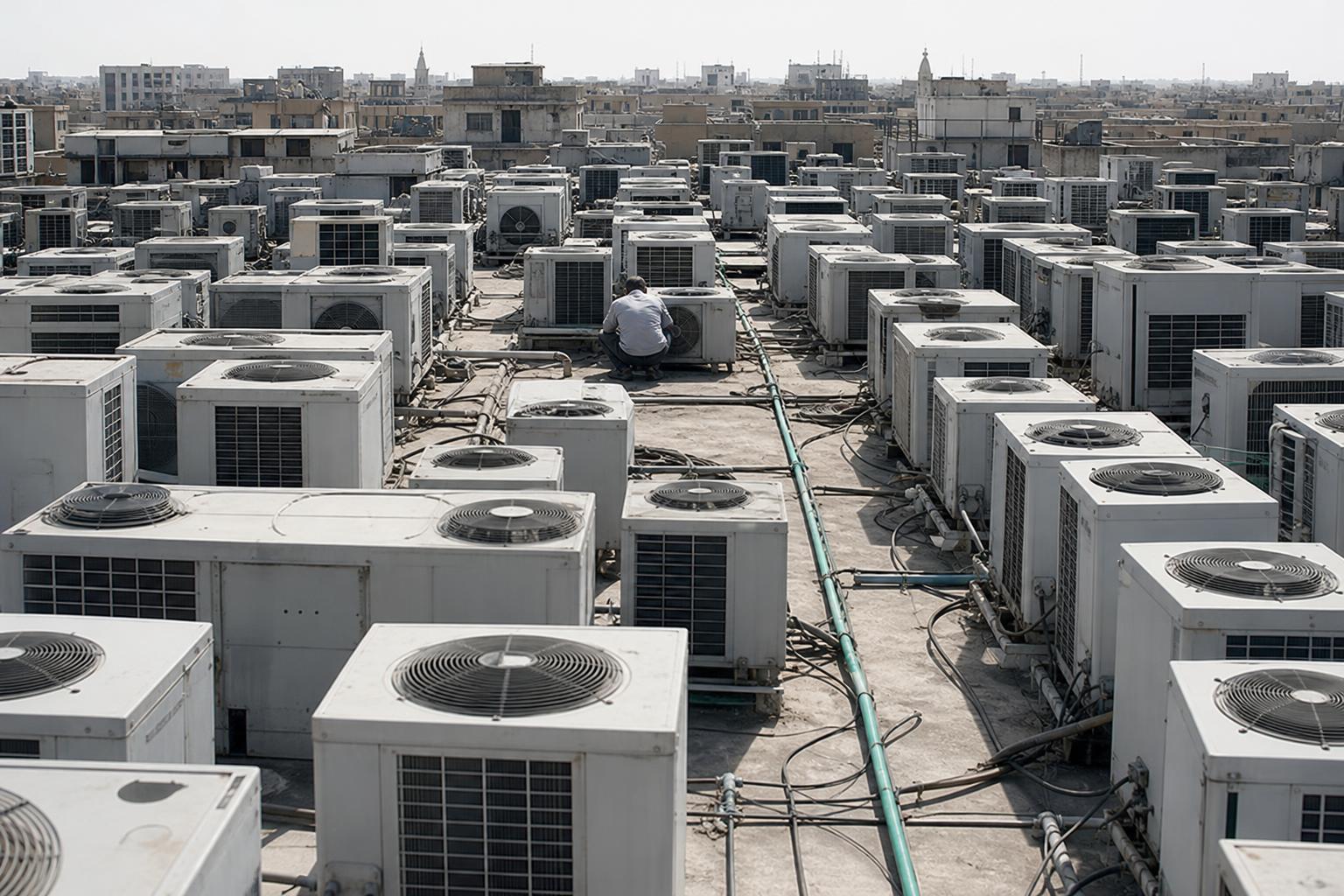
The appliance defining this century's grid is the air conditioner. Cooling demand is growing faster than any other major use of electricity, driven by incomes rising exactly where the heat is, and its consumption peaks at the precise hour the climate makes generation hardest.
What actually happened
Billions of people live in hot regions entering the income band where a household's first air conditioner becomes affordable. Each unit is modest; the aggregate is a new industrial revolution's worth of load. Projections that once looked dramatic now look conservative after each heatwave season resets the record for peak demand.
Who pays, who gains
Cooling is not a luxury; above certain wet-bulb temperatures it is survival equipment, and the mortality statistics of heatwaves fall hardest on those without it. The bill lands twice: on households, where a summer of cooling can rival rent in the hottest months, and on grids, which must build for a peak that exists a few hundred hours a year. Everyone's tariff carries that spare capacity.
The mechanism
The compounding problem is that heat degrades supply while raising demand — thermal plants derate, lines sag, solar panels lose efficiency in extreme heat. Efficiency standards are the cheapest generator available: the gap between an average unit sold and the best on the market is enormous, and closing it costs a labelling law.
What happens next
Expect cooling-aware building codes, district cooling in dense cities, and tariffs that pay households to pre-cool before the peak. The number to watch is seasonal peak demand growth in emerging economies. The constraint nobody mentions: the coolant chemistry itself — refrigerants are potent greenhouse gases, and the transition inside the box matters nearly as much as the electricity feeding it.