Dimming the sun costs less than warming does
Solar geoengineering could cost $10 billion a year. The damage it's meant to offset already runs into trillions.
By The Ledger · · 5 min read
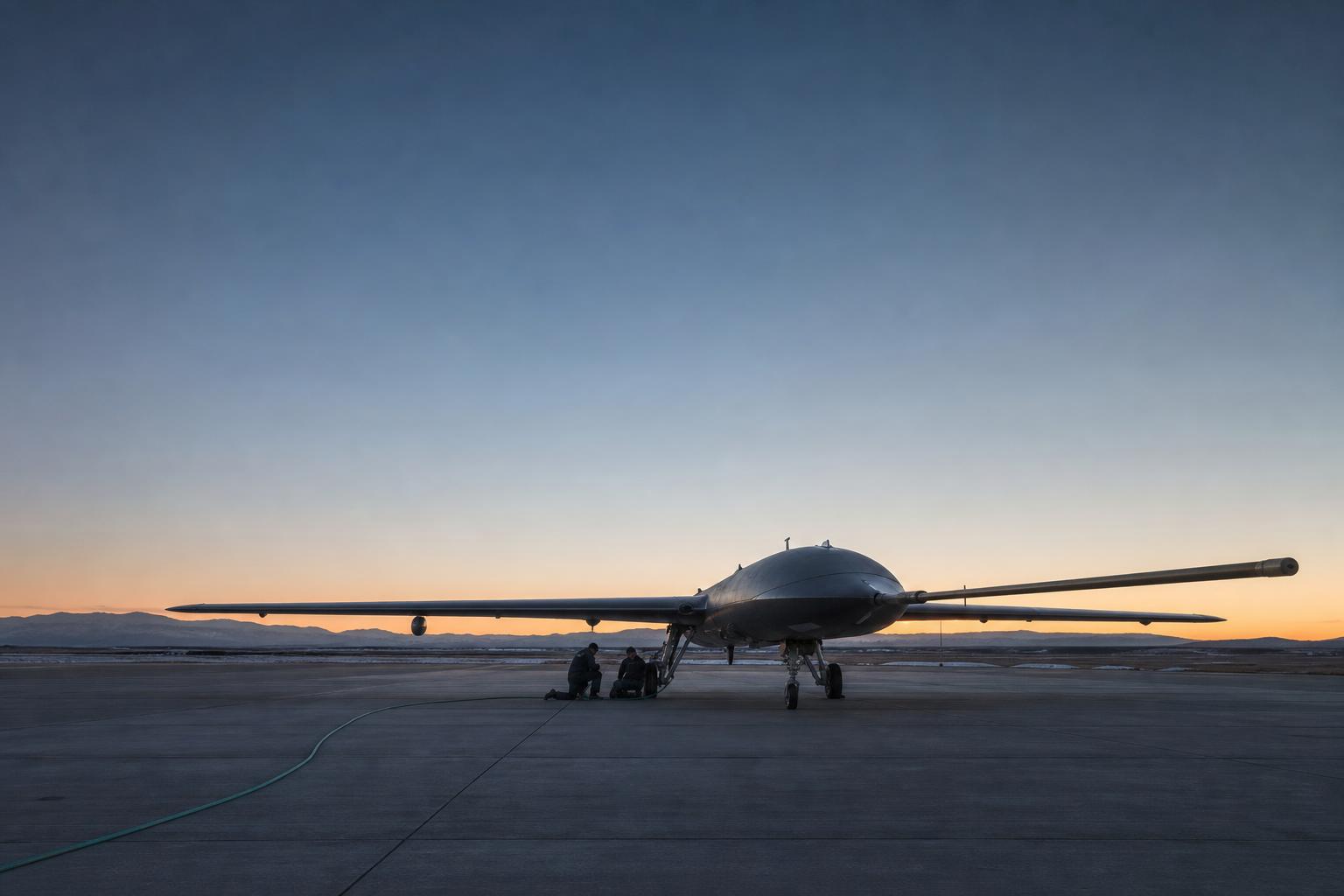
Injecting reflective particles into the stratosphere to cool the planet could run about $10 billion a year, by the estimates researchers have floated for a fleet of high-altitude aircraft. Climate damages already cost the global economy an estimated $38 trillion annually by 2049, according to a 2024 study in Nature. Nobody has approved the aircraft. Nobody has to.
What actually happened
Researchers at UC Santa Cruz, publishing through the university's news office this month, laid out the governance gap behind solar radiation management: the technology to dim incoming sunlight is closer to feasible than the rules for deciding who authorizes it. The most-discussed method, stratospheric aerosol injection, would disperse sulfate particles roughly 20 kilometers up to reflect a fraction of sunlight back to space, mimicking the cooling effect volcanic eruptions produce naturally.
Mount Pinatubo's 1991 eruption dropped global temperatures by about 0.5°C for roughly a year, the reference case scientists cite most often. That event released an estimated 20 million tonnes of sulfur dioxide. Engineered programs would need sustained, repeated injections, not a one-off blast, to hold any cooling in place.
No international treaty governs who can attempt this. No UN body has authority to approve or block a national program. The 2010 Convention on Biological Diversity issued a non-binding moratorium on geoengineering field experiments, and it has no enforcement mechanism. A single wealthy government, or a well-funded private venture, could in principle launch a program without asking permission from anyone downwind.
Who pays, who gains
The arithmetic favors the interveners over the affected. A country or coalition that funds an aerosol program bears roughly $10 billion a year, by Harvard-linked estimates for a Pinatubo-scale deployment, a figure far below the trillions in annual climate damage the intervention targets. That asymmetry is exactly why governance matters: the cost of acting unilaterally is low enough that one actor could do it alone, while the consequences land on everyone.
Modeling published in Nature Climate Change and elsewhere shows aerosol injection could shift monsoon patterns across South Asia and reduce rainfall in parts of the Sahel. The people affected by those shifts would not be the ones who funded the intervention, and would have had no vote in deploying it. That is the incidence problem underneath the technology: the payer and the harmed party are rarely the same government, or even the same hemisphere.
Insurers and agricultural economies in monsoon-dependent regions carry the downside risk without carrying any of the decision rights. A rice-producing province in India or Bangladesh has no seat at a table that, right now, does not exist.
The mechanism
Solar geoengineering doesn't remove carbon dioxide from the atmosphere. It masks the warming carbon dioxide causes, by reflecting sunlight before it reaches the surface. That distinction matters for what happens if the program stops. Carbon dioxide accumulated over decades stays in the atmosphere for centuries. Reflective aerosols wash out of the stratosphere within one to three years.
If a deployment program halted abruptly — for political, financial, or military reasons — the masked warming would reassert itself over a handful of years rather than the century-plus timescale of gradual emissions reduction. Researchers call this "termination shock." A country that starts an aerosol program effectively commits itself, or the world, to sustaining it indefinitely, because stopping produces a faster temperature swing than the original warming did.
The other underappreciated mechanism is that aerosol injection treats the symptom that's easiest to measure — global mean temperature — while leaving the causes it doesn't touch untouched. Ocean acidification continues unabated, because it's driven by dissolved carbon dioxide, not by incoming sunlight. A cooled atmosphere sitting above an increasingly acidic ocean is not the same planet as one that never warmed.
Under the "who gets to decide" question the UC Santa Cruz researchers raised, the honest answer is: whoever has $10 billion and a fleet of aircraft, absent a binding international framework. The 2013 UN Environment Programme review of geoengineering governance recommended stronger multilateral oversight. It has not been adopted by any binding treaty since.
What happens next
Watch for national research programs rather than deployment announcements. The U.S. National Academies of Sciences recommended in 2021 that Washington fund a research program of $100 million to $200 million over five years to study solar geoengineering risks, not to deploy it. China and the European Union have smaller, less publicized research tracks. None of these amount to authorization to deploy.
The falsifiable marker to track is whether any government moves from research funding to an actual stratospheric injection test above a threshold that affects regional weather — as opposed to small-scale, contained experiments like the Harvard-led SCoPEx project, which was cancelled in 2024 after community objections in Sweden. If a state or a private entity crosses that line without multilateral sign-off, the governance vacuum stops being theoretical.
Also watch insurance and reinsurance markets. If a major reinsurer begins pricing "termination shock" risk into agricultural or coastal policies, that is the market's way of saying it now views unilateral geoengineering as a real, not hypothetical, exposure.
FAQ
Is anyone currently doing this at scale? No. Field experiments have been small and contained. The SCoPEx project, the most advanced U.S.-linked test, was cancelled before reaching deployment scale. No government currently runs an operational stratospheric injection program.
Could a single country really do this alone? Technically, yes. The aircraft and sulfate technology are not exotic. The barrier is political and diplomatic, not engineering. That is precisely the governance gap researchers are flagging.
Does cooling the planet fix ocean acidification or sea-level rise? No. Those are driven by accumulated carbon dioxide directly, not by how much sunlight reaches the surface. Aerosol injection addresses temperature only, leaving the underlying chemistry of the ocean unchanged, and the bill for that damage still comes due.