Four hours of batteries rewired the evening market
Grid storage stopped being a demo. In sunny markets it now sets the price of the evening.
By The Ledger · · 2 min read
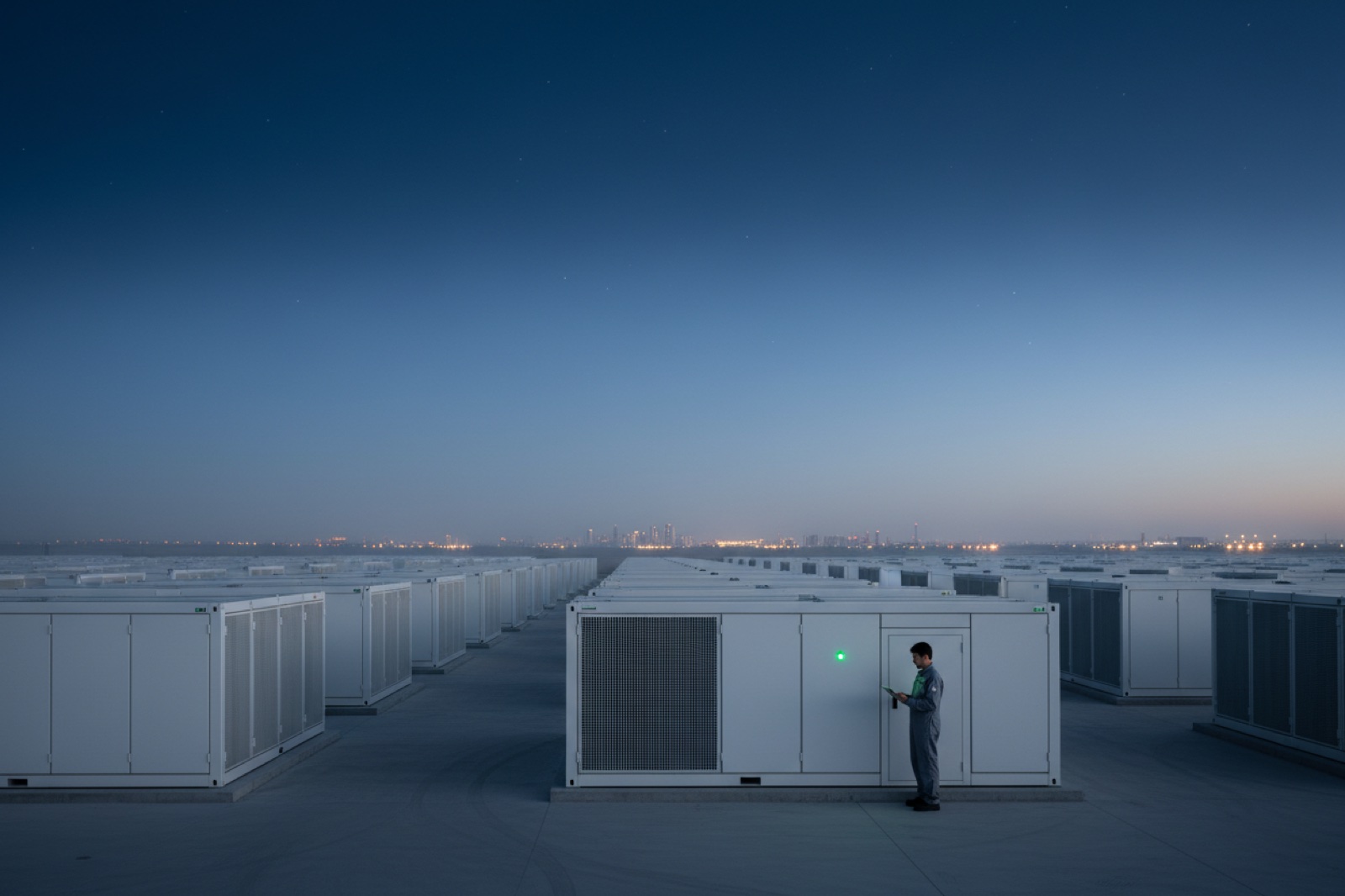
The most interesting hours in electricity are the two after sunset. Solar leaves, demand stays, and for years the gap belonged to gas plants that charged accordingly. In the sunniest markets, four-hour batteries now bid into that gap at scale — and the evening price curve has begun to flatten.
What actually happened
Battery costs fell along the same learning curve that made solar cheap, roughly halving and halving again over a decade. Grid-scale storage went from novelty to, in several markets, the largest new source of evening capacity. The business is elegantly simple: buy the afternoon's surplus sun at near-zero prices, sell it back at dinner.
Who pays, who gains
The arbitrage narrows itself: every battery that joins compresses the very spread it feeds on. Consumers gain twice — cheaper evenings, and fewer payments to peaker plants that ran a few hundred hours a year at extraordinary rates. The losers are those peakers, whose business model was scarcity itself.
The mechanism
Four hours is the economic sweet spot because the evening ramp is a four-hour problem. Longer storage — the cloudy week, the windless fortnight — remains expensive and mostly unsolved; batteries move energy within a day, not across seasons. That is why storage complements rather than replaces transmission and firm capacity: each solves a different duration.
What happens next
Watch the duration creep — six and eight-hour projects pencilling out as cells cheapen — and watch grid operators redesign markets built for fuel-burning logic. The constraint nobody mentions: interconnection queues apply to batteries too, and the queue is longer than the manufacturing lead time. The hardware learned faster than the paperwork.