Indigenous land holds carbon. Who pays to keep it there?
Indigenous territories hold 36% of intact forest globally. Malaysia's new pitch tests who funds their upkeep.
By The Ledger · · 6 min read
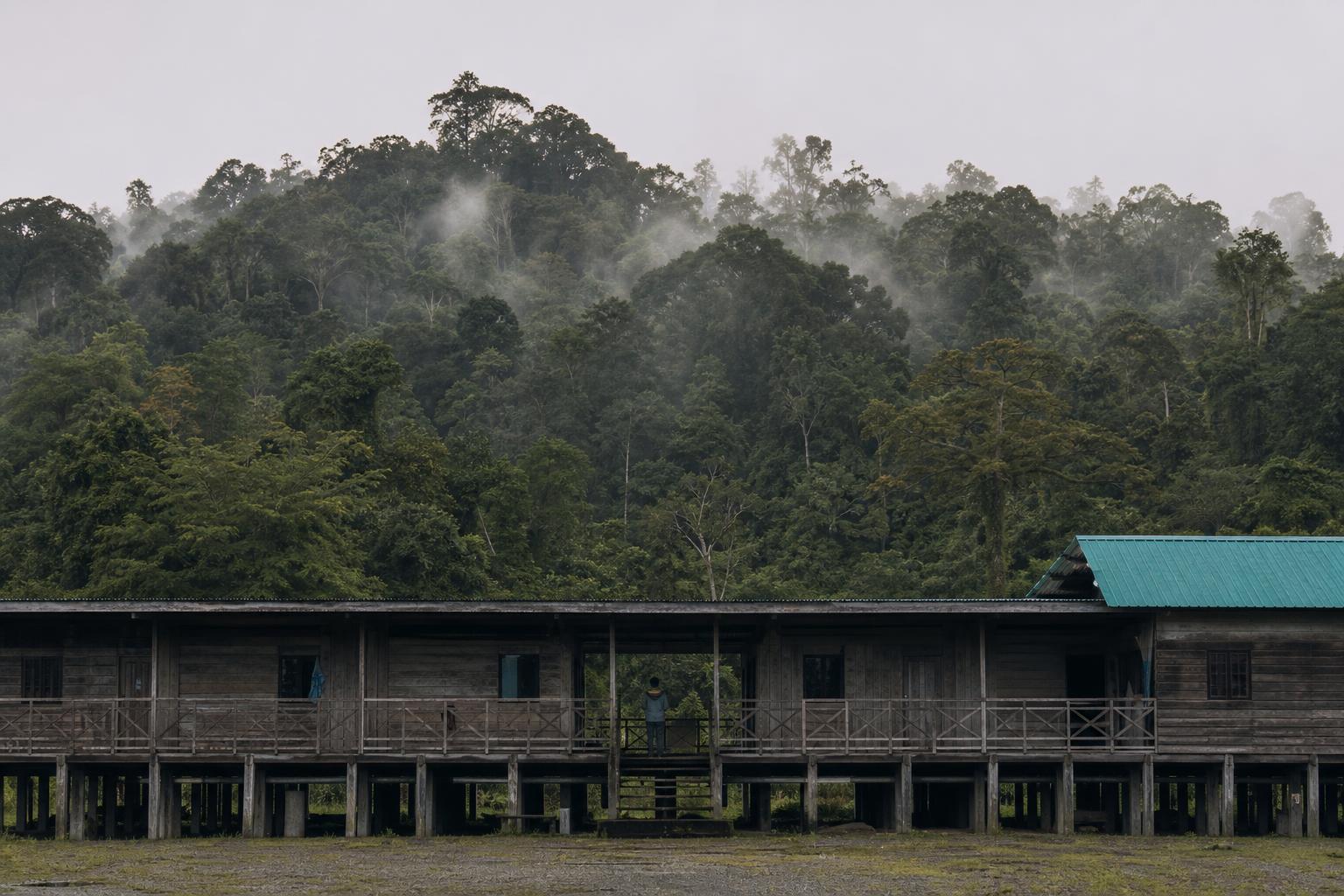
Indigenous and tribal territories hold roughly 36% of the world's remaining intact forest landscapes, according to a 2021 World Resources Institute analysis of satellite data. Malaysia's environment minister this week proposed folding these communities into national climate strategy, alongside AI monitoring tools. The proposal contains no budget line.
What actually happened
Malaysia's Natural Resources and Environmental Sustainability Minister called for "innovation, AI, and Indigenous community partnership" in climate response, according to a report carried by The Star on 21 November. No new funding was announced. No agency was named to administer payments to Indigenous groups for land stewardship. The statement joins a pattern visible across at least three other items in this week's climate news cycle: a design conference keynote on adaptive building, a Nigerian NGO launching a desertification programme, and BRICS officials meeting in New Delhi to discuss climate finance priorities without a public accounting of who funds what.
The pattern matters more than any single announcement. Intact forest landscapes—continuous stretches of forest without visible signs of human disturbance—are shrinking globally. The University of Maryland's Global Forest Watch recorded 3.7 million hectares of primary tropical forest loss in 2023 alone. Where Indigenous land tenure is legally recognised, deforestation rates run measurably lower. A 2020 study in Nature Sustainability, covering the Brazilian Amazon, found deforestation rates on titled Indigenous land were roughly 66% lower than on comparable land without formal tenure.
Malaysia's proposal doesn't include tenure reform. It calls for "partnership," a word that in Malaysian and Indonesian forestry policy has historically preceded consultation processes rather than binding land rights. Peninsular Malaysia's Orang Asli communities, who number roughly 210,000 according to the Department of Orang Asli Development's 2020 census, have petitioned for stronger land recognition since at least the 2013 landmark Federal Court ruling in favour of native customary rights—a ruling still unevenly enforced across states.
Who pays, who gains
Nobody has committed money yet, which is the story. Global climate finance flowing directly to Indigenous and local communities totalled roughly $517 million per year between 2011 and 2020, according to Rainforest Foundation Norway's 2021 tracking report. That sounds substantial until set against total global climate finance flows, which the Climate Policy Initiative estimated at $1.3 trillion in 2021-2022. Indigenous-led initiatives received under 1% of that total, despite managing land that stores an estimated 253 gigatonnes of carbon, per WRI's 2021 figures—comparable to 30 years of current global fossil fuel emissions.
If Malaysia's proposal produces actual disbursement, the likely mechanism is a results-based payment scheme, similar to REDD+ carbon credit structures already operating in Sabah and Sarawak. Those schemes pay per verified tonne of carbon retained, typically $5 to $15 per tonne in voluntary markets as of 2023 pricing data from Ecosystem Marketplace. On that scale, a forest block sequestering 50,000 tonnes annually generates $250,000 to $750,000 a year—split among verification costs, government administration, and the communities managing the land. Community shares in existing Southeast Asian REDD+ projects have run as low as 20% of gross payments after intermediary fees, according to a 2019 CIFOR review of Indonesian schemes.
The AI component adds a separate cost. Satellite-based deforestation monitoring systems, such as those built on Global Forest Watch's infrastructure, cost implementing governments and NGOs an estimated $2 to $5 per hectare monitored annually, based on published World Bank forest-monitoring project budgets from Indonesia and Peru. For Malaysia's roughly 18.3 million hectares of forest cover, reported by the Forestry Department in 2022, comprehensive AI monitoring would run into tens of millions of ringgit yearly—money that competes directly with the modest sums earmarked for community payments.
The mechanism
Carbon stored in intact forest only counts, financially, if someone can verify it stayed there. That verification is where AI enters, and where the incentives get complicated.
Satellite monitoring can detect canopy loss within days using systems like Planet Labs' daily imagery or the University of Maryland's GLAD alert system. This solves a genuine measurement problem: older monitoring relied on periodic ground surveys, often years apart, that missed illegal logging until it was complete. Real-time detection lets funders pay for outcomes rather than promises.
But verification systems need an owner, and ownership determines who captures the payment. If a government forestry department runs the monitoring, it typically retains administrative control over disbursement, and Indigenous communities become monitored subjects rather than paid partners. If monitoring data is co-managed with community groups—a model tested in Peru's Amazon under agreements documented by the Forest Peoples Programme—communities gain leverage to demand a larger payment share, because they can independently verify their own compliance.
Malaysia's minister did not specify which model applies. That single unspecified detail decides whether "partnership" means a funding stream or an oversight regime. The distinction has already played out badly elsewhere: Indonesia's early REDD+ pilots, evaluated by CIFOR between 2013 and 2018, found that projects designed without community co-management of monitoring data saw lower community buy-in and higher reported land-use conflicts, compared with projects that shared verification authority from the start.
There is also a currency problem. Carbon credit prices are volatile and buyer-dependent. Voluntary carbon market prices fell from an average of $7.40 per tonne in 2021 to roughly $4.20 per tonne by mid-2023, according to Ecosystem Marketplace data, following high-profile investigations into credit quality by outlets including The Guardian and Die Zeit. A funding model built on carbon credit sales exposes Indigenous communities to a price they don't set and can't hedge—the same structural problem facing any commodity producer without pricing power.
What happens next
Watch for three concrete markers over the next twelve months. First, whether Malaysia's environment ministry publishes a specific budget allocation tied to this proposal, rather than a policy statement alone—Budget 2026, tabled in October, contained no line item for Indigenous climate partnerships as of publication. Second, whether any resulting monitoring agreement grants communities co-access to satellite verification data, rather than reporting results to them after the fact. Third, whether payment structures reference a fixed price per tonne or a market-linked one, since the latter transfers carbon market volatility directly onto communities with the least capacity to absorb it.
If none of these markers appear within a year, the proposal will have functioned as most prior "partnership" announcements have: a statement of alignment with global climate rhetoric, not a transfer of money or authority.
FAQ
Does Indigenous land actually store more carbon than other managed forest?
Per hectare, intact Indigenous-managed forest often matches or exceeds carbon density in other protected areas, because lower disturbance rates mean less canopy loss and soil carbon release. WRI's 2021 analysis found comparable or better carbon retention on Indigenous lands versus non-Indigenous protected areas across multiple countries studied.
Why hasn't more climate finance already gone to Indigenous communities directly?
Most climate finance flows through national governments or large multilateral funds, which then subcontract implementation. Rainforest Foundation Norway's tracking found administrative and verification costs frequently consume 40% or more of nominal funding before it reaches community level.
Is carbon credit income reliable for communities that depend on it?
Not currently. Voluntary carbon prices swung by more than 40% between 2021 and 2023 according to Ecosystem Marketplace, and credit quality scandals have periodically frozen buyer demand entirely, leaving committed sellers without revenue for months at a time.