Nepal’s flood bill is $5bn. Its economy is $50bn.
Nepal faces flood damage worth a tenth of its GDP, while wealthy nations spend on wildfire insurance instead.
By The Ledger · · 5 min read
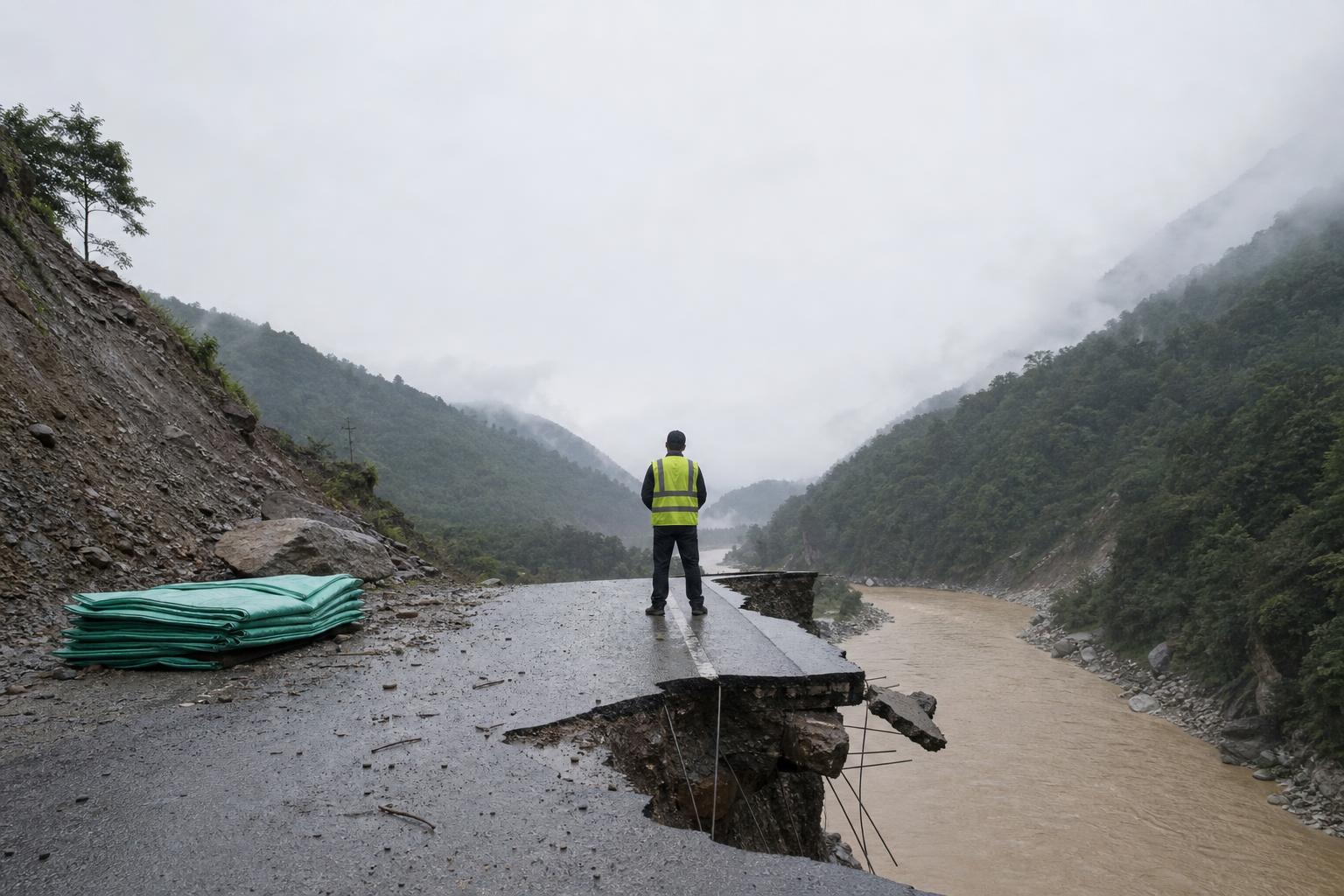
Nepal's floods have killed more than 750 people this year, with thousands still missing. Rebuilding the damage could cost up to $5bn — close to a tenth of the country's entire economy. The UK spent roughly £100m ($126m) preparing for wildfires it did not lose a tenth of its GDP to.
Both countries faced climate disasters in 2026. Neither faced the same bill, relative to what they have.
The same hazard, two different balance sheets
France scrambled tax breaks, relocation funds and rebuilding aid for wildfire-hit businesses this summer. The UK had already committed close to £100m before its fire season started, aimed at resilience rather than recovery. These are the moves of governments with fiscal room and functioning insurance markets behind them.
In the US, wildfire insurers now price risk using AI models that read location and construction material and output a premium. That is not a luxury. It is what happens when an economy has enough surplus capital to build a pricing industry around a risk, rather than simply absorbing the loss when it lands.
Nepal has no equivalent buffer. Its estimated flood-rebuilding bill of $5bn does not include the foreign technical assistance, equipment and labour the country will also need to import, because it lacks the domestic capacity to do the rebuilding itself. Nepal's GDP was estimated at roughly $50bn in recent years. A $5bn bill is not a line item. It is a decade of growth, gone in one flood season.
Who pays: the coastline pays twice
The Caribbean shows the mechanism most clearly, because two separate cost centres are stacking on the same coastline. Coral reefs across the region are dying from ocean acidification and warmer water. That is a direct hit to income: in Jamaica, roughly 90% of economic activity runs through coastal industries — tourism, fishing, shipping — that depend on reefs staying alive.
But reefs also do a second job nobody prices until it is gone. They absorb wave energy before it reaches shore, acting as a physical buffer against storm surge. Kill the reef, and the same hurricane hits harder, because the natural barrier that used to blunt it is gone. Warmer ocean water also strengthens the hurricanes themselves. The result is a country losing income and taking bigger structural hits from storms, at the same time, from the same underlying cause.
That is the asymmetry in one sentence: rich countries pay to prepare, poor countries pay to recover, and some poor countries pay a second bill in lost natural infrastructure that never shows up on a national accounts spreadsheet.
750 deaths in Nepal, and a different arithmetic in India
Heat delivers its own version of the split. A single day of extreme heat in India has been estimated to cause roughly 3,400 excess deaths. Five consecutive days of extreme heat push that toward 30,000 deaths, according to recent mortality estimates. In April, all 50 of the world's hottest recorded cities on a single tracked list were in India — a concentration air-quality analysts say has no precedent in the modern weather record.
Heat mortality at that scale is not primarily a temperature story. It is an access story. Households with reliable electricity, working air conditioning and unlimited clean water survive heat waves that kill households without those three things. The heat is the same. The infrastructure underneath it is not.
The buffer is capital, and capital is the whole mechanism
Strip away the geography and the pattern is simple. Climate breakdown produces physical events — floods, fires, heat, storms — at increasing frequency almost everywhere. What varies by country is not the hazard. It is the stock of capital available to convert that hazard into a manageable cost rather than a catastrophic one.
Rich countries convert hazard into cost through several channels at once: insurance markets that spread the loss across millions of policyholders, government reserves that fund rapid relief, and physical infrastructure — sea walls, cooling networks, early-warning systems — built in advance rather than after. Every one of those channels requires capital sitting idle, waiting to be deployed. That idle capital is what a wealthy economy has and a country like Nepal does not.
Without that buffer, a disaster does not get spread across time and across a population. It lands all at once, on the people who happened to be in its path, in a country that then has to divert years of development spending toward rebuilding instead of growing. The $5bn Nepal needs is not just a repair bill. It is $5bn that will not go toward schools, roads or hospitals for years, because it has been redirected toward putting back what already existed.
What happens next, and how to check it
Watch three numbers over the next 18 months. First, how much of Nepal's $5bn rebuilding estimate is actually financed, and by whom — domestic budget, multilateral loans, or bilateral aid — because the financing mix determines whether the country takes on new debt to recover from a disaster it did not cause. Second, whether Caribbean nations see any measurable slowdown in coral-reef-linked income, since a continued decline would confirm the double-hit mechanism rather than leave it as a plausible story. Third, whether India's heat-mortality estimates for the next hot season come in above or below this year's, which will show whether cooling infrastructure investment is closing the gap or falling further behind population growth in exposed cities.
None of those three numbers will be argued over ideologically. They will simply be reported, or not. The countries with the resources to measure and publish them are, by definition, the ones least affected by the thing being measured. The people paying the bill are, for now, the ones least equipped to send the invoice.