Nevada’s lawsuit is about 70%, not 20%
Nevada sued over Colorado River cuts after federal plan spared upper-basin states any mandatory reduction.
By The Ledger · · 5 min read
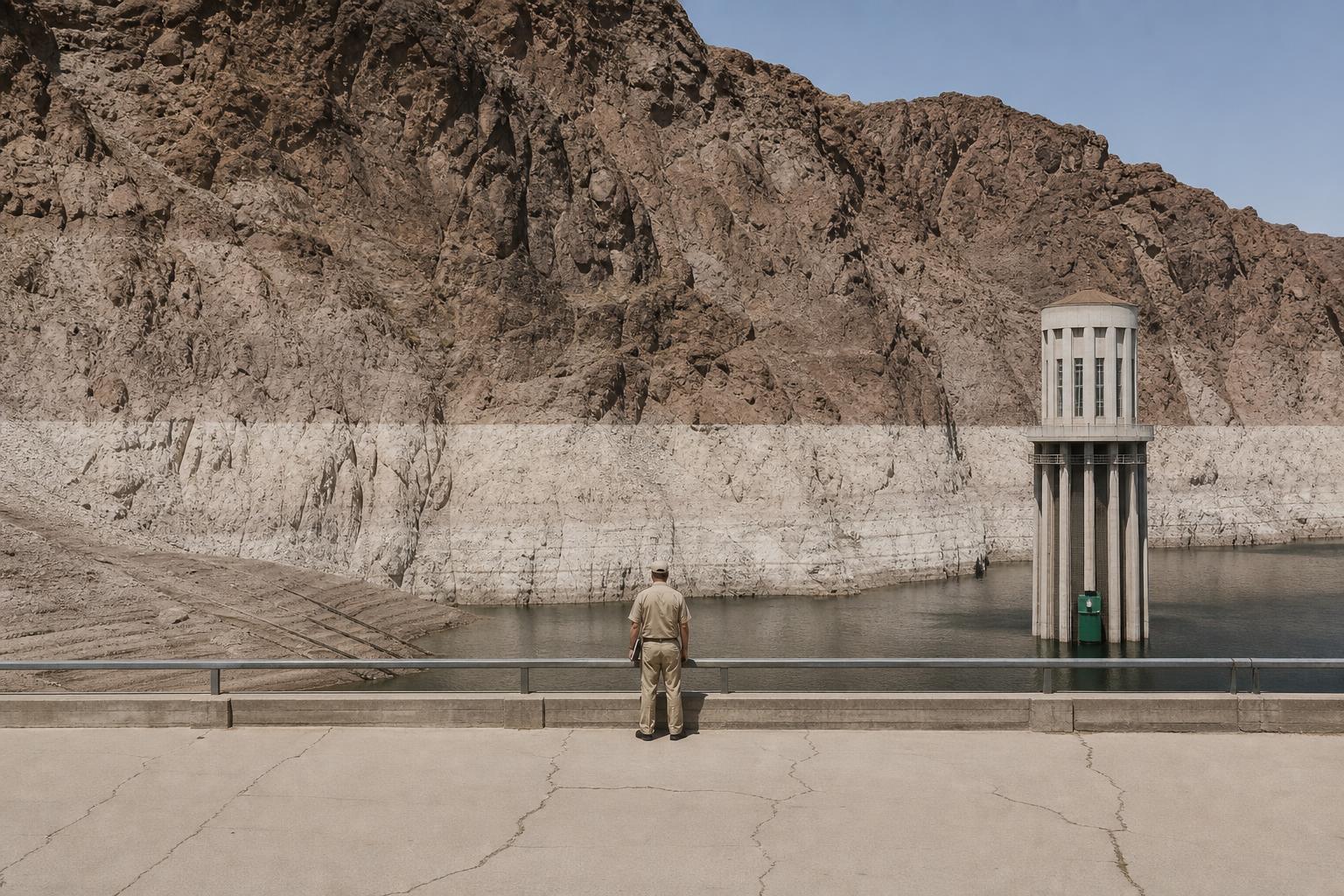
Southern Nevada stands to lose more than 70% of its Colorado River allocation under a federal plan issued August 21, 2026. Nevada, Arizona and California together face roughly 20% cuts on average. The gap between those two figures is the entire lawsuit.
Nevada filed suit Monday in US district court against the Department of the Interior and the Bureau of Reclamation. The Colorado River Commission of Nevada and the Southern Nevada Water Authority joined as plaintiffs. Three days separated the plan's release from the legal challenge.
The 20% figure is an average. The 70% figure is a specific state's exposure.
The federal framework cuts water supplied to the three lower-basin states — Nevada, Arizona and California — by about 20% over the next two years, with room for deeper cuts depending on reservoir conditions. That average masks how unevenly the reduction lands. Nevada's governor, Joe Lombardo, put Southern Nevada's loss above 70% of its share.
Nevada already receives the smallest legal entitlement of the seven states that draw from the river. A large percentage cut to a small baseline allocation produces an outsized reduction for the state with the least room to absorb one. Arizona and California, with larger entitlements, feel the same 20% differently.
The four upper-basin states — Colorado, Utah, New Mexico and Wyoming — face no mandatory contribution under the plan. Lombardo's statement made that comparison explicit: the upper basin was "not required to contribute a drop."
The river supplies 40 million people. The compact governing it dates to 1922.
The Colorado River supplies water to roughly 40 million people, dozens of tribal nations, and 5.5 million acres of farmland across the American West. The legal architecture dividing that water — the Colorado River Compact — was signed in 1922, before most of the cities now dependent on it existed at their current scale.
That compact split the river into upper and lower basins, each entitled to roughly half the historical flow. It did not anticipate a river that delivers less water than it did a century ago. Long-term overuse and a warming climate have both reduced what the compact assumed would always be there. The states have spent years failing to agree on how to divide a shrinking resource under a framework built for a larger one.
Lake Mead and Lake Powell, the two reservoirs the Bureau of Reclamation operates, sit at the center of the federal government's leverage. Washington cannot force blanket cuts across all seven states. But because Reclamation controls the dams and reservoirs that physically deliver water to the lower basin, it has direct authority over what flows to Nevada, Arizona and California. It has no equivalent lever over the upper basin, which draws from headwaters before the water reaches federal infrastructure.
The upper basin's defense: distance, not innocence.
Upper-basin states have resisted mandatory cuts, arguing they draw from the river's headwaters and bear no responsibility for falling levels at Mead and Powell. Their position is that the lower basin's historical overuse — decades of drawing more than the system could sustainably replace — created the deficit, and the lower basin should absorb the correction.
That argument has some structural logic. The upper basin has never fully used its compact allocation; the lower basin regularly has. But it does not resolve who bears the cost of a river reduced further by drought and heat, conditions the compact's authors never priced in. Rhett Larson, a water law professor at Arizona State University, said before the plan's finalization that the lower basin would soon have "a pretty compelling argument" that the upper basin has not met its delivery obligations under the compact — an obligation triggered specifically when upstream states fail to pass along agreed volumes, regardless of why the river ran short.
Arizona has separately argued in a letter last week that the federal plan itself violates the 1922 compact's terms. That dispute — over whether Washington's authority to allocate lower-basin cuts extends as far as this plan claims — is now a live legal question, not a policy disagreement.
Litigation freezes the river's remaining flexibility.
John Berggren, a regional policy manager at Western Resource Advocates, has warned that court battles over water allocation tend to freeze operational decision-making. Reservoir operators will keep protecting Mead and Powell's basic function. But discretionary measures — environmental flows, ecosystem management, anything beyond keeping the taps running — are typically the first casualties when management passes from water engineers to judges.
That matters because the river's crisis is not static. Reservoir levels respond to snowpack, temperature and demand in real time. A multi-year court case adjudicates a snapshot while conditions keep moving. Nevada's suit could take years to resolve. The federal plan's built-in mechanism for harsher future cuts, based on reservoir conditions, will keep triggering during that time regardless of what the courts eventually decide about the plan's legality.
Who pays while the case proceeds.
Southern Nevada's water authority serves roughly 2.3 million people in the Las Vegas metro area, drawing almost entirely from Lake Mead. A 70% cut to its allocation, if the plan stands, falls on a utility with limited alternative sources — unlike Arizona or California, which have more diversified supply portfolios to cushion a similar percentage reduction. Arizona has signaled it may file its own suit. If both states litigate against Washington, and potentially against each other, the courts — not the seven states' water managers — become the forum deciding who absorbs a river that already delivers less than the century-old paperwork promised. Nevada's ratepayers, and eventually its farmers and industries dependent on Lake Mead deliveries, carry the near-term cost of that delay.