A hostel bed at £40 needs the room to sleep four, not two
Generator plans to convert distressed Novotel and Holiday Inn hotels into bunk-bed hostels without touching the walls.
By The Route · · 5 min read
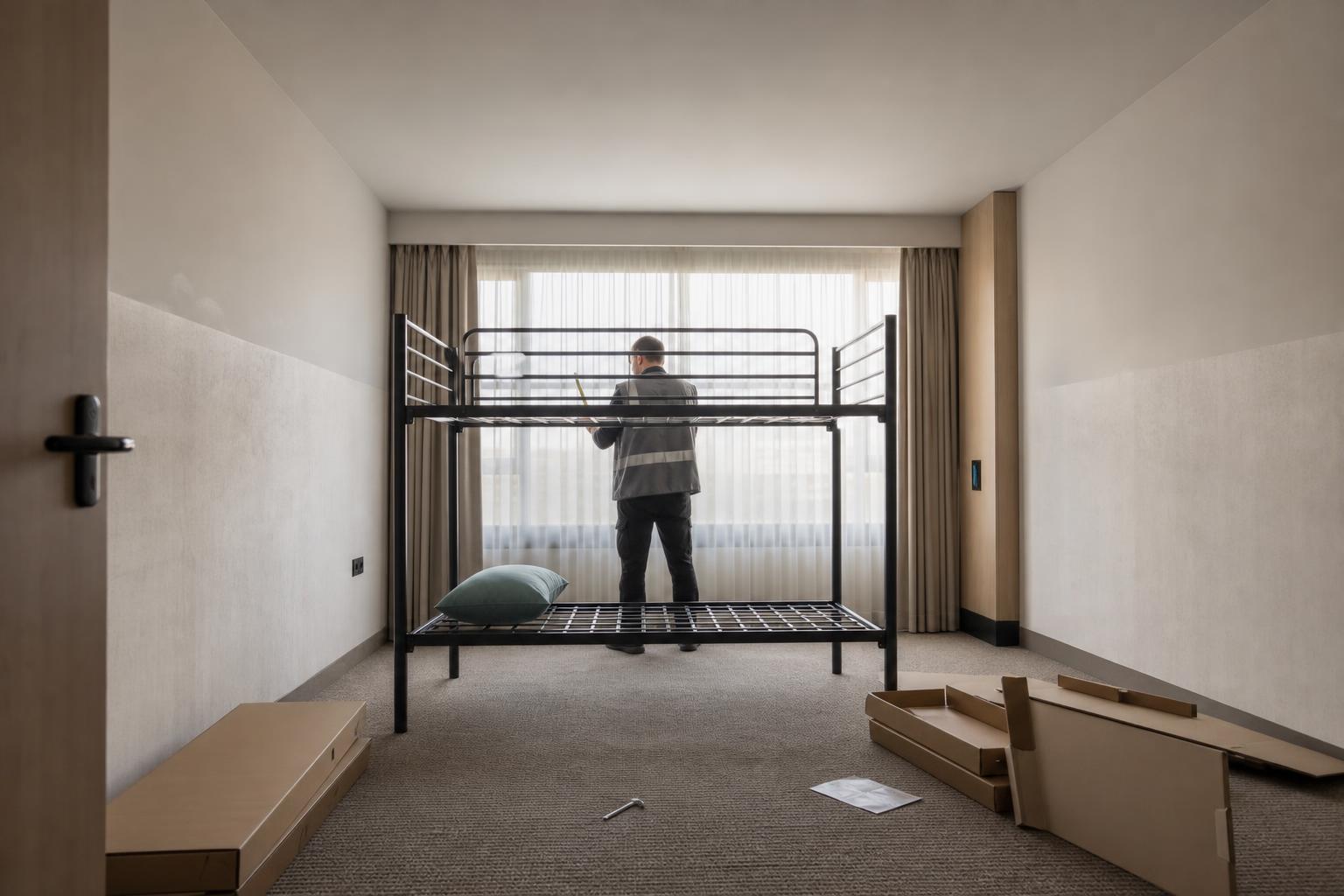
Generator's plan to double its hostel footprint by 2030 doesn't involve building anything. It involves buying four-star hotel rooms that already exist, adding four or five beds to each, and charging roughly £40 (about $51) a bed instead of the £90–£120 ($114–$152) those rooms once fetched as doubles. The arithmetic only works if occupancy holds and the dining rooms downstairs start paying their own way.
Fifteen properties, then thirty — and the units of growth are beds, not buildings
Generator runs 15 hostels across Europe and the Americas. Xavier Mufraggi, appointed chief executive in July, has set a target of doubling that count by 2030 — but the more telling number is what happens inside each property. A standard four-star hotel room built for two becomes a room for four to six once bunk frames go in. A single Novotel with, say, 120 rooms can become a hostel with 500-plus beds. That's the entire thesis: the same square footage, four times the paying heads, at a third of the nightly rate per head. Brookfield Asset Management bought Generator in May 2025 for roughly €776 million ($876 million), and the return on that price depends on this per-room math holding across dozens of conversions, not fifteen.
Why £40 a night is a higher number than it looks
A £40 ($51) hostel bed sounds like the budget end of travel, and against a private hotel room it is. But run the occupancy math and it's a different story. Four beds at £40 each is £160 ($203) a room, before food, bar and event revenue. A Novotel or Holiday Inn selling that same room as a double at, conservatively, £100 ($127) a night needs no extra cleaning, no bunk frames, no additional linen turnover — and it still earns less per room than the converted version at full occupancy. Mufraggi's own target is a revenue-per-available-room figure at least 40% above a standard three- or four-star hotel. The bed price looks cheap to the guest. To the balance sheet, it's the higher-yielding asset — provided the beds fill.
The catch is the beds that don't fill
Hostels live and die on occupancy in a way hotels don't, because the revenue per room scales with heads, not with a flat room rate. A half-empty Novotel double still nets most of its £100 ($127). A half-empty six-bed hostel dorm nets half its £240 ($305) potential and loses the group-booking premium entirely, since hostel guests often book as pairs or larger parties expecting to share a room together. Generator is also inheriting buildings designed around business travellers and airport-adjacent convenience — a Novotel Greenwich, the first conversion underway, was built for conferences and layovers, not for the 20-something rail-and-rooftop crowd Mufraggi is chasing. Converting the shell is cheap. Converting the customer base that used to walk through the door is not something a bunk bed does on its own, and Generator's F&B upsell — rooftop parties, dinners, bar events — has to do that work instead, in a building with no track record of drawing that crowd.
The counter-argument: distressed hotels are cheap because the mid-market is genuinely dying
Mufraggi's own framing supplies the strongest objection to his plan. He says Novotel, Mercure and Holiday Inn-tier hotels are widely available at attractive prices because "everything in between right now is in trouble" — meaning the three- and four-star segment is structurally weak, squeezed between budget chains cutting costs and lifestyle brands capturing the fee-paying young traveller. If that's true, the buildings are cheap for a real reason: demand for exactly this kind of stay, at exactly this price point, has been thinning for years. Buying more of a declining category at a discount is not obviously a growth strategy — it's a bet that the building's location and bones are worth more than its previous business model, stripped of everything that made it a hotel in the first place. Generator is confident the bones are worth it. The prior owners, selling at a discount, were not.
Where the beds get sold: along the rail line, not the flight path
Generator's expansion map follows Europe's high-speed rail corridors rather than airline hubs, with an eye toward multi-city passes and partnerships floated with Interrail, Eurostar and Lime. That's a deliberate break from the airport-hotel logic of a Novotel, whose value was often proximity to a terminal. A converted Novotel that sat well for business travellers landing at an airport needs to instead sit well for someone arriving by train with a rail pass and three more cities on the itinerary. The company is also holding off on franchising and global expansion, preferring to own the assets and run them under management contracts — a slower, costlier route that keeps Generator in control of pricing and guest experience but means Brookfield's return depends on execution across every single conversion, not on licensing fees from partners doing the work.
What the number does next
The next test isn't the CEO's PR line about matching Hoxton or Moxy on style. It's whether the Novotel Greenwich conversion, once open, actually clears that 40%-higher-RevPAR bar against what the same rooms earned as a business hotel — and whether it does so across a full year, including the months when a rail-corridor hostel network built for gap-year travellers and interrailers sees its beds empty. A hostel selling bunks to backpackers between May and September, when Interrail season peaks and Europe's summer crowds are already stretching hotel capacity elsewhere, is a different business from the same building in February, competing for a much thinner pool of winter travellers against hotels that can still discount a double down to nearly hostel-bed money. Generator's bet is that the F&B and events revenue smooths that seasonality out. Nobody has run this model at scale yet to say whether it does.