Delta’s fuel bill grew $6 billion. Your fare didn’t move yet.
Delta cut its 2026 profit forecast by nearly 30% after jet fuel hit $4.50 a gallon.
By The Route · · 4 min read
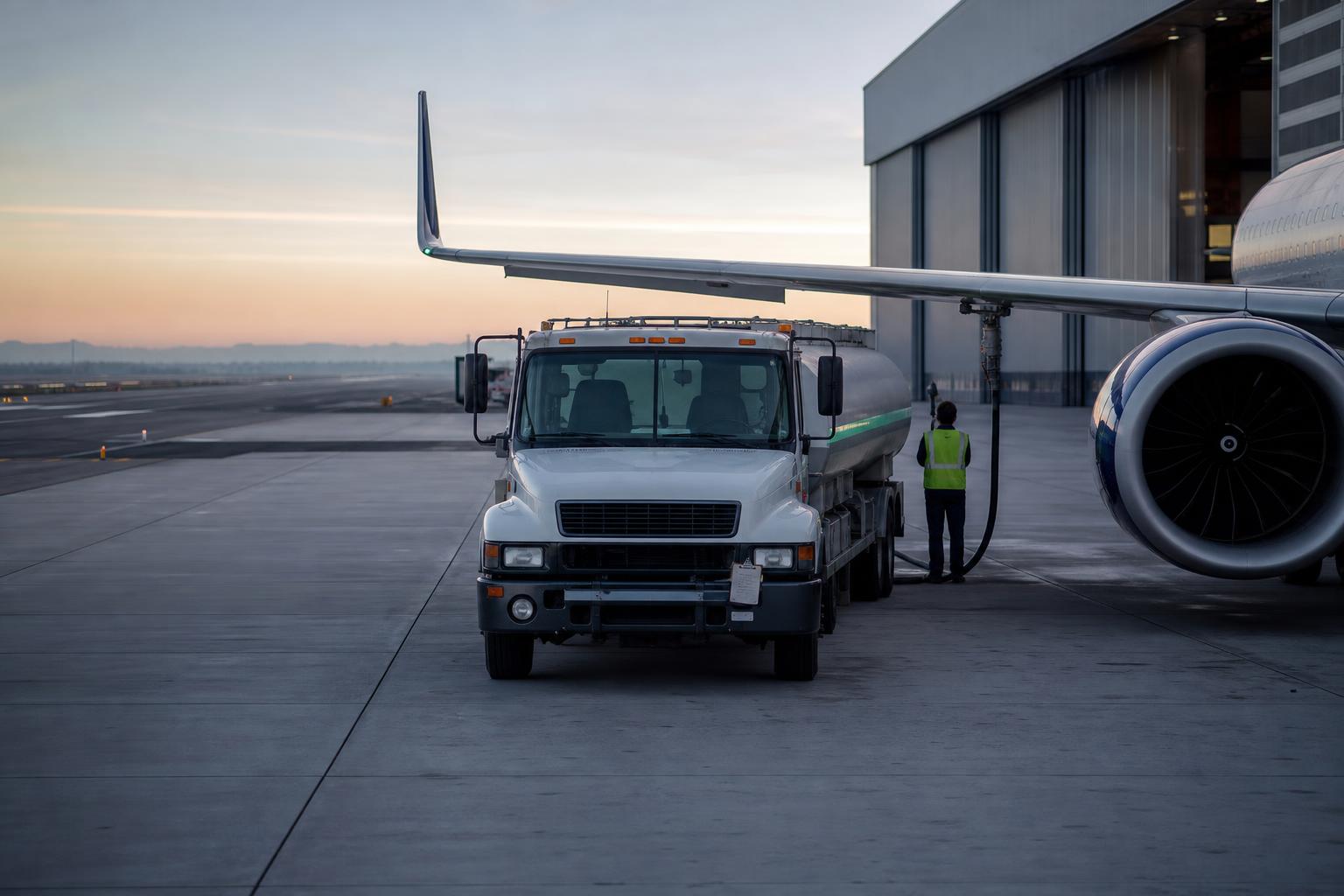
Delta Air Lines made money in the third quarter of 2026. It is still cutting its profit forecast for next year by close to 30 percent, because jet fuel averaged $4.50 a gallon this week and the airline now expects to pay $6 billion more for it than it had planned. Earnings per share, once guided at $6.50 to $7.50, now sit at $5.10 to $5.60. Nobody at the airline is calling this a crisis. That is worth noticing on its own.
A flight attendant's bonus check was already spent before this news
Delta's profit-sharing program pays employees a cut of the airline's annual income, and the company has already set aside $900 million for 2027 payouts — money accrued, not yet distributed, sitting on the books as a promise. For a Delta flight attendant or ramp worker, that number is the one that matters more than an analyst's EPS revision. The profit-sharing pool is calculated off actual earnings, and if 2026's bottom line comes in lower because fuel costs more, the pool employees are counting on for 2027 could shrink too, even though the $900 million already booked for the following year is a separate, earlier commitment. The airline is not telling staff their bonus is at risk. It is telling investors its margins are thinner. Those are the same sentence, read by two different audiences who will hear it differently.
Fuel has always been the one cost an airline can't hedge away completely
Jet fuel typically runs 20 to 25 percent of a major US carrier's operating costs, behind only labor, and it is the line item airlines have the least control over. Airlines buy fuel hedges — financial contracts that lock in a price — to soften swings, but hedges cover only a portion of consumption and cost money themselves, whether or not fuel prices move against you. When crude prices climb, as they have through much of 2026, the hedge cushions some of the blow and the rest lands straight on the income statement. Delta's $6 billion figure is the unhedged remainder: the part no contract caught.
This is not new. Delta has absorbed fuel shocks before, including the 2008 spike that pushed it into merger talks with Northwest, and the 2022 run-up tied to the war in Ukraine that forced similar guidance cuts across the industry. What's different this time is the starting position: Delta entered 2026 profitable, with enough cash flow to keep funding profit-sharing even while lowering guidance. A decade ago, a shock this size would have meant furloughs discussed in the same earnings call. This time, the call was about forecast math, not survival.
The catch
The catch is that lowering a profit forecast is not the same as lowering a fare, and it rarely works that way in sequence. Airlines facing higher fuel costs do eventually pass some of it to ticket prices, but not on a one-to-one basis, and not immediately — competitive pressure on popular routes keeps fares sticky in the short term even when costs rise. What moves faster is capacity: airlines trim unprofitable routes, swap larger aircraft for smaller ones on routes with softening demand, and slow fleet renewal, all of which show up months later as fewer seat options and less schedule flexibility, not a line item a passenger can point to. The $6 billion gets absorbed quietly, through decisions that look unrelated to fuel by the time a traveler notices them. Delta's CFO, Erik Snell, framed this as cost absorption rather than cost-passing — a choice the airline can afford this year because the third quarter was profitable enough to cushion it. That cushion is not permanent. If fuel stays near $4.50 a gallon through 2027, the airline that chose to absorb the cost this year may not choose the same thing twice.
The open question
Nobody knows whether $4.50 jet fuel is a spike or a new baseline. Delta's guidance assumes elevated prices persist through 2026, but the forecast itself will move again if crude prices move — this is a snapshot of October's assumptions, not a fixed number. The honest answer is that the airline is pricing in uncertainty it cannot resolve, and so is everyone buying a ticket for next summer.
Will my ticket price go up because of this?
Not directly or immediately — fare increases from fuel costs tend to show up gradually, through fewer discount fares and schedule changes, rather than as an instant surcharge.
Is Delta's profit-sharing program at risk for 2026?
The $900 million already accrued for 2027 is locked in, but the size of future payouts depends on earnings that just got revised downward.