Alaska sells Breeze tickets it cannot combine with its own
Alaska’s Breeze interline covers only Charleston, Las Vegas and Raleigh — no joint fares, no shared elite perks yet.
By The Route · · 5 min read
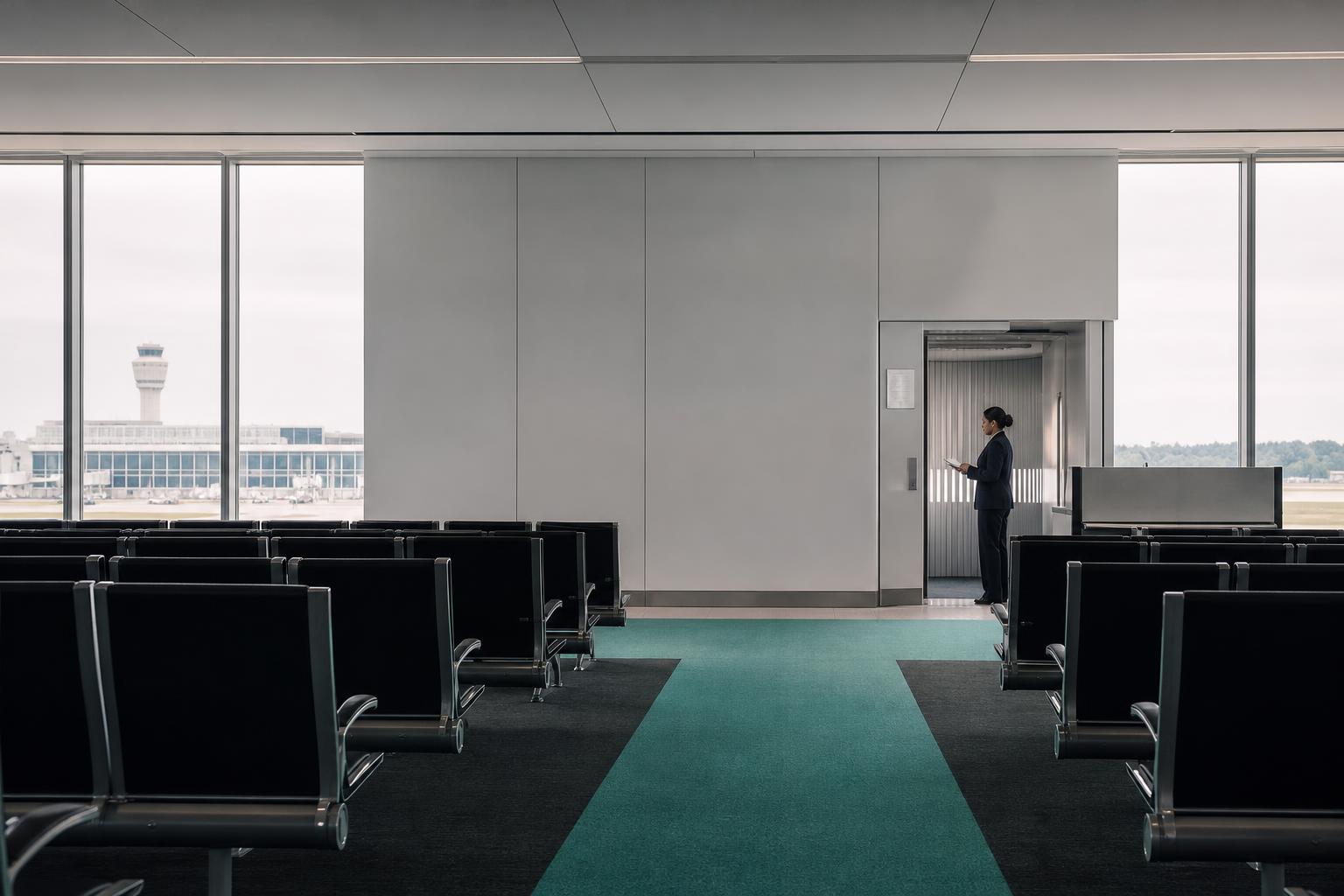
Alaska Airlines has started selling Breeze Airways tickets through its own site, but the two carriers' flights cannot be combined into a single itinerary, Atmos Rewards points cannot buy a Breeze seat, and Breeze does not sell Alaska flights back. It is a sales channel, not a network. The test covers exactly three airports — Charleston, Las Vegas and Raleigh-Durham — and only on routes Alaska does not already fly.
A traveler in Raleigh gains a seat map. Nothing else changes yet.
Picture someone in Raleigh-Durham who flies Alaska twice a year, always west, always transcontinental, and has 40,000 Atmos miles sitting unused. Before this month, Alaska's own schedule from RDU went to Seattle and San Diego and stopped there. Now that same traveler can open Alaska's booking engine and buy a Breeze flight to one of the 40 cities Breeze serves from Raleigh — Hartford, Providence, Norfolk, dozens more — and earn Atmos points on the purchase, since Alaska issues the ticket under its own 027 ticket-number prefix.
What that traveler cannot do is build one itinerary: Raleigh to Seattle on Alaska, then a connecting Breeze hop onward, booked and protected as a single trip. If the Alaska leg runs late, Breeze owes nothing. If the traveler wants to redeem points instead of paying cash, Breeze is not on the list of redeemable carriers. The two fare systems do not talk to each other yet — Cranky Flier, which first reported the test, found different prices and different fare rules quoted for the same flight depending on which airline's page you were on.
Alaska built an interstate, not a street grid
Alaska Airlines was founded in the territory of Alaska in 1932 and took its modern shape after the 1978 deregulation of US air travel, when it expanded down the West Coast and became the dominant carrier in Seattle, Portland and California. That geography defined the airline for four decades: a network built to move people north-south along the Pacific coast and, increasingly, coast-to-coast on long nonstops to the East.
The result, by its own account, is more than 70 daily nonstops linking six West Coast cities to 11 East Coast airports. That is a wide, well-used interstate highway. It is not a street grid. None of those 11 East Coast airports connect to each other on Alaska metal, and none reach the smaller East Coast markets that have grown fastest in the last three years — places like Charleston, which gained point-to-point service precisely because larger carriers treated it as a spoke, not a hub. Breeze, founded in 2021 around exactly that gap, now advertises more than 90 cities and reached Raleigh-Durham with 40 destinations by May, more than any other airline there.
The catch: Breeze gets a sales channel, Alaska gets a data experiment
The honest read on this deal is that it costs Alaska almost nothing and promises it almost nothing. There is no capital outlay, no new aircraft, no slot negotiation — just a software interline agreement and a page on Alaska's partner site. What Alaska buys for that low cost is a cheap test of a real question: will Atmos members, who are disproportionately loyal to Alaska's own metal, actually click through to buy a budget carrier's ticket for points they still have to pay cash for? If they will, Alaska has found a low-cost way to look relevant in East Coast markets it has no near-term plan to fly itself. If they won't, Alaska has lost nothing. Breeze, for its part, gets exposure to Atmos's loyalty base and a shot at point-to-point customers it would otherwise never see — without giving up a single reciprocal benefit, since it isn't selling Alaska flights at all. One side is testing distribution; the other is testing demand. Neither is building the feeder network the route map visually suggests, and Alaska's own annual report is specific that the value of a genuine interline is single-fare, multi-carrier itineraries — the one feature conspicuously absent here.
Seattle is full. Portland is the overflow valve, not Raleigh.
The Breeze test also has to be read against what Alaska's chief commercial officer Andrew Harrison told Skift this month: that the airline's real growth lever is not the East Coast at all, but shifting connecting traffic off a constrained Seattle-Tacoma hub — expected to hit capacity by 2032 — and onto Portland and San Diego instead, while upgauging aircraft (swapping 124-seat Max 7s for 188-seat Max 10s) to add capacity without adding flights. That is where Alaska's actual capital is going: hub rebalancing, bigger planes, international routes out of the West Coast bases it has owned for decades. The Breeze interline is a side experiment running in parallel, not a step toward it. If Alaska wanted to build real East Coast connectivity, the economics would mean its own aircraft serving its own hubs on the East Coast — an investment nowhere in its current capital plan.
The open question is whether this scales past three airports or quietly disappears. Interline agreements like this one are reversible in weeks, not years — there's no fleet order or lease behind it, just a booking-engine integration. If Atmos members redeem the points but don't book the Breeze flights in volume, Alaska has no reason to extend the test beyond Charleston, Las Vegas and Raleigh-Durham, and Breeze has no reason to reciprocate by selling Alaska fares at all.
Two questions worth a straight answer
Can I earn status or elite perks flying Breeze through this deal? No — there are no reciprocal elite benefits; you earn Atmos points on the purchase, nothing more.
Can I book a connecting itinerary that uses both airlines on one ticket? No — Alaska and Breeze flights cannot currently be combined into a single itinerary, so a missed connection is your problem, not theirs.
This arrangement disappoints anyone expecting Alaska to have quietly solved its East Coast gap. It hasn't. It has found a cheap way to ask whether its loyalty members will shop outside its own network — and until the answer comes back in flight volume, not sign-up numbers, the three-airport test is the whole story.