Brent hit $100. The gas market moved more.
Brent crude reached $100 a barrel while European gas cleared €80, a bigger three-year move.
By The Ledger · · 5 min read
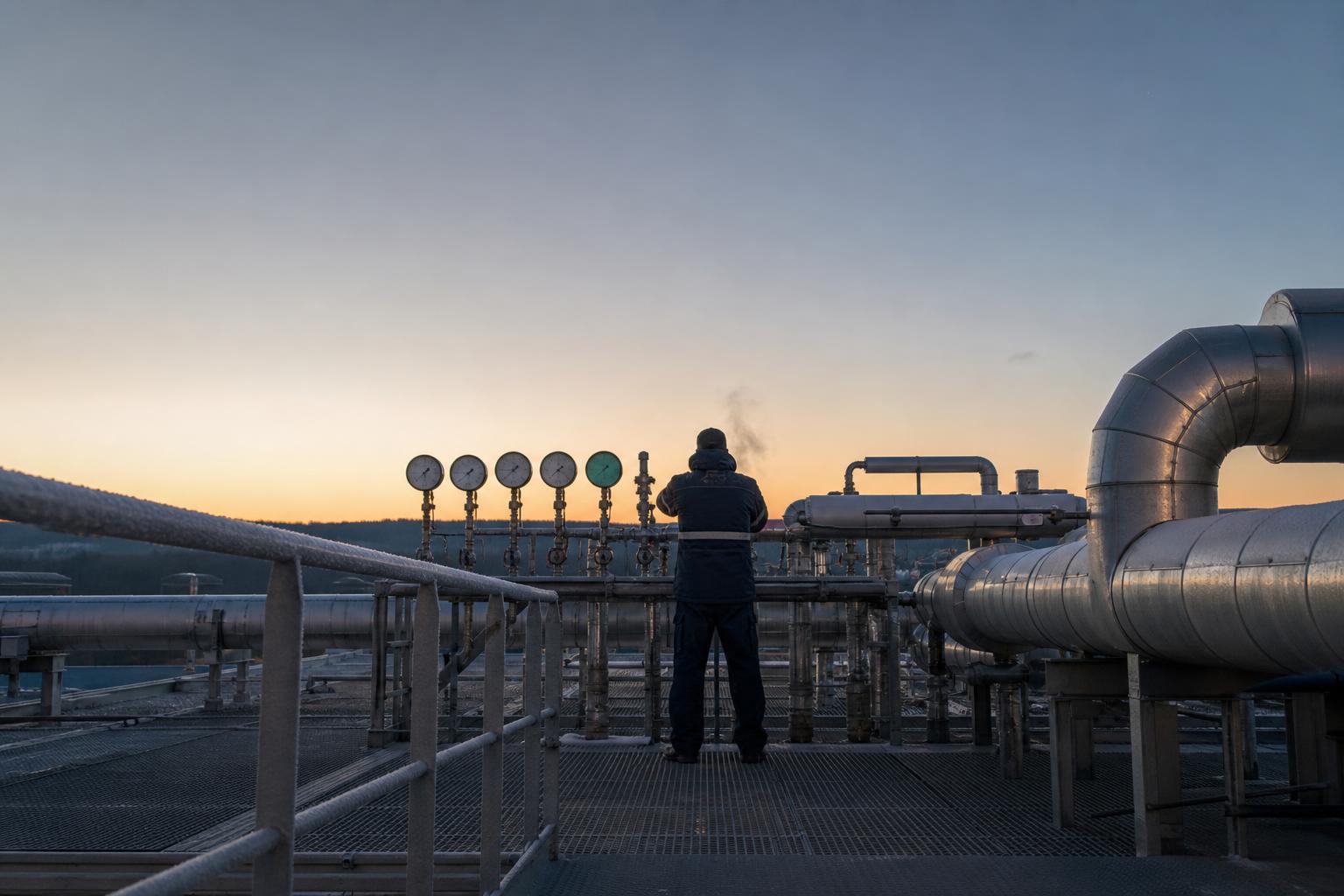
Brent crude touched $100 a barrel on September 9, 2026, its first time there since July. On the same day, European natural gas cleared €80 a megawatt-hour, a level it hasn't held since 2023. The oil number made the homepage. The gas number is the one that changes heating bills before winter starts.
Both moves trace to the same event: an escalation in the confrontation between the United States and Iran, reported the same week by the Financial Times and Bloomberg. But oil and gas are different markets with different plumbing, and the gap between how far each moved tells you where the real exposure sits.
€80 per megawatt-hour is the number that reaches a boiler
Bloomberg reported the European benchmark, Dutch TTF gas, crossed €80 a megawatt-hour on September 9 — a level last seen in 2023, during the post-invasion energy crisis. That's roughly $87 at current exchange rates. A megawatt-hour of gas heats an average European home for two to three days in winter. At €80, a household using 12,000 kilowatt-hours a year for heating and cooking is looking at a wholesale gas cost near €960 annually, before transmission charges, supplier margin and tax — which typically double or triple that figure at the retail meter.
The Brent figure is more familiar but less immediately painful. A barrel at $100 adds roughly $2.40 to the cost of refining a barrel into fuel, spread across about 42 gallons of output. That's before the separate refining-margin inflation already pushing US pump prices higher this year. Oil at $100 is a headline. Gas at €80 is a bill that lands in November.
The oil market has spare capacity. The gas market doesn't, not this winter
Here is why the gas number matters more than its smaller absolute move suggests. OPEC+ producers, led by Saudi Arabia, hold an estimated 4 to 5 million barrels a day of spare oil production capacity, according to the International Energy Agency's most recent assessments. If Iranian barrels are disrupted, that spare capacity can, in principle, replace much of the shortfall within weeks. Oil at $100 reflects fear of disruption more than a confirmed, unreplaceable loss of supply. Gas has no equivalent buffer. Europe rebuilt its storage after the 2022–23 crisis by buying liquefied natural gas on the global spot market, competing directly with Asian buyers. European gas storage sat at roughly 83 percent of capacity heading into September 2026, adequate for a mild winter but not for a cold one paired with reduced Middle East LNG flows. Qatar alone supplies close to a fifth of Europe's LNG imports, and Qatari cargoes transit the Strait of Hormuz — the same waterway an escalating US-Iran conflict puts directly at risk.
So the €80 gas price isn't pricing in a shortage that hasn't happened yet. It's pricing in the removal of the one flexible supplier — LNG cargoes that can be redirected from Asia to Europe when prices justify it — at the exact moment winter demand starts rising.
The counter-argument: prices this high have reversed before
The strongest case against reading too much into either number is precedent. TTF gas spiked above €300 a megawatt-hour in August 2022 and fell back below €30 within eighteen months, as Europe secured alternative LNG contracts and demand fell through efficiency gains and a mild winter. Brent has crossed $100 four times since 2021 without triggering a lasting supply crisis; each time, either OPEC+ output rose or demand softened enough to bring prices back down within two quarters. Traders pricing in geopolitical risk routinely overshoot the eventual outcome, because options markets reward hedging against the worst case, not the average one. If the US-Iran confrontation cools — through diplomacy, a ceasefire, or simply de-escalation without further strikes on energy infrastructure — both prices could retreat as fast as they rose. Nothing about a spot price captures how long an escalation will last.
That argument is sound as far as it goes. But it describes what happened after previous spikes, not what protects against this one. The 2022 recovery took eighteen months and required Europe to outbid Asian buyers for LNG at a premium that European industry is still absorbing through permanently higher energy costs relative to 2021. A recovery is not the same as a free pass.
Who pays first: industry, then households, in that order
European industrial gas users — chemical plants, fertilizer producers, steel mills — are typically the first to feel a spike like this, because many buy on shorter-term contracts tied to the spot price, unlike households, who are often on fixed annual tariffs that reset with a lag. German and Dutch fertilizer plants curtailed production during the 2022 spike when gas costs exceeded the value of their output; a repeat above €80 puts the same plants back at that threshold. Households follow with a delay of one to six months, depending on national tariff-setting rules. The United Kingdom's Ofgem price cap, for instance, resets quarterly and would reflect a sustained €80 gas price in its next adjustment, not immediately. Germany's regulated tariffs move faster. The oil side reaches drivers within days, through pump prices that track crude and refining costs almost in real time. But the sums involved are smaller per household than the gas exposure, because most European heating runs on gas, not oil.
The number to watch next isn't Brent. It's whether TTF gas holds above €80 through the next storage report, due from Gas Infrastructure Europe in early October. If storage draws faster than the five-year average because supply from the Gulf tightens further, the household bill that arrives in January reflects a decision made in the Strait of Hormuz in September — and paid, eventually, by whoever didn't hedge.