13 million tonnes of e-waste a year has no owner yet
AI datacenters could triple annual e-waste to 13 million metric tonnes by 2030, with no disposal plan funded.
By The Ledger · · 5 min read
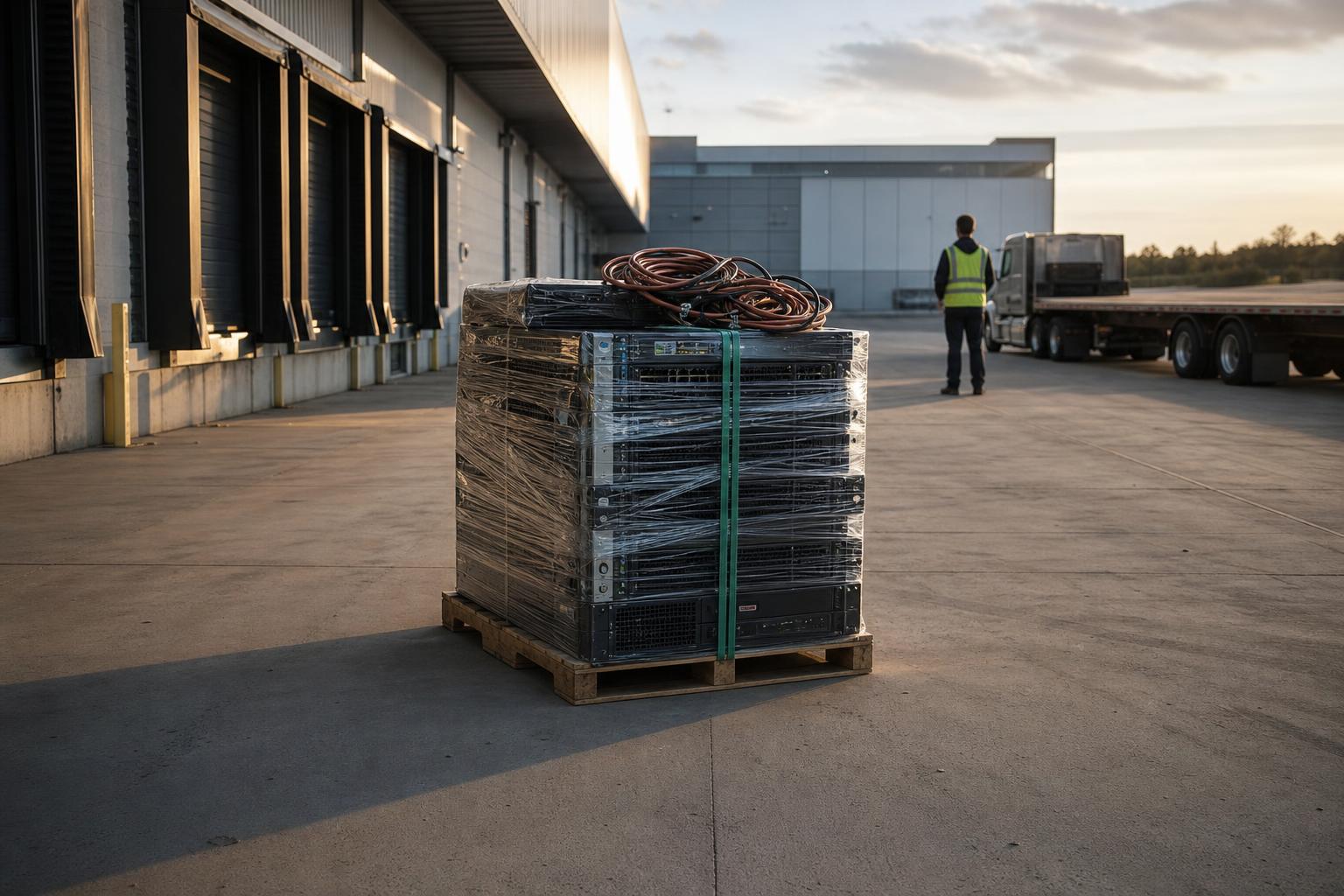
By 2030, equipment retired from the artificial intelligence buildout could generate 13 million metric tonnes of electronic waste every year. That single figure, from a new report by the nonprofit Basel Action Network, would nearly triple current global e-waste output within 25 years. Nobody has budgeted to manage it.
The report calculated volumes by weight, not by press release. Server racks run 1,360 kilograms each. Network switches add up to 30 kilograms apiece. Copper cabling connects every rack, adding hundreds more kilograms per unit. Multiply that across roughly 100 gigawatts of new datacenter capacity expected worldwide by 2030, and the tonnage stops being an abstraction.
The equipment was never built to last
This is not a story about phones piling up in drawers. It is a story about industrial hardware with a two-to-five-year lifespan, replaced on that schedule because AI workloads make older chips uneconomical to run, not because they are broken. The report's authors assumed no meaningful repair or reuse cycle for this gear, because none currently exists at scale.
That assumption tracks with what happens today. "We're doing a terrible job of handling e-waste in the US," said Vince Beiser, author of a book on the global metals trade, Power Metal. "Some of it gets dumped overseas. Most of it just gets dumped in landfills." Landfilled electronics leach lead, mercury, cadmium and PFAS compounds — the so-called forever chemicals — into soil and groundwater over years, not days.
Jim Puckett, co-founder of Basel Action Network, frames the baseline problem plainly: "Already electronic waste is the fastest-growing waste stream on the planet and only one-fifth is properly managed." AI does not create that gap. It widens it, on a compressed timeline, with equipment that is heavier and more toxic per unit than a discarded laptop.
4,871 new datacenters, and no line item for what comes out the back door
There are 4,871 new datacenters in the US construction pipeline, according to the report. Not every one is designated for AI specifically, but the report says many will be. Each one represents capital committed to the front end — the chips, the buildings, the power contracts — with essentially nothing committed to the back end, where servers, switches, cooling systems and power-distribution equipment eventually become waste.
The scale of the front-end spending makes the absence of back-end planning more conspicuous. McKinsey & Company estimated in 2025 that achieving the industry's planned AI rollout will require nearly $7 trillion in capital worldwide over five years. That sum funds construction, chips and electricity. It does not fund a disposal or recycling pathway for the hardware those dollars buy, because no such pathway has been costed into any public plan reviewed by the report's authors.
The arithmetic of a five-year discard cycle
Run the numbers as a household would. A server rack costs tens of thousands of dollars and lasts, at the outside, five years before replacement. Multiply by the tens of thousands of racks a single large datacenter can hold, and by thousands of datacenters, and the resulting waste stream arrives at a scale — 13 million metric tonnes annually by 2030 — that the report says would fill enough shipping containers to circle the globe six times over 25 years.
Copper, steel and rare-earth elements inside that hardware carry real recovery value. But separating usable metal from a server rack requires specialized processing, not a scrapyard shredder. The report notes these materials are "valuable" but "challenging to reclaim" — a gap between what the metal is worth in theory and what it costs to actually extract in practice. That gap is where most e-waste currently ends up simply buried instead.
Who pays: not the company that bought the server
The datacenter operator pays for the rack. The operator does not typically pay for what happens to it five years later. Historically, discarded electronics get exported to processing sites in lower-income countries, where informal recycling operations extract metal by burning cable insulation and dissolving circuit boards in acid — processes that expose workers and surrounding communities to the same toxins the equipment was built with.
Basel Action Network exists specifically to track and interrupt that export pattern. Its position, stated in the report, is that no regulatory framework currently obligates AI infrastructure builders to fund end-of-life processing for the hardware driving this cycle. The capital plans reviewed by the report include no equivalent of a decommissioning fund, the kind an oil or nuclear project would be required to post before construction begins.
There is a second, adjacent cost that lands earlier in the chain. A group of environmental and health experts called last week for a federal pledge to protect public health from AI's electricity demands, citing estimates that datacenter-related air pollution could cause hundreds of thousands of new asthma cases and as many as 1,300 premature deaths annually in the US. That is a separate mechanism — combustion emissions from power generation, not landfill leaching — but it shares the same structural gap: infrastructure built without the safeguard costed in.
The regulatory backdrop is loosening, not tightening
The current US administration has moved to weaken environmental safeguards that would otherwise apply to a buildout this size, adding a policy dimension to the disposal gap. Where a stricter regime might require producer take-back programs or bonded disposal funds before permitting new datacenter capacity, the report describes a landscape where no such requirement exists at the federal level.
What would actually change the trajectory
Three things could bend the 13-million-tonne curve, and each is testable. First, extended producer responsibility rules — already in effect in parts of the European Union — could require hardware makers to fund collection and recycling for equipment they sell, shifting cost from landfill operators and downstream communities back to the manufacturer. Second, datacenter operators could build recovery and refurbishment into procurement contracts now, before the first wave of five-year-old racks comes offline around 2028. Third, the industry could publish actual retirement and disposal data, which currently does not exist in a standardized form across major cloud providers.
None of the three is happening at meaningful scale yet. The report's projection assumes current practice continues unchanged. If it does, the equipment financed by this decade's $7 trillion in datacenter capital arrives at landfills and informal recycling sites on a schedule that starts now and accelerates through 2030. The bill for that arithmetic falls on the communities nearest the disposal sites, not the balance sheets that financed the buildout.