Twelve votes, one quarter point, and no dissent to explain
The Fed’s 12-0 hike to 3.75-4% came with worse inflation forecasts and a 2029 target date.
By The Ledger · · 5 min read
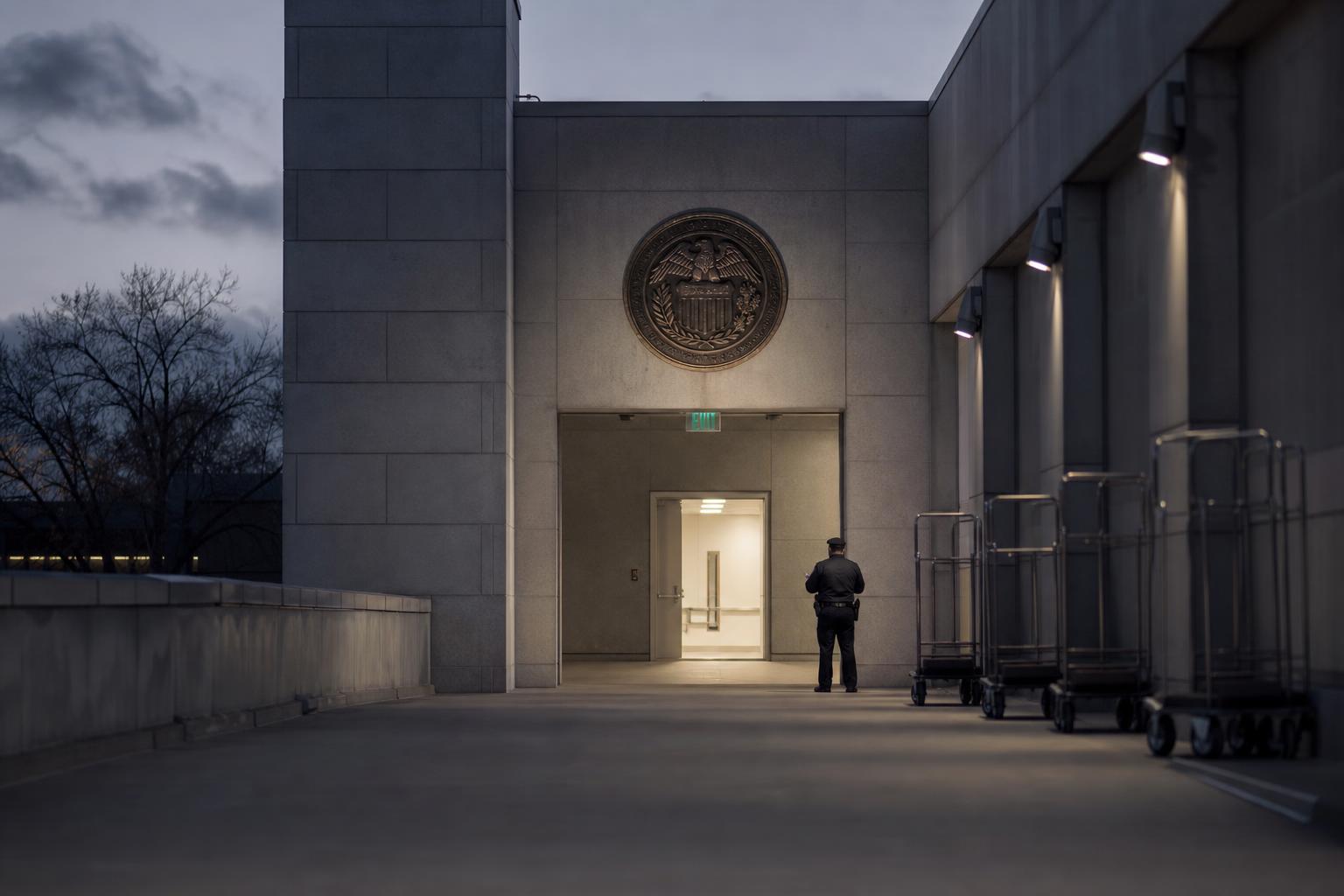
The Federal Reserve raised its benchmark rate a quarter point on September 16, to a range of 3.75% to 4%. The vote was 12-0. Sixteen of eighteen officials expect at least one more hike this year, and the Fed does not now expect to hit its 2% inflation target until 2029.
That is the arithmetic. Everything else — Chairman Kevin Warsh's "too high, for too long," the market's flinch, the economists' dueling quotes — sits on top of those four numbers.
The unemployed number that isn't moving is the one that matters
A household with a variable-rate mortgage or a credit-card balance pays first. Every quarter point on the federal funds rate moves the prime rate in step, and prime sets the floor for most credit-card APRs and home-equity lines within a billing cycle or two. A family carrying $6,000 in revolving credit-card debt, the roughly average US balance according to Federal Reserve data on consumer credit, now pays about $15 more a year in interest for this hike alone — small on its own, additive against three years of prior increases.
The Fed also nudged its unemployment forecast down to 4.1%, from 4.3% in June. That is the detail Mike Madowitz, principal economist at the Roosevelt Institute, flagged as the puzzle: a labor market this stable does not usually justify raising the cost of borrowing. Rates are the blunt instrument. The inflation the Fed is fighting has a specific source — oil prices lifted by the Iran war, plus tariff pass-through — and neither responds to the price of money in any short-term way.
The Fed hasn't moved once and stopped, ever, in this cycle
This was the first rate increase since July 2023. The three years in between were a pause, not a retreat: the funds rate stayed elevated while officials waited for inflation data to confirm the fight was won. It never fully did. Headline personal consumption expenditures inflation, the Fed's preferred gauge, is now projected at 3.7% for this year, and core PCE — which strips out food and energy — at 3.4%. Both figures are 0.1 percentage point worse than the Fed's own June forecast.
That revision is the tell. Central banks do not raise rates once, out of the blue, and then wait to see. The dot-plot released Wednesday shows 16 of 18 officials expecting another hike before year-end, four of them penciling in two. Only two think one hike is enough. History with this committee says the second move usually comes within one or two meetings of the first, not because the data demands urgency, but because a single hike rarely fixes an inflation trajectory that's already drifting the wrong way.
The 2029 target date is the number nobody put in a headline
Buried in the projections: the Fed does not expect headline or core inflation to reach its 2% goal until 2029. That's a three-year gap on top of a hike delivered in 2026, in a policy framework built around 12-to-18-month transmission lags. Officials see both measures dropping "sharply" in 2027 — to 2.3% headline, 2.5% core — but even that improved trajectory leaves two more years above target after the drop.
The rate path attached to that timeline is oddly gentle. No further hikes are penciled in for 2027 or 2028. Instead, the dot-plot shows one cut in 2028 and at least one more in 2029. The Fed is saying, in effect: we will raise rates now, hold them elevated through a slow disinflation, and only start cutting once the 2027 drop is confirmed in the data. That is a four-year plan built on a forecast that has already been revised upward once, in June, and again this week.
Warsh's press conference answered a question nobody outside the room asked
Reporters wanted to know when the Fed would stop. Warsh spent his opening remarks establishing why the Fed had started again at all — citing the labor market's strength, elevated inflation, and Middle East tension as three inputs that "lend themselves to a firm unanimous decision." Krishna Guha, head of economics and central bank strategy at Evercore ISI, called the performance "coherent, confident and consistently hawkish." Andrzej Skiba of RBC Global Asset Management noted that risk assets sold off on the news, then partially recovered on the reasoning that Warsh's clarity might support longer-dated Treasury prices — a bet that a decisive Fed reduces the odds of a policy mistake later, even if it costs more now.
The catch nobody in that room raised: a unanimous 12-0 vote on a rate decision, paired with two dissenting dot-plot entries on future hikes, is not full consensus. It's agreement on the diagnosis with disagreement on the dose. Two of eighteen officials think one hike solves this. Sixteen think it doesn't. The vote count flatters the appearance of unity; the dot-plot shows the actual argument.
The energy shock the Fed can't discount and can't cure
The Fed's own statement points to oil prices tied to the Iran war as a driver of the inflation it's now fighting with domestic interest rates. That's a mismatch. A rate hike raises the cost of borrowing inside the US economy — mortgages, car loans, business credit lines. It does nothing to Brent crude pricing set by global supply and geopolitical risk. If the Middle East tension driving fuel costs doesn't ease, the Fed is left raising the price of money to offset a price it doesn't control, which is close to what Madowitz meant by "a really costly way to solve this problem."
The honest open question is whether the Fed is fighting energy inflation with the wrong tool, on a four-year timeline, betting that higher borrowing costs discourage enough other spending to offset an oil shock nobody in Washington can end by voting on it.
Does a Fed rate hike change my mortgage rate immediately?
Only new or adjustable-rate loans move right away; most fixed 30-year mortgage rates already priced in the expected hike beforehand.
Who actually pays for this hike first?
Holders of variable-rate debt — credit cards, home equity lines, some private student loans — see costs rise within one to two billing cycles.