Builders are cutting prices while land and labor still cost more
A rising share of builders cut new-home prices even as construction costs climb, mortgage rates near 7 percent.
By The Ledger · · 5 min read
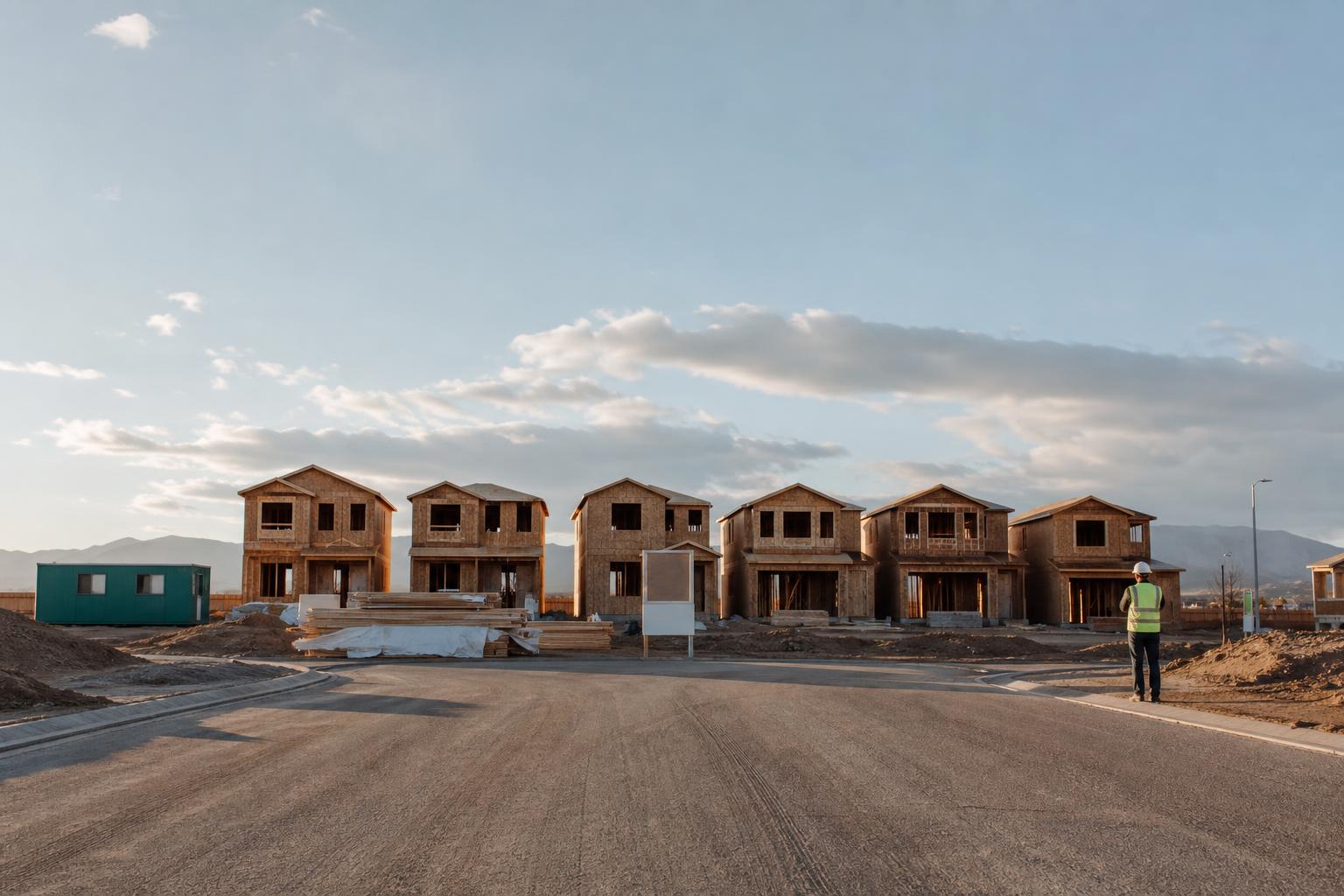
Home builders are cutting prices on new construction at a rising rate, even though the cost of building those homes keeps climbing. That combination — falling sale prices, rising input costs — only happens when builders are choosing a smaller loss over an unsold house. The arithmetic says buyers, not builders, are setting the price now.
The figure that anchors this story is the share of builders cutting prices: it has been rising in National Association of Home Builders surveys through 2026, tracking a market where mortgage rates have stayed close to 7 percent for over a year. That single data series — a monthly builder confidence and pricing survey — is the primary source both builders and analysts cite when they talk about the state of new construction. It is not a government figure. It is an industry association polling its own members, which matters for how much weight to give it.
The discount is smaller than the mortgage rate makes it look
A price cut on a new home sounds like relief. It rarely offsets what a 7 percent mortgage rate costs a buyer compared with the sub-4 percent rates common through 2021. On a $400,000 loan, moving from 3.5 percent to 7 percent adds roughly $850 a month in interest and principal — about $10,200 a year. A builder discount of 5 percent on the same house saves $20,000 upfront, but that's a one-time number set against a recurring one. Buyers financing the purchase feel the rate every month; they feel the discount once, at closing.
That's why builders are choosing price cuts and incentives — mortgage rate buydowns, closing-cost credits — over simply waiting out the market. A rate buydown that takes a buyer's effective rate from 7 percent to 5.5 percent for two or three years costs the builder money upfront, paid to the lender, but it moves inventory faster than an equivalent price cut would. Builders are running the same math buyers are: what actually changes the monthly payment, not what changes the sticker price.
Construction costs went up while sale prices went down — that gap comes out of margin
Builders aren't cutting prices because their own costs fell. Lumber, labor and land have all stayed expensive or gotten more so, partly from tariff-driven material costs and persistent skilled-labor shortages in framing and electrical trades. When a builder cuts the price of a house that costs more to build than it did a year ago, the difference comes directly out of gross margin — the buffer that normally covers overhead and profit.
Public homebuilders have reported exactly this squeeze in recent quarters: gross margins compressing even as revenue holds up, because units are moving at lower average prices against a rising cost base. That's a company absorbing the gap rather than passing it to the buyer. It is a temporary posture. A builder can eat margin for a few quarters to keep cash flowing and avoid carrying unsold inventory, which has its own costs — interest on construction loans, property taxes, insurance on empty houses. It cannot eat margin indefinitely without cutting something else: land purchases, new starts, or headcount.
The counter-argument: builders always have room that resale sellers don't
The strongest case against reading this as distress is that builders control supply in a way individual homeowners don't. A builder can cut the price of a spec home, throw in a finished basement, or waive lot-premium fees — moves that function like a price cut without officially lowering the listed price, which matters for appraisal comparables in the neighborhood. Builders also buy land years before they build, often at prices set before the current rate environment, giving some of them real margin to give away before they hit cost.
This is a fair point, and it explains why builder price cuts don't necessarily signal the same distress that falling resale prices would. A resale seller who cuts price is usually responding to a lack of buyers at any price near their number. A builder who cuts price and offers a rate buydown is often protecting a margin structure built on land bought cheap, using incentives as a release valve rather than a distress signal. The NAHB's own reporting distinguishes between builders cutting price outright and those relying on non-price incentives, and the two responses aren't identical evidence of the same problem.
Who pays: buyers financing at today's rate, and builders holding today's land
The 7 percent mortgage rate is the fixed point in this story. It hasn't moved much, and the Federal Reserve's decisions on the federal funds rate influence but don't directly set it — mortgage rates track the 10-year Treasury yield plus a spread that widens when lenders see more risk. Builders can discount houses, buy down rates for two years, or throw in upgrades, but none of that changes the underlying financing cost a buyer faces once any temporary buydown period ends.
What happens next depends on whether builders keep absorbing the gap between rising costs and falling prices, or start cutting production instead. Housing starts data from the Census Bureau is the number to watch: a sustained drop in single-family starts would mean builders have decided the incentive strategy isn't working, and it's cheaper to build fewer houses than to keep discounting the ones already underway. That shift hasn't shown up yet in the numbers cited in current builder surveys. When it does, the cost moves from builder margins to construction-sector jobs — a different bill, paid by different people.