Private jets pay 0.6% of a fund they use 7% of
Private aircraft account for 7% of US airspace activity but fund less than 0.6% of the trust that runs it.
By The Ledger · · 5 min read
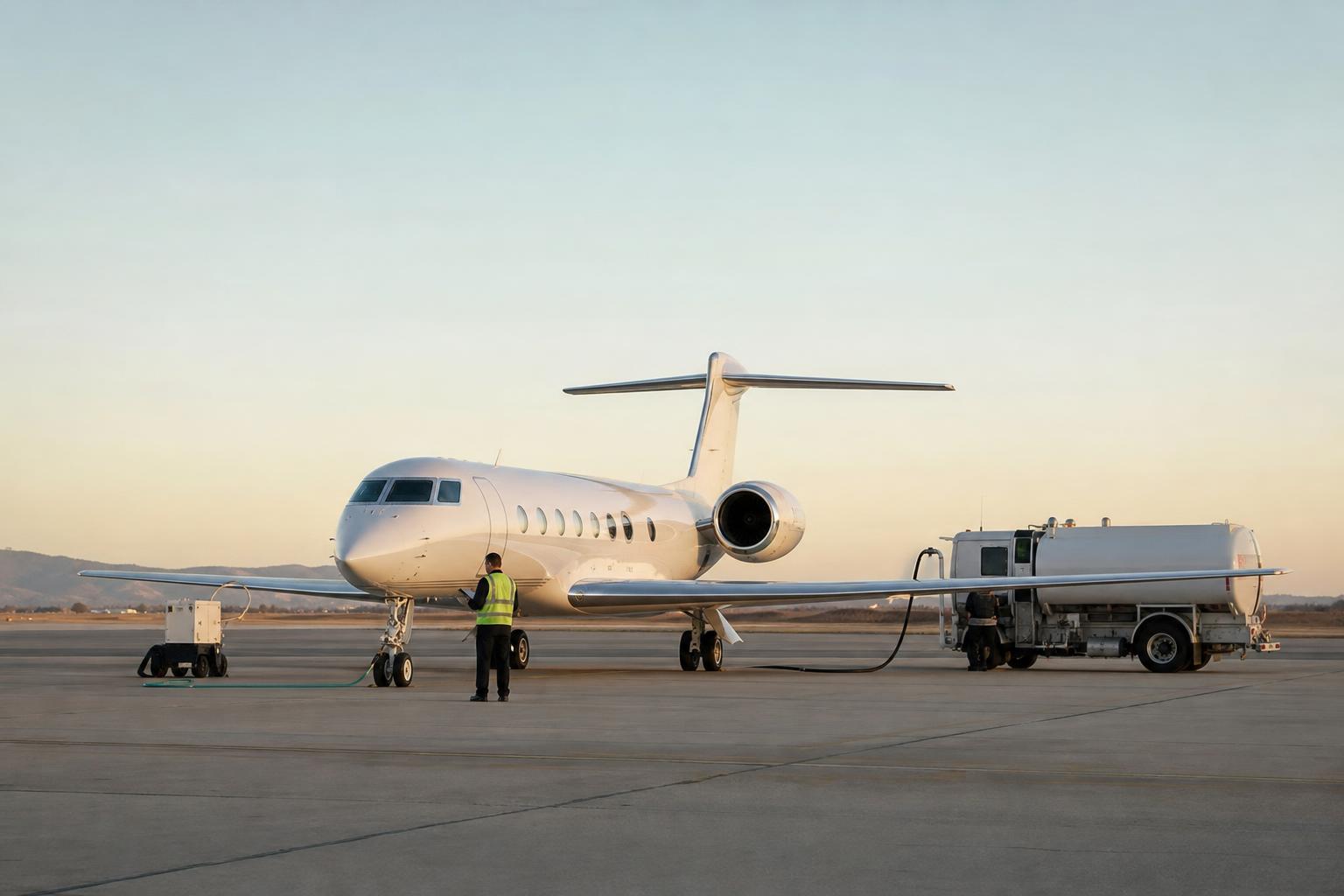
Private jets make up 7% of US airspace activity and pay less than 0.6% of the taxes that fund it, according to the Department of Transportation. The median private jet owner is worth $190 million. The gap between those two numbers is the story.
The Airport and Airway Trust Fund pays for the Federal Aviation Administration's air traffic control, runway maintenance and safety inspections. Commercial airline passengers fund most of it through a 7.5% ticket tax plus a per-segment fee, both baked into the price of a coach seat. Private jet operators pay a fuel tax instead — a flat cents-per-gallon charge that raises far less per flight than the ticket tax on an equivalent commercial trip. The Institute for Policy Studies, in a report published September 18, put a number on the resulting shortfall: private and charter flights now account for roughly 16% of FAA-handled operations, while contributing a fraction of that share in trust-fund revenue.
A coach passenger subsidizes a jet that emits 14 times more per seat
Picture two travelers leaving the same airport on the same afternoon. One buys an economy ticket and pays a ticket tax that funds the control tower guiding both planes. The other boards a private jet, pays fuel tax on a fraction of the fuel a commercial jet burns per passenger, and uses the same tower, the same runway, the same air traffic controllers. The commercial passenger's tax dollar stretches further per mile of infrastructure it buys. The private flyer's does not, because the fee structure was built when private aviation was a rounding error, not a growth business.
That imbalance now has a climate dimension attached. The report's Private Jet Emissions Tracker, built with more than 20,000 open-source flight trackers, found private jets produce 10 to 14 times more direct carbon emissions per passenger than commercial flights. The people generating those emissions are, by definition, few: an estimated 256,000 individuals worldwide use private aviation, or 0.003% of the global population. Emissions linked to private flying rose 50% over the period the institute studied, even as the passenger base stayed a rounding error next to commercial aviation's hundreds of millions of annual fliers.
The tax break survived because nobody big enough opposed it
The current split between ticket taxes and fuel taxes dates to the 1970 Airport and Airway Revenue Act, when private aviation was a niche pursuit for a small number of corporate flight departments and wealthy individual owners. Congress built a funding formula around the aviation industry that existed then: mostly scheduled commercial carriers, moving mostly middle-class passengers, generating most of the tax base through ticket sales. Fuel tax on private aircraft was set low partly because private flying was assumed to stay small.
It did not stay small. Fractional ownership — buying an equity share in an aircraft in exchange for guaranteed annual flight hours — grew 6% between 2019 and 2025, according to the institute's report. The median wealth of someone with a fractional stake is $140 million; full owners median $190 million. As the customer base grew wealthier and more numerous, the tax formula never caught up. The National Business Aviation Association spent approximately $2 million lobbying in 2025, the report says, largely in support of legislation preserving the tax treatment that keeps private aviation's contribution to the trust fund below its share of the airspace it uses.
Bonus depreciation is the mechanism, not the headline
The lobbying dollar figure is smaller than it looks. Two million dollars buys influence over a specific provision: accelerated depreciation schedules that let a jet owner write off most of an aircraft's purchase price against taxable income in the first year, rather than spreading it over the aircraft's useful life. That deduction, not the fuel tax rate, is where most of the dollar value of the subsidy sits. A $50 million jet depreciated in year one can offset tens of millions in taxable income for a buyer who has that income to offset. The fuel tax underpayment is real and documented — the 7% airspace share against 0.6% of trust-fund revenue is the institute's headline number — but the depreciation break is the larger transfer, and it never shows up in a per-flight tax comparison because it happens once, at purchase, off the FAA's books entirely.
Nobody has priced what replacing the shortfall would cost commercial flyers
The institute's report frames the fix as fairness: charge private jets fuel tax rates, or ticket-equivalent fees, that match their share of FAA operations. What it does not model is what happens to commercial ticket prices if the trust fund's revenue mix stays roughly the same size but shifts its source. If private aviation paid its proportional 7% to 16% share of trust-fund revenue rather than under 0.6%, that money would come from somewhere: either from private jet owners directly, which is the report's stated goal, or, if enforcement lags legislation the way it often does, from continued reliance on commercial ticket taxes rising to cover a widening FAA budget. The report does not estimate the dollar shift required, and no government agency has published one either. That is the honest gap in an otherwise well-documented case: the diagnosis is precise, the remedy's price tag is not.
Would a private jet fuel tax hike actually change flying behavior?
Unclear. Owners with median wealth of $190 million are unlikely to change habits over a fuel surcharge; the report argues the point is revenue and fairness, not deterrence.
Is there a bill in Congress addressing this now?
The report references NBAA lobbying against reform but does not name a specific pending bill; no legislation has been introduced as of the report's September 18 publication.
The report closes on Chuck Collins's framing: ordinary taxpayers are covering infrastructure costs that private jet owners' fuel taxes do not. The FAA still has to fund the same towers, the same runways, the same safety inspections, regardless of who flies through them. Until the fee structure catches up to who is actually in the airspace, the commercial passenger buying a ticket tax pays the difference.