Canada’s tariffs hit $27.6bn. The G20 fight is about a bigger number
Canada’s 50% tariffs target $27.6bn in US goods, as China rejects G20 pressure over export reliance.
By The Ledger · · 5 min read
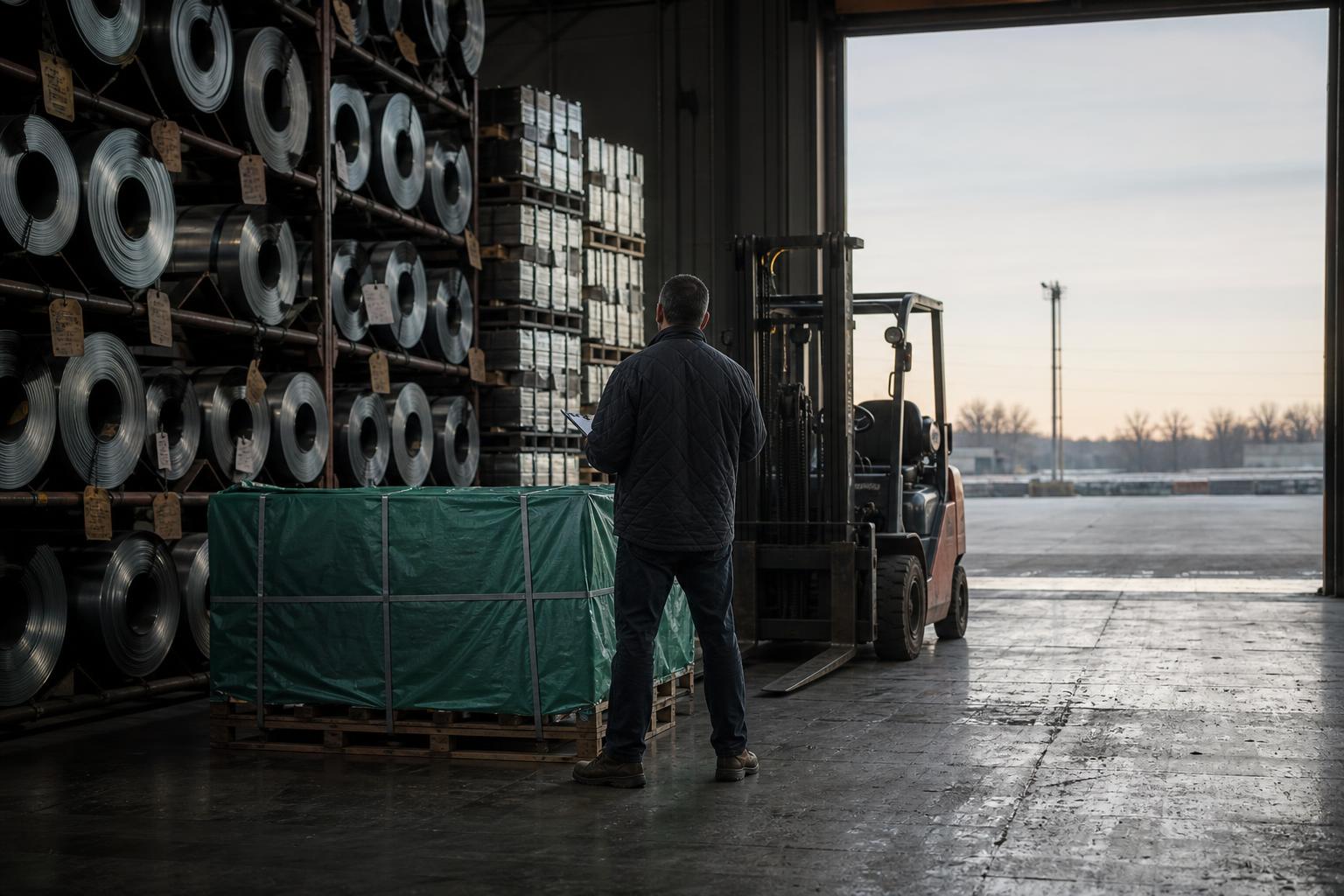
Canada will impose tariffs of up to 50 percent on $27.6 billion of US goods starting September 8, 2026. The list reads like a cross-border supply chain's inventory: steel, aluminum, pulp and paper, appliances, agricultural equipment. Two thousand miles away in Beijing, a Commerce Ministry spokesperson spent the same week rejecting a G20 statement that 19 of 20 member nations had just signed.
Both stories are about the same arithmetic problem. Trade imbalances have a bill, and every government at the table is trying to make sure it lands on someone else's ledger.
$27.6 billion is the number, and it's smaller than the tariff rate suggests
A 50 percent tariff sounds like a wall. Applied to $27.6 billion of goods, it is a tax that raises prices on specific categories, not a blockade on trade between the two countries. Canada and the US moved roughly $760 billion in goods across their shared border in 2025, according to US Census Bureau trade data. Bloomberg's Ottawa bureau chief, Brian Platt, told Bloomberg This Weekend on September 6 that the broader economic impact of the new measures "may be limited" — the tariffs cover under 4 percent of total bilateral trade. The rate is the headline. The base it applies to is the story. Steel, aluminum, pulp and paper, appliances and agricultural equipment are sectors where Canada has leverage — industries with US suppliers who need the Canadian market, and Canadian buyers who can substitute elsewhere. That is not accidental. Retaliatory tariff lists are built by trade ministries to maximize political pain on the other side while minimizing self-inflicted cost, and this one follows that playbook closely.
The businesses that don't get to average it out
A national trade statistic can absorb a 4 percent tariff exposure without much movement. A single appliance manufacturer with a plant in Ontario and a supplier in Ohio cannot. Platt's second point matters more than the topline number: companies with integrated cross-border supply chains, and tourism operators near the border, face concentrated costs that don't show up when you average across the whole economy. The pain is real, it is just not evenly spread, and evenly-spread is the assumption every "limited impact" headline quietly makes.
The G20's dissenting vote was one country against nineteen — and that's the wrong way to count it
On September 2, 2026, US Treasury Secretary Scott Bessent said 19 of the G20's members had agreed to address what he called an "unsustainable equilibrium" caused by a "stream of cheap exports." China was the sole dissenter from the joint statement's language on trade imbalances. Beijing's Commerce Ministry responded two days later, on September 3, accusing the group of "promoting protectionism" and calling the imbalance framing "an excuse to pressure and restrict China." Nineteen against one looks decisive until you note which one country it is. China ran a $960 billion goods trade surplus with the rest of the world in 2025, according to China's General Administration of Customs — a figure roughly ten times the size of the tariff dispute unfolding between Canada and the US in the same week. A unanimous vote of 19 countries carries real diplomatic weight. It carries no enforcement mechanism against the twentieth, which is why the sanctions language did the actual work: Bessent's September announcement that Chinese banks facilitating Iran-linked transactions could be cut off from the US financial system is a policy with teeth. A joint statement is not.
Two different fights, one word doing the same job
"Protectionism" appears in both disputes and means something different each time. Canada's tariffs are explicitly retaliatory — a response to prior US measures, calibrated by product category. China's use of the word inverts the accusation: it argues that criticizing an export-driven economy, rather than raising tariffs against it, is itself the protectionist act. Both governments are using trade-policy vocabulary to describe defensive moves as principled ones. Neither framing is wrong on its own terms. Both are incomplete without the other side's number attached.
The counter-argument: none of this changes anyone's spending plans yet
The strongest case against reading too much into either story is timing. Canada's tariffs take effect September 8, 2026 — they have not yet raised a single invoice. The G20 statement is a communiqué, not a binding accord; it carries no tariff schedule, no enforcement date, no penalty. Bessent's Iran-sanctions threat targets money laundering and sanctions evasion specifically, not the trade imbalance itself. A reader could reasonably conclude that this is a week of positioning ahead of Chinese President Xi Jinping's visit to Washington later in September 2026, and that the real numbers arrive after that meeting, not before it. That reading has merit. It also assumes positioning is free. Every day these measures sit on the books, businesses on both sides of the US-Canada border are re-pricing contracts and shifting suppliers in anticipation, whether or not the September 8 date holds. Anticipatory cost is a real cost, even when the final number hasn't been struck yet.
Where the bill actually lands next
France gives the clearest preview of what comes after the statements. Huang, the Commerce Ministry spokesperson, warned on September 4 that if France proceeds with a law targeting low-cost Chinese e-commerce platforms such as Temu, "France will bear all consequences" — language nearly identical to what Beijing has used against tariff-minded trading partners before. The European Union, separately, wants China to narrow its trade deficit with the bloc by October 2026, with EU Trade Commissioner Maroš Šefčovič warning of "harsher measures" if Beijing doesn't deliver "concrete results." That is three simultaneous fronts — Canada-US, the G20 statement, and the EU's October deadline — all running the same mechanism: one side sets a number and a date, the other side disputes the number, and the tariff or sanction becomes the enforcement tool when the talking stops. Canada's $27.6 billion takes effect in days. The EU's October deadline is weeks away. China's dissent from the G20 language buys time, not immunity. The businesses filling out customs paperwork on steel and aluminum shipments starting September 8 will not be reading the G20 communiqué. They will be reading the tariff schedule. That is the part of this story with a date attached, and it is the part that costs money first.