Choice’s $650 million sale funds a growth rate it hasn’t hit since 2022
Choice Hotels plans to sell $650 million in real estate to fund 2–4% room growth, currently stuck at 1.5%.
By The Route · · 5 min read
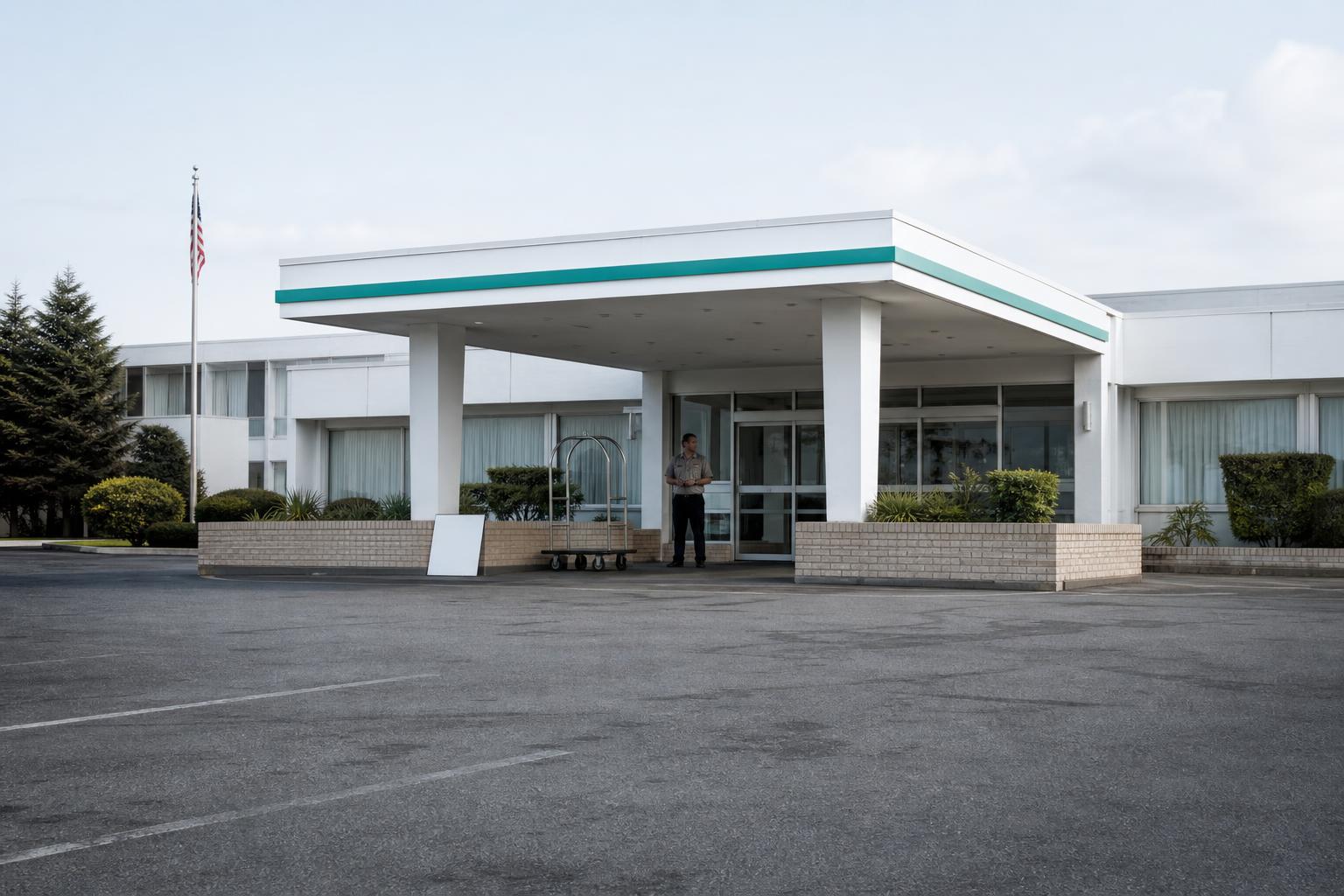
Choice Hotels wants to sell roughly $650 million worth of hotels and investments starting in the first half of 2027. The company's new chief executive, Dominic Dragisich, calls this "returning to our roots" — but the roots he's returning to belong to a company that grew U.S. room counts at 2 to 4 percent a year. Right now Choice is growing at 1.5 percent globally, and the gap between those two numbers is the whole story.
1.5 percent is the figure, and it's a global number covering a domestic problem
Dragisich laid out his plan Wednesday at a Bank of America investor conference, days after his August 31 appointment ended an interim period at the top. The centerpiece figure — 1.5 percent global net rooms growth, against a historical range of 2 to 4 percent — sounds like a modest miss. It understates the problem. Choice's growth engine has always run on U.S. franchise volume: economy and midscale brands like Comfort Inn, Quality Inn and Sleep Inn, sold to owner-operators who put up the capital and pay the franchise fees. When that engine slows to 1.5 percent blended with faster-growing international segments, the domestic core is almost certainly flatter still.
The company didn't get here by standing still. Over the past several years it bought Radisson Americas and WoodSpring Suites, brands that needed renovation and repositioning before they could pull their weight. It built out Cambria and Everhome as owned demonstration properties — hotels Choice operates itself to prove the concept to franchisees before asking them to build one. And it culled hotels that dragged on the system average. Each of those moves cost capital or attention. None of them, on their own, grew net U.S. rooms. That's the mechanism behind the 1.5 percent: Choice spent the growth years consolidating instead of expanding.
The $650 million sale is smaller than the headline suggests, and that's deliberate
Choice is not liquidating a hotel empire. The $650 million figure covers real estate and investments the company holds directly — the Cambria and Everhome demonstration properties, plus other owned assets accumulated during the acquisition years — not its franchise system, which comprises thousands of hotels owned by third parties who already carry that capital risk. Selling $650 million converts Choice from what Dragisich calls a "capital employer" into a "capital recycler": a company that collects franchise fees and royalties rather than tying up its balance sheet in buildings.
This matters because the asset-light model is what public markets reward in hotel companies. Marriott, Hilton and Wyndham all trade at premiums partly because they own almost nothing and collect fees on almost everything. Choice built up owned real estate specifically to prove new brand concepts work before asking franchisees to bet their own money — a sensible R&D strategy that nonetheless leaves capital sitting on hotels instead of chasing new franchise deals. Selling that inventory frees cash for the thing that actually drives the stock: net rooms growth.
The sale timeline — starting in the first half of 2027 — is also doing quiet work. It gives Choice roughly a year to find buyers at reasonable valuations rather than dumping assets under pressure, and it lines up with the multi-year runway Dragisich needs to show growth reacceleration before Wall Street loses patience.
The RevPAR gap is the harder number to close, because it isn't about ownership
Dragisich's third priority — closing the revenue-per-available-room gap with peers like Wyndham — is the one that can't be solved by selling buildings. RevPAR measures how much money each hotel room actually generates, blending occupancy and nightly rate. If Choice hotels are lagging Wyndham's, the fix has to happen at the property level: better distribution, stronger loyalty engagement, sharper revenue management tools that help a Comfort Inn owner in Ohio price a Tuesday night in February correctly.
This is where the plan gets specific and, frankly, more convincing than the real estate sale. Dragisich is promising a procurement program that could cut equipment costs for franchisees by up to 20 percent — mattresses, linens, kitchen equipment, the unglamorous inputs that eat into an owner's margin regardless of what nightly rate they're charging. He's also pointing to an AI tool called Charlie, designed to deliver measurable operating savings to franchisees currently squeezed by insurance premiums, labor costs, property taxes and financing rates that have all risen faster than room rates in many U.S. markets over the past two years.
The catch: franchisee profitability is the actual bottleneck, and it's not fully in Choice's control
Here is the honest complication in Dragisich's formula. Net rooms growth depends on franchisees deciding to build new Choice-branded hotels instead of a competitor's, or instead of not building at all. That decision runs on financing costs, insurance availability and construction costs — all currently elevated and largely outside any hotel company's control. A 20 percent cut in procurement costs helps an existing owner's margin. It does very little to offset a construction loan that costs three percentage points more than it did in 2021, or an insurance premium that's doubled in hurricane-exposed markets.
Choice can sell $650 million in real estate, launch Charlie, and negotiate better equipment pricing, and still watch U.S. net rooms growth stay near 1.5 percent if the financing environment for new hotel construction doesn't loosen. The company is betting that operational relief — lower costs, better tools — is enough to tip marginal development decisions in its favor even without macro tailwinds. That's a real bet, not a guarantee, and Dragisich didn't claim otherwise at the conference.
What the sale actually funds, and when to check whether it worked
The proceeds from the $650 million divestiture are earmarked to fund the growth push directly — capital that would otherwise sit in owned hotels gets redeployed toward franchisee incentives, brand-conversion deals, and the technology and procurement infrastructure meant to close the RevPAR gap. Investors and franchisees alike will get their first real read on whether this works when Choice reports full-year results for 2027, since the sales begin in the first half of that year and any rooms-growth effect takes at least several quarters to show in the numbers.
The plan disappoints if judged on Choice's current trajectory: a company that has spent recent years integrating acquisitions rather than growing organically doesn't reverse that in one investor presentation. The three priorities Dragisich named are the right diagnosis. Whether 1.5 percent becomes 2 percent, let alone 4, depends on financing conditions Choice doesn't set, arriving on a timeline the company can't control either.