Nebraska’s $4.72 billion tourism year still can’t fund its own airport
Nebraska tourism spending hit $4.72 billion in 2025, but Lincoln’s airport still lacks daily coastal flights.
By The Route · · 5 min read
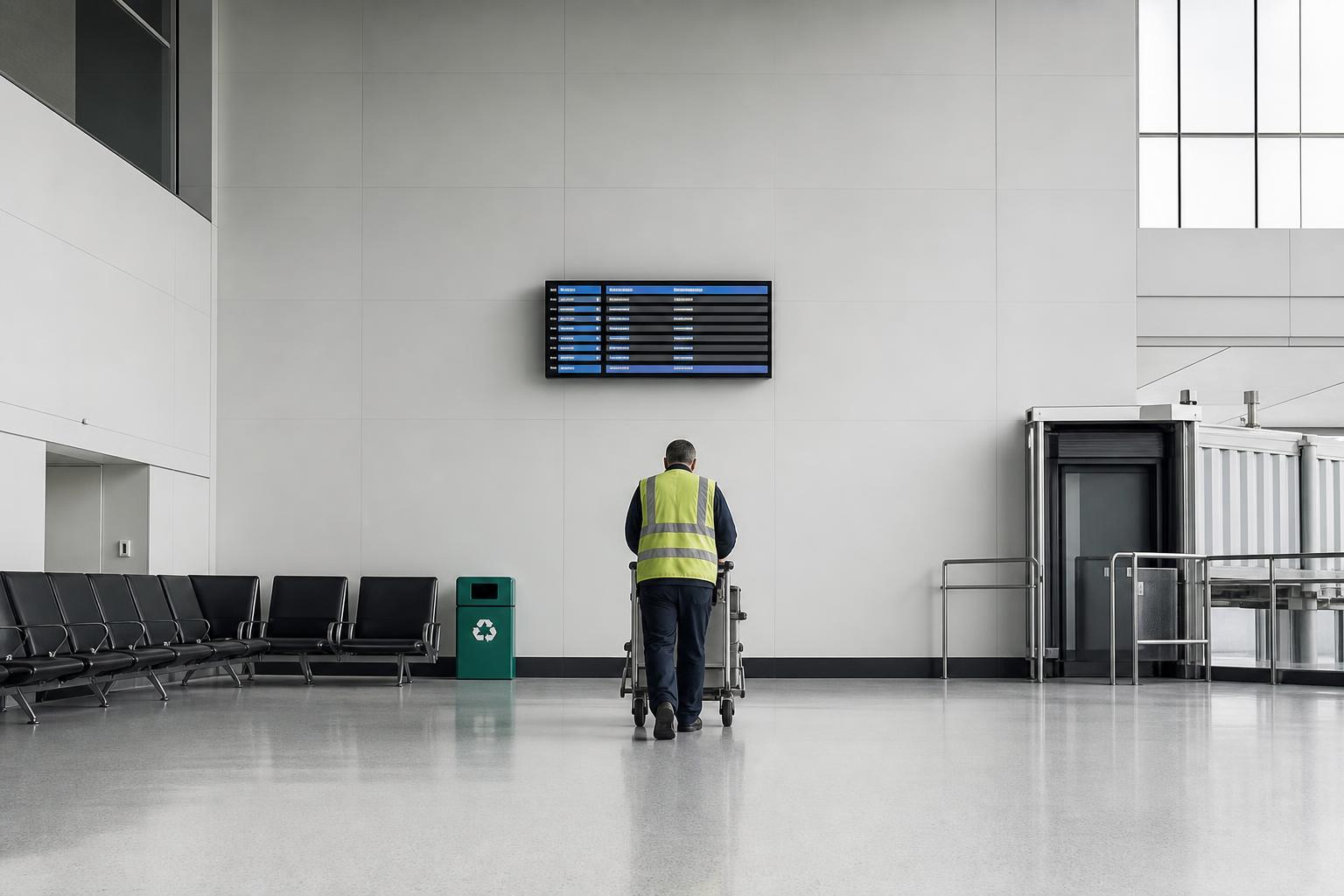
Nebraska says visitors spent $4.72 billion in the state in 2025, a number the governor's office released without much explanation of who counted it or how. The state's own tourism agency puts the figure alongside a claim of over 90,000 jobs supported — a familiar pairing that raises a familiar question: does the money actually stay, and who collects it?
The number came from an economic-impact model, not a cash register
State tourism offices rarely tally receipts directly. They commission an outside firm — commonly Tourism Economics or a state university's bureau of business research — to model spending using a mix of hotel occupancy tax data, fuel sales, and traveler surveys extrapolated across the year. Nebraska Tourism's $4.72 billion figure for 2025 almost certainly follows that pattern, meaning it is an estimate built on proxies, not a sum of invoices. That doesn't make it fiction. It does mean the number moves with the model's assumptions about how many out-of-state license plates at a gas pump count as "tourism" versus commuting or freight traffic passing through on Interstate 80.
What changed in 2025 is scale, not method. Nebraska Tourism has reported steady annual increases through the decade, and this year's figure represents another year-over-year gain, continuing a run that survived a pandemic-driven collapse in 2020. The state has leaned on drive-market visitors — travelers from Iowa, Kansas, Missouri and Colorado making weekend trips — rather than long-haul flyers, because Nebraska's own airport capacity limits how many of the latter it can realistically capture.
A day in Nebraska costs less than a day almost anywhere else on the circuit
Budget travelers can run a full day in Omaha or Lincoln for roughly $120 to $150: a $90–$130 mid-range hotel room, $35–$45 in meals split across three stops, and $10–$15 for a museum or state park entry fee (Nebraska state park permits run $6 per day for a vehicle, one of the cheaper access fees in the Midwest). That's the pitch embedded in the spending figure — Nebraska is positioning itself as an affordable alternative to Colorado or the Dakotas, where a comparable day easily clears $200.
The catch is that affordability and volume pull in opposite directions. A state drawing visitors on price rather than marquee attractions needs more of them to hit the same revenue as a destination charging premium rates to fewer people. Nebraska's $4.72 billion depends on high visitor counts sustained across drive-market repeat trips — state fairs, college football weekends in Lincoln, hunting season in the Sandhills — rather than a smaller number of big-ticket stays. That's a fragile structure if gas prices rise or if neighboring states start competing harder on the same budget-traveler segment.
The lodging tax funds the marketing that produces the next year's number
Nebraska's tourism promotion runs substantially on a 1% statewide lodging tax layered on top of local occupancy taxes, which can push total lodging tax in some cities above 15% combined. That state lodging tax revenue funds Nebraska Tourism's marketing budget directly — meaning the $4.72 billion spending figure and the agency's own funding are mechanically linked. More visitor spending on hotel rooms generates more lodging tax, which funds more marketing, which the agency then credits with generating more visitor spending. It's not fraudulent, but it is a closed loop that makes the growth figure partly self-reported and self-funding, with limited independent audit of the causal claim.
Job numbers attached to these reports — Nebraska's release cites more than 90,000 positions supported — use a similar multiplier logic: a dollar spent at a diner is assumed to support a fraction of a server's wage, a fraction of a supplier's truck driver, and so on down an input-output table. These jobs are rarely new hires created by a marketing campaign; they're existing hospitality and retail positions whose survival gets attributed, in the model, to tourism spending broadly.
Nebraska residents fund the campaign that brings in visitors who don't pay income tax to the state
Out-of-state visitors paying Nebraska's sales and lodging taxes contribute revenue the state wouldn't otherwise collect — genuinely useful money for state coffers. But locals in host cities absorb costs the spending figure doesn't price: road wear from increased weekend traffic, strain on state park facilities funded partly by general tax revenue, and housing pressure in small towns near popular hunting or fishing areas where short-term rentals compete with long-term housing stock. None of that appears in the $4.72 billion topline, and Nebraska Tourism's public reporting doesn't net it out.
The airport gap is the ceiling on how big this number gets
Lincoln and Omaha's Eppley Airfield both lack the daily nonstop coastal service that feeds destination tourism in competing states. Eppley's flight roster leans on hub connections through Denver, Chicago and Minneapolis rather than direct long-haul routes, which caps the state's ability to draw visitors from further afield without a connecting flight and its added cost and time. Until that changes, Nebraska's growth model stays tied to drivable radius — a ceiling the marketing budget can't spend its way past.
Winter is when the model strains hardest. Nebraska's outdoor attractions — the Sandhills, the Niobrara River, state park camping — depend on temperate months, and hotel occupancy in rural counties drops sharply from December through February. A traveler chasing this year's cheap-day math should expect the state's better restaurants and smaller attractions to have reduced hours or be closed outright in deep winter, with the spending figure's growth concentrated almost entirely in the six warmer months. Anyone visiting for the number, rather than for Nebraska itself, will find the state considerably quieter than $4.72 billion implies for at least a third of the year.