Saudi Arabia’s tourism push reroutes the Gulf’s money
Saudi Arabia posted 116 million visits in 2024 and is spending Vision 2030 oil money to make travel a permanent export.
By The Route · · 5 min read
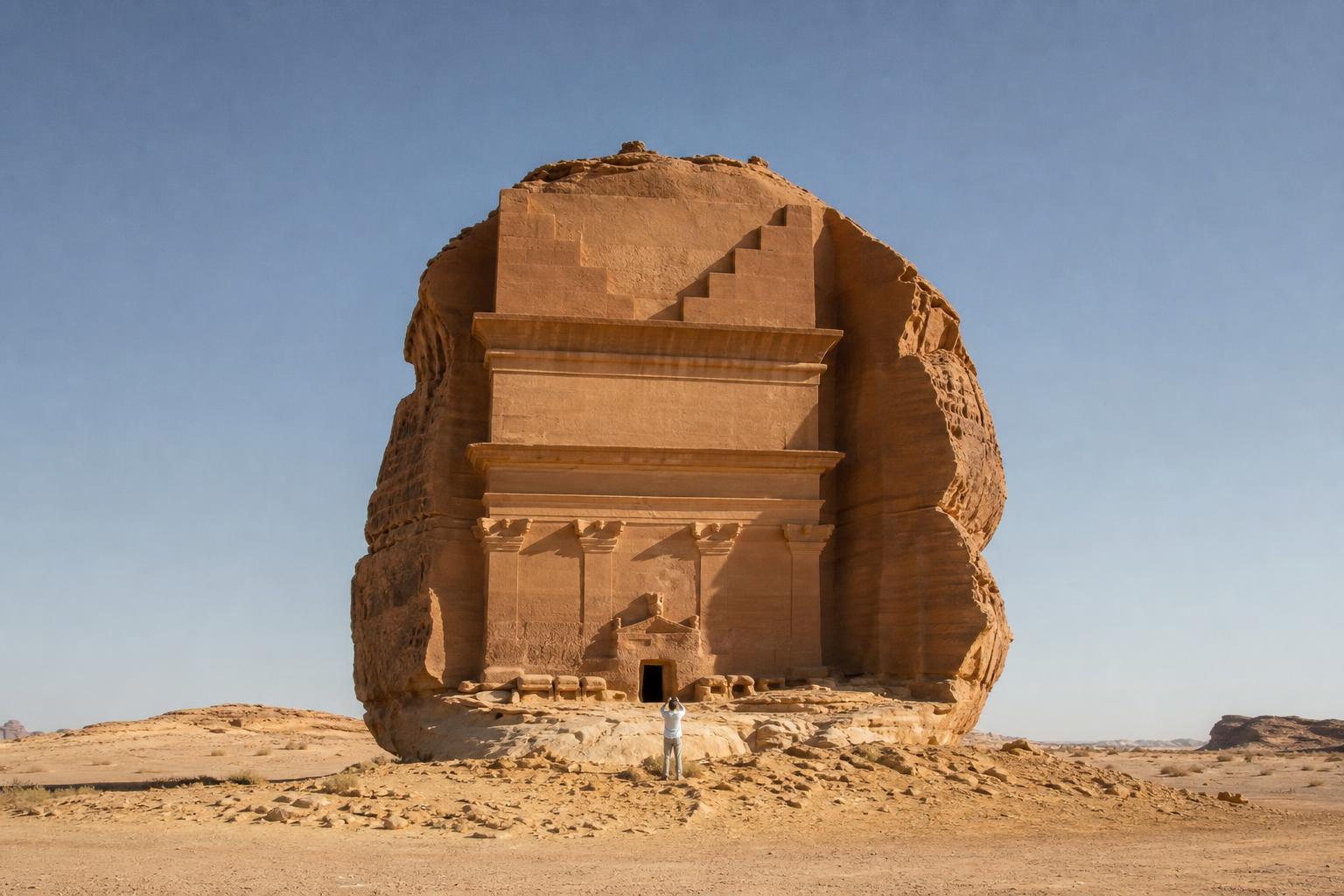
Saudi Arabia recorded roughly 116 million visitor arrivals in 2024, according to the kingdom's tourism ministry, up from under 4 million in 2016. The government wants 150 million by 2030, split between domestic trips and foreign arrivals, and it is spending oil revenue to force that number rather than wait for it. A one-day visa now costs SAR 480 (about $128), and the kingdom has opened Red Sea diving zones, a new airline, and Riyadh nightlife that did not legally exist a decade ago.
What actually happened
Skift's State of Travel 2026 report, released this month, places Saudi Arabia among the fastest-growing outbound-inbound tourism economies worldwide, part of a broader shift the report describes as leisure travel becoming "geopolitical infrastructure" rather than a discretionary export. The kingdom's own numbers back the framing: tourism contributed SAR 249 billion (about $66 billion) to GDP in 2023, roughly 6.4% of the total, according to the World Travel & Tourism Council's Saudi accounting, up from 3% in 2019.
The mechanism is state-directed, not organic. Vision 2030, the diversification plan Crown Prince Mohammed bin Salman launched in 2016, set tourism as one of three pillars alongside entertainment and sports. The Public Investment Fund, sitting on roughly $925 billion in assets, has bankrolled the visible pieces: NEOM's Red Sea developments, the Diriyah historic district outside Riyadh, and AlUla's rock-cut Nabataean tombs, which opened to general tourism only in 2019 after being restricted for decades.
None of this happened by market forces discovering Saudi Arabia. Riyadh Season, the state-run entertainment festival now in its fifth year, drew 12 million attendees in its 2023-24 edition according to organizers, with tickets ranging from SAR 100 to SAR 2,000 ($27 to $533) for headline concerts. The government picks the acts, subsidizes the venues, and absorbs losses the private sector wouldn't.
Who pays, who gains
The Saudi state pays first. Estimates of Vision 2030 giga-project spending run past $1 trillion cumulative through 2030, with tourism infrastructure — airports, the Red Sea Project, Qiddiya's entertainment city — a fraction of that but still in the tens of billions annually. The kingdom's 2024 budget ran a deficit of SAR 79 billion ($21 billion), partly explained by this spending pace continuing even as oil prices sit below the roughly $96 a barrel Riyadh needs to balance its books, per IMF estimates.
Visitors pay a steeper entry fee than most competing destinations. The e-visa costs $128 for a single 90-day multiple-entry permit — more than double Turkey's $50 e-visa or Egypt's $25. Riyadh hotel rates have risen accordingly: average daily rates hit SAR 750 ($200) in 2024 according to STR data cited by Saudi tourism officials, up 18% from 2022, driven partly by genuine demand and partly by a supply shortage the kingdom hasn't caught up to yet.
Saudi citizens gain jobs at a rate the government publicizes heavily: tourism ministry figures claim 900,000 direct and indirect jobs created since 2019, against a target of 1.6 million by 2030. Whether these are net new jobs or reclassified existing employment in retail and hospitality is harder to verify independently, since the ministry is also the primary source grading its own progress.
The mechanism
What makes the Saudi case different from, say, Dubai's tourism build-out in the 2000s is sequencing. Dubai built infrastructure and let visa liberalization and low taxes pull in visitors organically over fifteen years. Saudi Arabia is running visa liberalization, mega-project construction, and cultural liberalization simultaneously and on a compressed ten-year clock tied to a political deadline — 2030 — that carries no flexibility because it's attached to the crown prince's personal economic narrative.
That compression shows up in the contradictions travelers actually encounter. Alcohol remains illegal nationwide even as the government licenses Riyadh nightclubs with alcohol-free cocktail menus running SAR 60-90 ($16-24) a drink. Women can now drive and travel without a male guardian's permission, a change dated to 2019, but the kingdom's guardianship system for other decisions remains largely intact. Tourists arrive expecting either a conservative Gulf state or a westernized resort and find a jurisdiction actively negotiating between both in real time, project by project.
The financing mechanism matters too. Because PIF money is sovereign wealth rather than private capital seeking near-term returns, Saudi tourism projects can run at a loss for years in ways that would bankrupt a private developer. Neom's The Line, a planned 170-kilometer linear city, has already seen its projected 2030 population target cut from 1.5 million to under 300,000 according to Bloomberg reporting from 2024, with costs reportedly running past initial estimates by a wide margin — yet construction continues because the funding source doesn't answer to quarterly earnings.
What happens next
The 150-million-visit target by 2030 is likely reachable on paper because roughly two-thirds of current visits are domestic and religious tourism — Hajj and Umrah pilgrims numbered over 13 million in 2024 alone, a captive, non-discretionary market the kingdom doesn't need to market for. The harder number is foreign leisure visits unconnected to religious obligation, which remain a minority of the total and face genuine competition from Dubai, Qatar, and Egypt, all of which are also spending heavily on the same demographic of Gulf-curious travelers.
Watch hotel occupancy rates in Riyadh and Jeddah through 2026 and 2027. If Vision 2030's tourism infrastructure outbuilds actual demand — a real risk given the pace of construction — average daily rates will fall and occupancy will lag the government's public targets, the same pattern that hit Qatar's hotel sector after the 2022 World Cup building spree left it with rooms nobody needed.
FAQ
Can non-Muslim tourists actually get a Saudi visa easily now? Yes. The e-visa system launched in 2019 covers 49 countries, processes in about 24-72 hours, and costs $128 for 90 days. It's simpler than obtaining a Saudi visa was at any point before 2019, when tourism visas essentially didn't exist for most nationalities.
Is Saudi Arabia actually cheaper or pricier than Dubai for a similar trip? Riyadh hotels now run close to Dubai's mid-range rates — around $200 a night versus Dubai's roughly $180-220 for comparable four-star properties — but flights into Riyadh remain less competitive, since Dubai's Emirates and flydubai network offers far more direct routes and lower fares from most origin markets.
Does the tourism boom show up as more Saudi jobs or more foreign workers? Both, and the split isn't cleanly published. The kingdom has expanded a foreign-labor sponsorship system for hospitality even while touting Saudi employment gains, and independent labor data on the split between Saudi nationals and expatriate hires in tourism-specific roles is not separately broken out in the ministry's public reporting.