Sydney’s second airport sells 24 hours. Who’s paying for the rail link?
Western Sydney Airport opens October 26 with no curfew, but its $11 billion rail line arrives after the planes do.
By The Route · · 5 min read
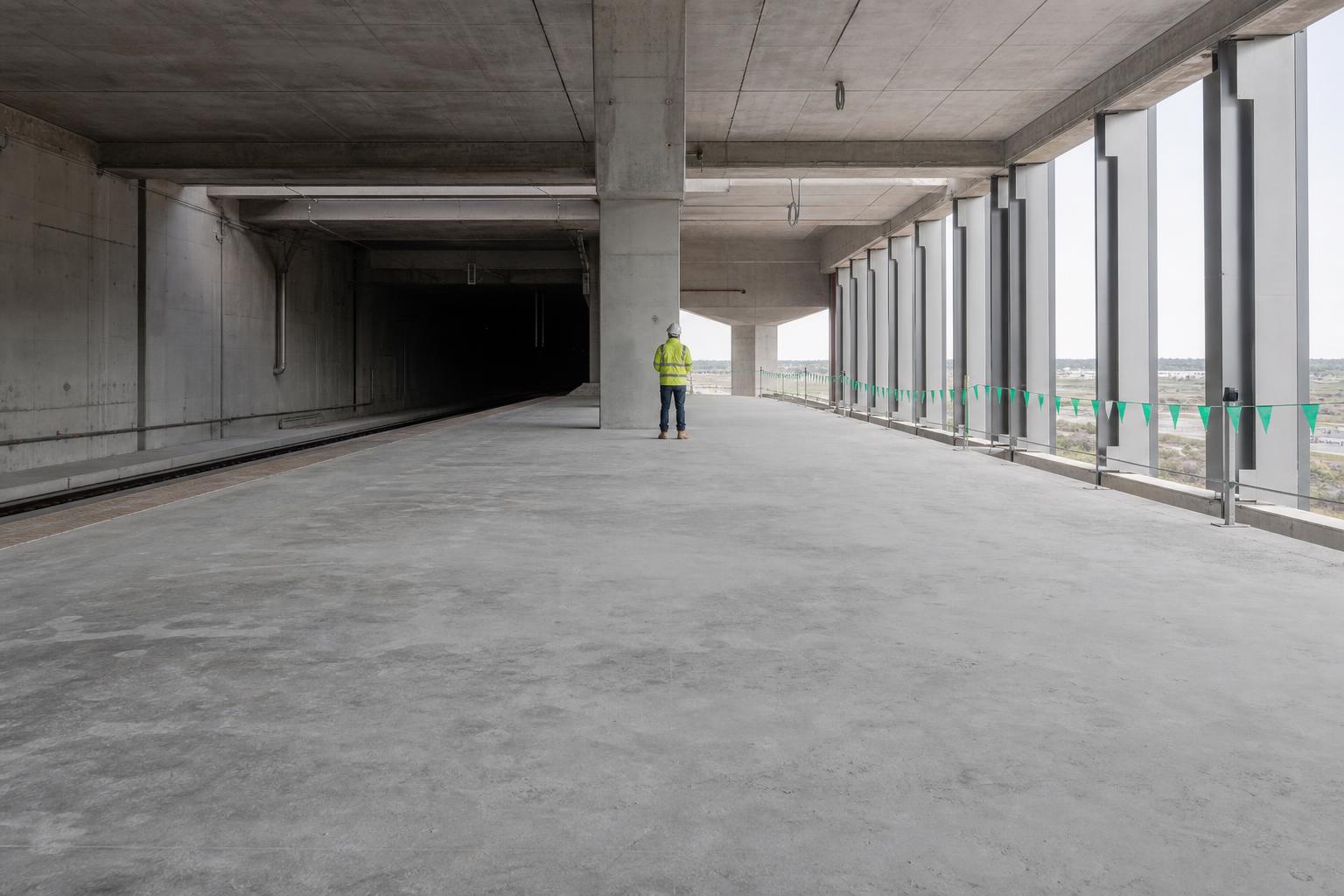
Western Sydney International opens on October 26 roughly 50 kilometres from Sydney's centre, and the one thing every airline wants from it costs nothing to use: 24-hour operations, with no nighttime curfew. The terminal itself cost about A$5.3 billion (roughly US$3.5 billion). The number worth sitting with is the A$19 billion (US$12.6 billion) total, because most of that money isn't airport at all — it's the rail line and roads built to get people there before the planes are full.
A curfew-free runway is worth more than the terminal that holds it
Sydney Kingsford Smith Airport bans most aircraft movements between 11:00 PM and 6:00 AM, a restriction in place for decades because the runway sits inside a residential city. That curfew has quietly shaped every long-haul schedule touching Sydney: redeye departures clustered into narrow windows, aircraft parked overnight instead of flying, crews and gates idle during hours a 24-hour airport would use. Western Sydney International has no such restriction. It sits on 1,780 hectares of Commonwealth land at Badgerys Creek, far enough from dense housing that nobody has to negotiate a curfew into existence — there was no existing curfew to begin with.
That is the entire pitch to airlines, and it is a genuinely unusual one. Mature aviation markets almost never get a second major gateway built from nothing with unrestricted hours; most new airports are expansions of constrained ones, inheriting the same noise politics. An airline that can schedule a long-haul departure at 2 AM, or land a redeye at 4 AM, gets more hours of use out of every aircraft it owns — and aircraft utilisation, not ticket price, is usually the biggest lever in long-haul profitability.
The A$19 billion figure is three projects wearing one airport's name
The airport is routinely called a "A$14 billion project," but that number was already an undercount before the terminal opened. The terminal construction ran to roughly A$5.3 billion. The Sydney Metro Western Sydney Airport rail connection, built to carry passengers and workers from the new airport back into the city and surrounding suburbs, cost roughly A$11 billion (US$7.3 billion) on its own — more than double the terminal. The Western Sydney Infrastructure Plan, covering motorway upgrades and road works around Badgerys Creek, added a further A$4.4 billion (US$2.9 billion). Add those together and the federal government's own figure is close to A$19 billion.
Per day, that rail line alone — if you spread its cost over its first decade of operation — works out to roughly A$3 million a day in construction cost before a single fare is collected. A metro ticket from the airport into central Sydney will run a traveller somewhere in the range of A$10 to A$20 (US$6.60 to US$13), depending on distance, which is ordinary fare territory for a 50-kilometre rail trip in a city where petrol-adjacent taxi runs from the old airport can run A$70 to A$90 (US$46 to US$60). The rail line is the honest reason the airport can claim to serve a city centre it isn't actually near.
The catch: the trains and the terminal didn't open on the same day
Here is the paragraph that matters more than the ribbon-cutting. The rail connection that makes Western Sydney International usable without a car or a long taxi fare has, by the government's own admission, lagged the airport's construction timeline — critics have said directly that the rail link risks arriving too late to meet opening demand, which means a share of the airport's first travellers will be driving, parking, or paying for a taxi on roads still being finished under that A$4.4 billion infrastructure plan. An airport sold on 24-hour convenience is only as convenient as the transport that gets a passenger there at 3 AM, and a half-built motorway upgrade does not run all night the way a curfew-free runway does. The population growth argument — that Western Sydney is one of Australia's fastest-growing regions and the airport is built for people who haven't moved there yet — is a bet on 2035 demand carried by 2025 infrastructure gaps.
Comparisons to Mirabel are the wrong fear; the right one is slower
The airport's critics keep reaching for Montréal–Mirabel International, the Canadian airport built far from its city in the 1970s that never attracted the traffic its planners expected and was eventually stripped of passenger service entirely. The comparison is understandable — remote site, enormous capital outlay, a bet on future growth — but it misreads what actually sank Mirabel. Montreal's downtown airport, Dorval, stayed open and kept taking the traffic Mirabel needed; travellers simply chose the convenient option over the new one. Sydney's situation inverts that: Kingsford Smith's curfew is a permanent, structural constraint that no amount of convenience fixes, so Western Sydney isn't competing with an equally capable rival airport, it's competing with a curfew. That is a more durable advantage than Mirabel ever had, and it's the reason airlines are moving to secure slots before the rail link is even finished — but durability over decades doesn't erase inconvenience in year one.
Where to be skeptical, and when the airport underdelivers
The time to doubt Western Sydney International isn't at ribbon-cutting with 24-hour slots freshly allocated; it's in its first eighteen months, before the Metro rail line is running at full frequency and before road upgrades under the Western Sydney Infrastructure Plan are complete. A traveller flying into WSI in its first year should expect longer, costlier ground transport than the marketing suggests, and should price a taxi or rideshare into the trip at Sydney's going rate rather than assume a finished train network. The airport disappoints anyone arriving expecting Kingsford Smith's proximity to the city centre, and it disappoints anyone travelling on a schedule that depends on connecting road or rail infrastructure landing on time — a bet the project is still making, not one it has already won.