The $35 camera’s real cost is the SD card you forgot
Kodak’s viral $35 Charmera needs a separate SD card, and larger cards make it overheat.
By The Route · · 5 min read
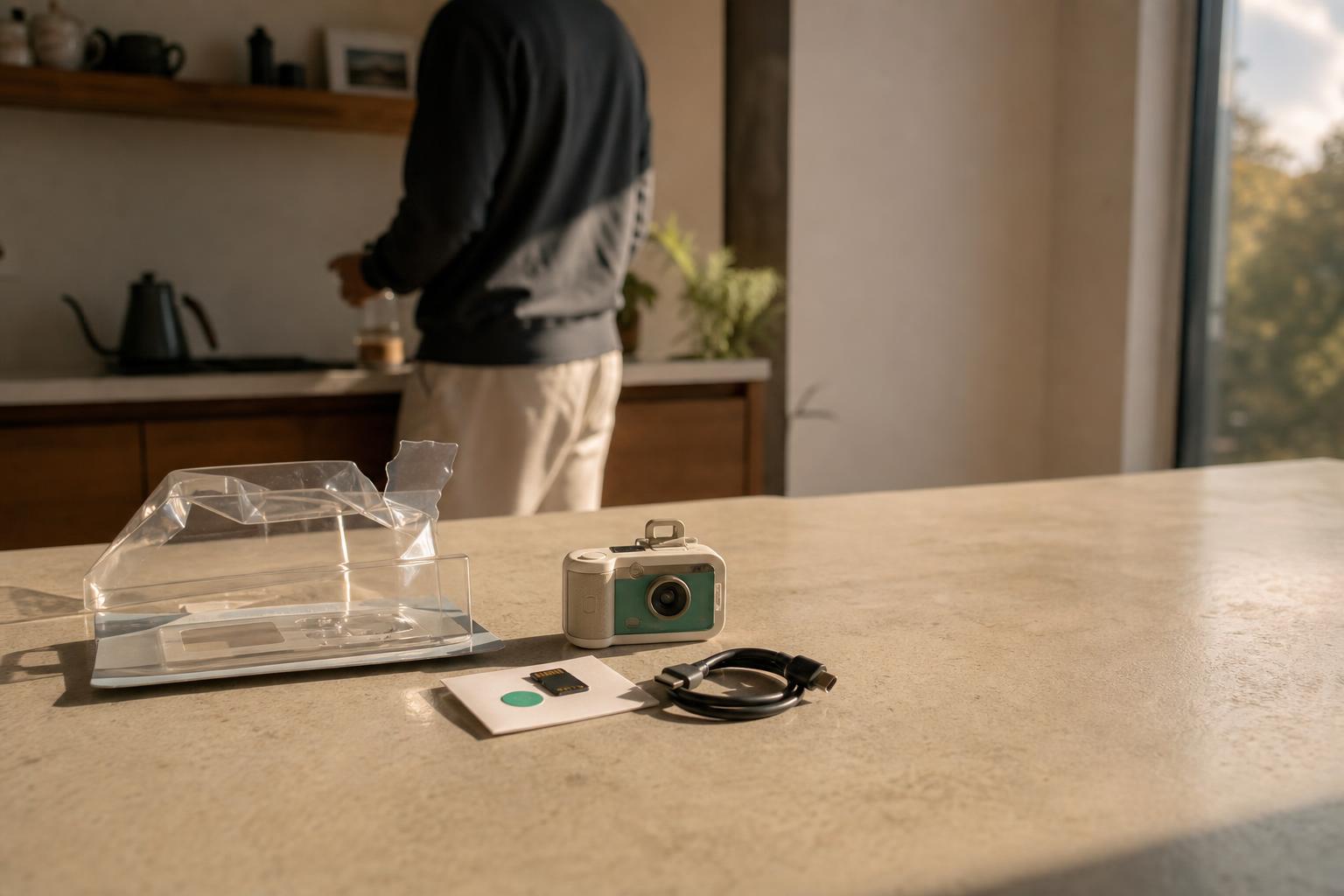
Kodak's Charmera costs $35 and clips onto a bag strap. The camera does not come with the one part it needs to function: an SD card, sold separately, and the reviews warn that anything larger than 32GB tends to overheat the tiny body until it stops working properly.
That detail matters more than the blind-box packaging or the ’80s filter pack, because it is the difference between a $35 purchase and a $45 or $50 one, depending on where you buy the card and how much storage you actually want. A 16GB card, the size used in early reviews, runs about $8 to $12 in the US. It holds roughly 56,000 photos on the Charmera's compressed file size — more than any traveller will shoot on a two-week trip, let alone a weekend in Cincinnati. The camera is genuinely inexpensive. The complete, working kit is not quite as inexpensive as the sticker suggests, and Kodak's own compatibility claim — cards up to 128GB — comes with a footnote the company doesn't put on the box: buy the big card and you may get a camera that overheats and quits.
A $35 gadget still needs $10 you weren't told to budget
For a traveller weighing this against a phone they already own, the math is simple enough. The camera plus a small SD card lands around $43 to $47 total, before a USB-C cable — which it does come with — or any printing costs if you want physical photos rather than files on a laptop. Against a $700-plus smartphone already in every pocket, that's a rounding error. Against the actual competition — disposable film cameras, which run $12 to $20 per single-use unit at US drugstores — the Charmera is the cheaper option if you take more than two or three rolls' worth of pictures a year, and the more interesting one, since it shoots video and stills on the same rechargeable body instead of throwing itself away after 27 frames.
The place this lands hardest is the space between a phone camera and a proper compact: the traveller who wants a physical object to hand a stranger and ask "can you take our picture?" without handing over an unlocked phone. A $35 toy-format camera solves a small, real problem — the awkwardness of camera-as-surveillance-device — better than it solves any actual image-quality problem. Nobody buying this is choosing it over a Sony a6400. They're choosing it over not carrying a separate camera at all.
Toy cameras keep returning because phones got too good to be fun
The keychain and blind-box format is not new territory. Japanese toy cameras — the Vivitar Ultra Wide & Slim, the various "Le Blanc" and "Golden Half" minis — built a collector market through the 1990s and 2000s on exactly this promise: low-fidelity images, a physical unboxing ritual, and a design language borrowed from an earlier decade. What's changed is the delivery mechanism. Those cameras sold through specialty importers and camera shops. The Charmera sells through an Instagram reel, the same distribution channel that turned skincare devices and posture correctors into overnight retail categories over the past five years. Kodak itself has run this playbook before, licensing its name onto instant-print cameras and disposable-format products built by other manufacturers rather than its own declining film-and-imaging division. The Charmera fits that pattern: a nostalgia brand attached to a product built for a TikTok unboxing, not a photography enthusiast. The follow-up model, the Millennium Charmera, arrived within roughly a year in metallic Y2K colorways rather than the original's ’80s aesthetic — a release cadence that looks less like camera engineering and more like a sneaker drop, timed to whichever decade is currently having a nostalgia moment.
The catch is the card, and nobody puts it on the front of the box
The one paragraph every review of this camera should carry, and mostly doesn't, is the overheating issue. Online owner reports describe the camera locking up, refusing to shoot, or shutting down mid-session when loaded with SD cards near the upper end of its stated 128GB compatibility. The manufacturer's spec sheet says the camera supports up to 128GB. The practical experience, reported by multiple users independent of Kodak's marketing, is that a 16GB or 32GB card performs reliably and anything larger risks thermal problems in a body small enough to clip onto a keychain, with correspondingly little room for heat to dissipate. That's not a defect Kodak advertises, and it's the sort of detail that only surfaces once enough owners have compared notes — which is precisely why it belongs in the second paragraph of any honest account, not buried in a forum thread.
There's a second, smaller catch: the photos live on the camera or on a computer you connect via USB-C. If your phone doesn't take USB-C — true for a meaningful share of iPhone owners until Apple's 2023 shift to the connector — getting images off the device means detouring through a laptop before you can post or send anything, undercutting some of the spontaneity that makes a pocket camera appealing in the first place.
What nobody has tested is whether the novelty survives month six
The open question is durability of interest, not durability of hardware. Novelty cameras built for social virality tend to follow a predictable arc — heavy use in the first few weeks, tapering fast once the "what is that?" conversations stop being new to the owner, even if strangers keep asking. Whether the Charmera earns a permanent spot in a travel bag past its first year, the way a genuinely useful travel object does, isn't something a launch-week review from someone who's owned it a matter of months can answer. That's the actual test, and it hasn't run yet.
Do I need to buy the SD card separately?
Yes — the Charmera ships without one, and a 16GB to 32GB card, at roughly $8 to $15, is the safer choice over larger sizes.
Will it replace my phone camera on a trip?
No — image quality is low-resolution by design; it works as a second, physical camera for the fun of the object, not as a primary travel camera.