The scanner that reads bags better also reads PreCheck worse
TSA’s $800,000 CT scanners cut manual checks but don’t speed lanes, weakening PreCheck’s core sales pitch.
By The Route · · 5 min read
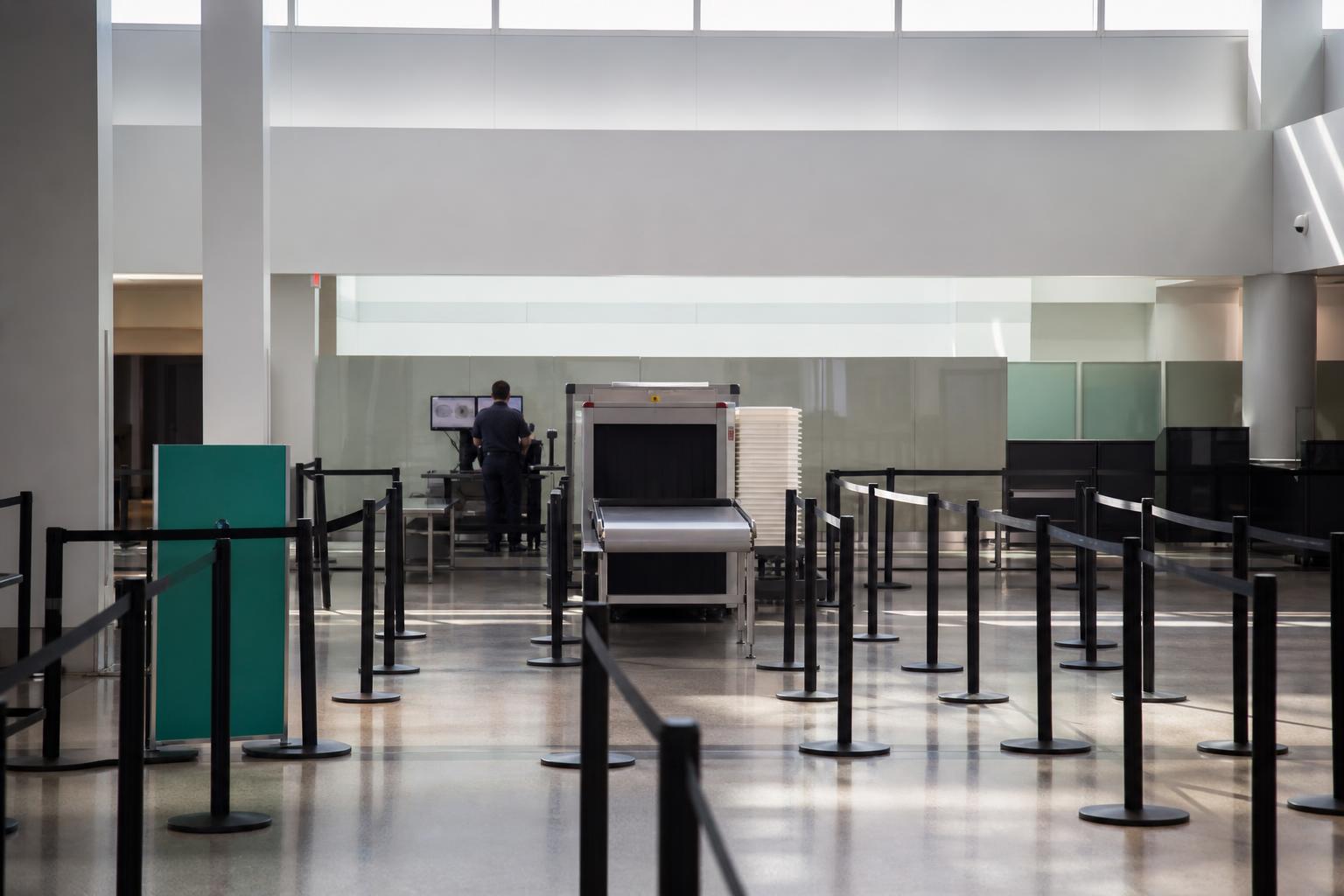
The Transportation Security Administration's new bag scanners cost roughly $800,000 apiece, produce a rotatable 3D model of every carry-on, and let officers see through laptops and liquids that used to cast blind shadows on old X-ray screens. What they do not reliably do is move the line faster. For a checkpoint sold entirely on speed, that gap matters more than the price tag.
The number the whole story turns on: zero seconds saved per bag
Computed Tomography, or CT, scanners work by taking hundreds of 2D X-ray images at different angles and assembling them into a single 3D image an officer can rotate on screen. That's the entire technical leap. It's real — officers can now judge the shape and density of an item rather than guessing at a flat silhouette — but nowhere in that process is there a step that makes the scan itself run quicker. The machine reads more; it does not read faster. Passengers keep laptops and permitted liquids inside their bags because the scanner no longer needs them separated to see clearly, and some airports abroad have loosened liquid limits for the same reason. That's a convenience gain at the packing stage, not a throughput gain at the belt.
Why "more accurate" reads as "faster" when it isn't
The confusion is understandable. TSA has spent years telling travelers that new scanners mean fewer bag pulls, and that part is true — officers no longer need to physically open and search a bag nearly as often, because software flags prohibited items and anomalies automatically. Fewer manual searches should, in theory, mean fewer stalled lanes. But the scan itself, the seconds a bag spends inside the tunnel producing that 3D model, is not shorter than on an older machine, and the CT units are physically smaller than the X-ray belts they replace. A bag that's oversized or oddly shaped is more likely to jam a smaller machine, which is the opposite of the smooth-lane experience the technology is marketed on. The accuracy gain is genuine. The speed gain, the one passengers actually feel while standing in socks holding a boarding pass, is not automatic.
PreCheck already outsourced its speed to something else
This is where TSA PreCheck runs into a design problem rather than a hardware one. PreCheck's entire commercial pitch — a five-year membership that requires an in-person interview, fingerprinting, a background check, and an application fee — is that members move faster because they're screened less, not scanned better. PreCheck travelers keep shoes, light jackets, and belts on, and pass through a metal detector instead of a millimeter-wave body scanner. The speed was never coming from bag-scanning technology; it was coming from TSA accepting more risk on a vetted population and skipping steps entirely. Installing an $800,000 machine that scans bags more thoroughly doesn't add to that equation, because thoroughness was the one variable PreCheck was built to reduce.
So the CT scanner's main selling point — fewer manual bag searches, better contraband detection — lands with more force in standard lanes, where TSA is scanning a general population it knows less about and currently pulls more bags for secondary inspection. Standard lanes are where the accuracy dividend pays off most, both in security terms and in reduced pat-downs and hand searches. PreCheck lanes, already stripped down to a metal detector and a bag that barely needs re-checking, have less slack for the new machine to remove.
The catch: the agency has to choose, and the choice isn't obvious
Here is the plain constraint nobody selling the story wants to say out loud. There are more than 400 commercial airports in the United States, the machines run roughly $800,000 each before installation and staff retraining, and TSA cannot equip every lane at every airport at once. Every CT scanner installed in a PreCheck lane is one not installed in a standard lane, where the accuracy and security case is strongest. Every CT scanner installed in a standard lane, meanwhile, does nothing to fix PreCheck's actual bottleneck, which was never bag-scanning speed in the first place — it's throughput per checkpoint, staffing, and how many PreCheck lanes an airport is willing to open at peak hours. TSA is being asked to spend capital on a machine whose main advantage doesn't address the product it would appear, on paper, to be upgrading.
The strongest case against this reading is that PreCheck still benefits indirectly: fewer manual searches anywhere in a terminal free up officers who can be reassigned to keep PreCheck lanes staffed and moving, and a smoother standard-lane experience reduces the spillover congestion that sometimes backs up into PreCheck queues at connecting checkpoints. That's a real second-order effect, and it's the argument TSA will likely lean on publicly. But it's an argument about staffing allocation, not about the scanner making PreCheck itself quicker — and it depends entirely on TSA choosing to redeploy officers that way, which is a management decision, not a property of the hardware.
What happens next is a budget decision, not a technology one
The rollout continues either way, because the detection case for CT scanners, catching threats old X-ray machines simply can't see through, stands on its own regardless of lane speed. But travelers who assumed the newest, most expensive scanner would show up first in the premium lane they paid for should expect otherwise. The agency has every incentive to put the machines where manual bag searches are still common and security risk is least understood: standard screening, not the lanes built around trusting people TSA has already vetted. If PreCheck lanes get CT scanners at all in the near term, it will likely be at the largest hub airports where volume justifies the cost regardless of the speed question, not because the technology finally solved PreCheck's marketing problem. It hasn't, and the gap between "TSA's newest scanner" and "TSA's fastest lane" is worth remembering the next time a five-year renewal notice arrives asking for another fee.