$75bn owed, zero dollars collected: a judge halts New York’s climate law
A federal judge blocked New York’s $75bn climate superfund law; oil companies owe nothing, for now.
By The Ledger · · 4 min read
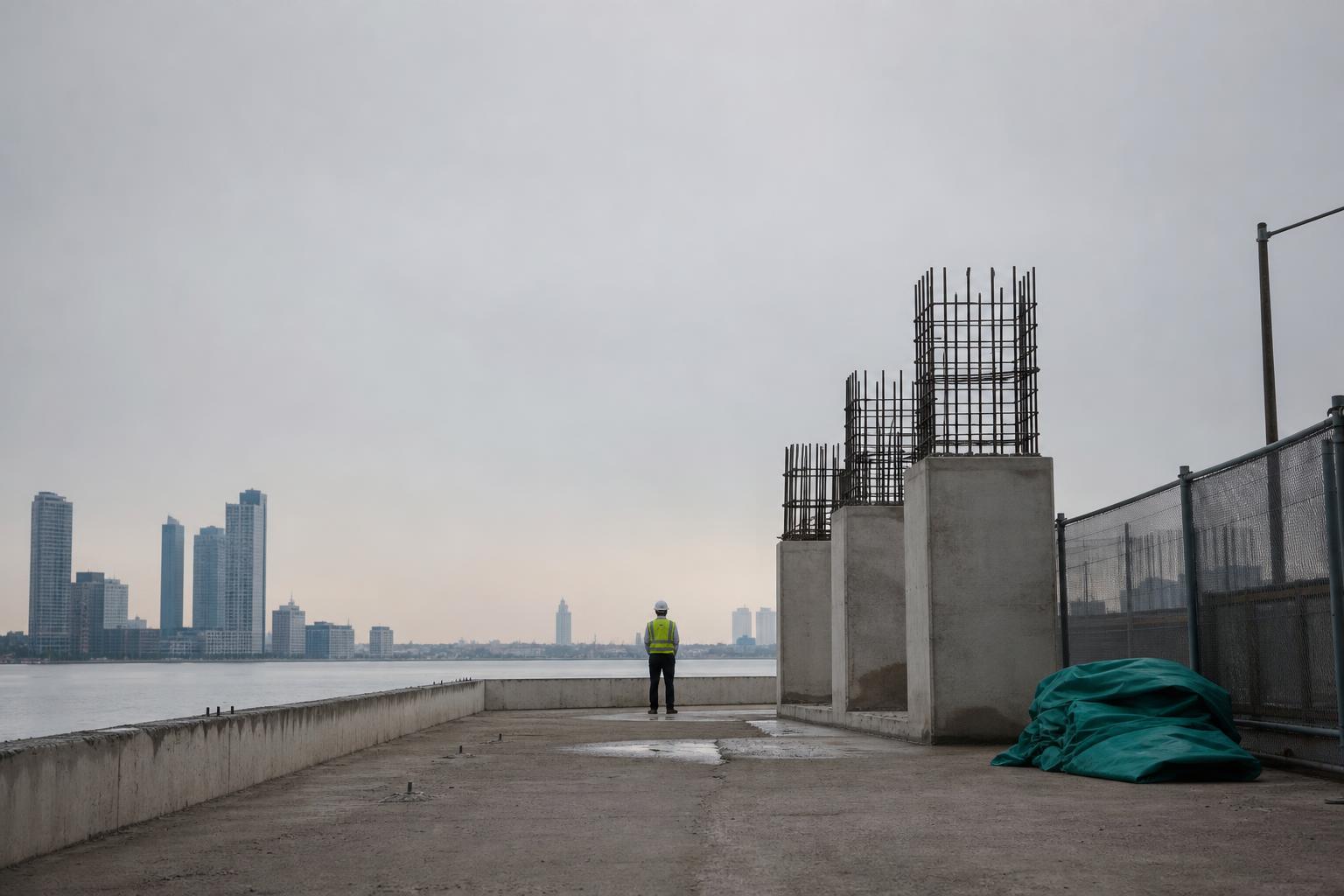
New York passed a law in December 2024 ordering fossil fuel companies to pay $75 billion over 25 years toward flood barriers, sewer upgrades and heat shelters. On September 1, 2026, a federal judge ruled the state cannot collect a cent of it. The money was never banked. Now it may never be billed.
Chief Judge Brenda Sannes of the US District Court for the Northern District of New York wrote 63 pages to reach that conclusion. Her core finding: climate liability is federal turf, and states cannot legislate their way onto it. West Virginia's attorney general, JB McCuskey, led the coalition that sued to stop the law. He called Monday's ruling a win against states "trying to balance their budgets on the backs of" coal, oil and gas workers. Make Polluters Pay, a group backing these laws, called it a gift to "some of the richest corporations in history."
The $75 billion was never a fine. It was a repair budget.
New York's law didn't ask oil companies for punishment money. It assigned each a bill proportional to historic emissions, then earmarked the total for named infrastructure: seawalls, culverts, cooling centers, drainage systems sized for storms that didn't exist when the pipes were laid. The number came from a state calculation of what climate adaptation actually costs a coastal, flood-prone state over a quarter century. Divided across 25 years, $75 billion works out to $3 billion annually — roughly $150 per New York resident, per year, that a handful of oil majors would have paid instead of taxpayers.
That reallocation is now void. The gap doesn't close. It moves. Whoever pays for the next flood-damaged subway station or heat-related hospital admission in New York will be the state's general fund, a municipal budget, or a resident's own insurance premium — not Exxon or Chevron.
A 2021 lawsuit about damages became a 2024 statute about billing, and the court didn't buy the swap
The legal foundation for New York's law was a 2021 Second Circuit decision, City of New York v. Chevron, in which the city itself tried to sue oil majors for climate damages. That case failed on its own terms — courts found federal common law, not city lawsuits, governs interstate emissions harm. New York's legislature then built a statute rather than a lawsuit, betting a state's taxing and regulatory power could reach where litigation couldn't.
Sannes's ruling treats that bet as a category error. Her opinion calls the law "unusual and sweeping" precisely because it uses a state statute to impose costs for a harm — global greenhouse gas emissions — that no single state can regulate without effectively setting national energy policy. The federal government's interest in emissions, trade and energy markets is, in her phrase, "so dominant" that a state-by-state billing system for climate damage cannot coexist with it. Vermont passed the only other version of this law. It now faces its own parallel challenge, with an outcome likely to follow New York's.
The catch: this ruling doesn't touch a single other state's ability to try again
Sannes's decision binds New York. It does not bind California, Massachusetts, or any of the roughly ten states that have floated similar climate superfund bills without passing them. A district court ruling in Syracuse has no formal reach into a state legislature in Sacramento. But formal reach and practical effect are different things. Lawmakers watching this outcome now have a specific, detailed roadmap of what a federal judge considers overreach — and a live example of what happens to two and a half years of legislative work when a court disagrees.
The Trump administration's Justice Department argued in support of the states challenging New York's law at last month's hearing, and has filed a separate lawsuit against the statute in the Southern District of New York that is still pending. That means New York faces two live federal threats to the same law: Monday's ruling, and a second case yet to be decided. Attorney General Tish James has not confirmed an appeal. Governor Kathy Hochul's office says it is reviewing the ruling to "determine possible next steps" — language that commits to nothing while an appeal clock runs.
The open question this ruling doesn't answer
Sannes's opinion rules on jurisdiction, not on whether oil companies owe climate damages at all. It says New York picked the wrong tool, not that the debt doesn't exist. That leaves an unresolved question hanging over every coastal and flood-exposed state: if a state law can't assign these costs, and a lawsuit already failed in 2021, what federal mechanism — if any — is left to bill emitters for adaptation costs, rather than taxpayers? Congress could legislate one. It has shown no sign of doing so.
What happens to the $75 billion New York expected to collect?
Nothing has been collected yet under the law, so there's no refund question — the money simply stops being scheduled to arrive, pending any appeal.
Does this ruling affect climate lawsuits already filed against oil companies?
No — it rules only on New York's statute, not on the separate tort lawsuits several cities and states have filed against fossil fuel companies in other courts.
Whoever pays for New York's next major flood will not be the fossil fuel companies this law targeted. Until an appeals court says otherwise, that bill returns to the state, and from there, to residents.