The gasoline crack spread is $1 a gallon higher. That’s the real tax.
Refining margins, not just crude prices, added roughly $1 per gallon to US gasoline since May.
By The Ledger · · 4 min read
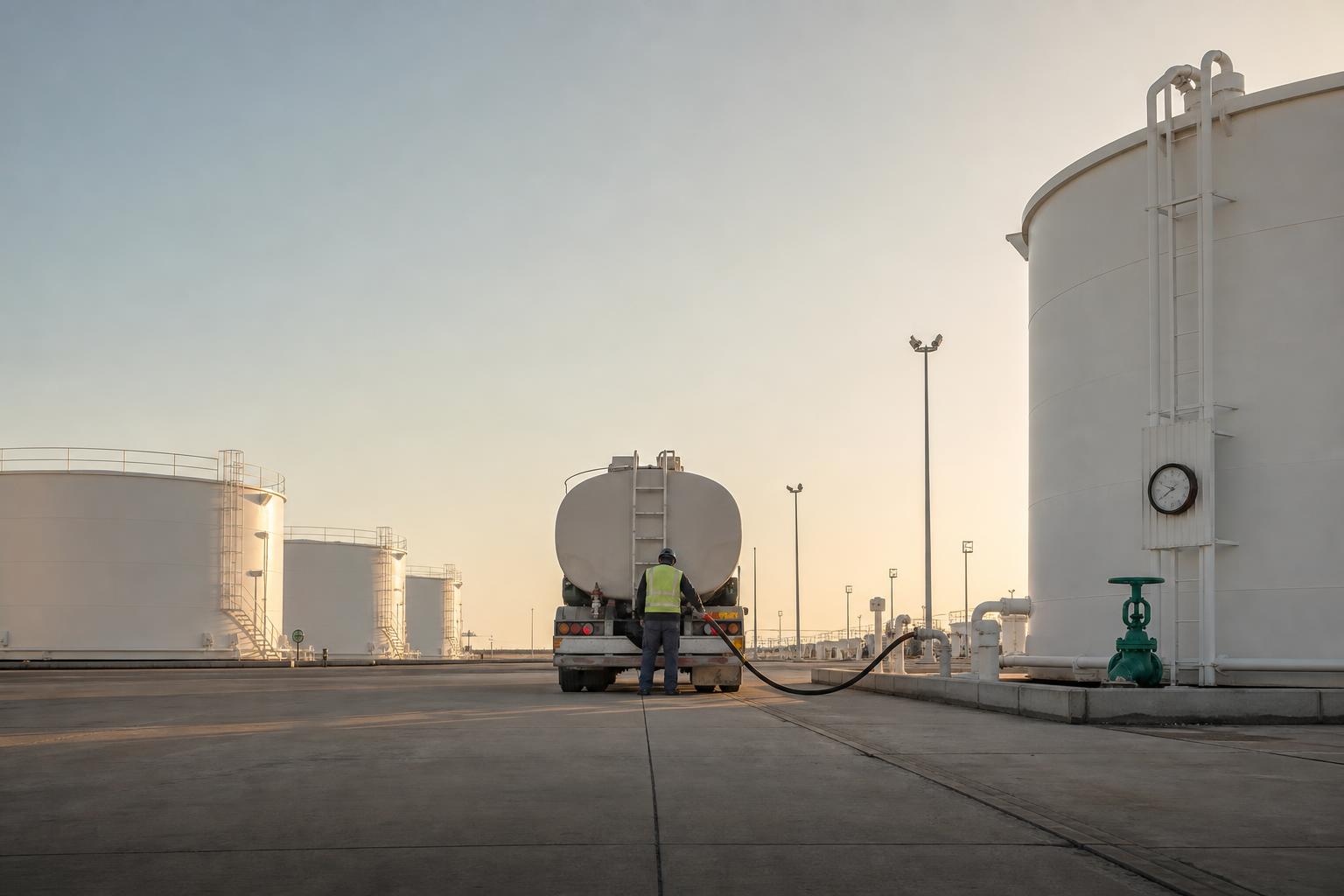
Crude oil jumped toward $100 a barrel this week after Houthi strikes on Saudi infrastructure. But the gasoline crack spread — the margin refiners earn turning crude into fuel — has averaged about $1 a gallon higher than 2025 since May. That margin, not the barrel price alone, is the bigger driver of what drivers pay.
The distinction matters because crude price spikes and refining margin spikes hit differently, and they're being reported as one event when they are two.
The crack spread is the part nobody prices at the pump
A crack spread is arithmetic, not jargon: take the wholesale price of a gallon of gasoline, subtract the spot price of a gallon of crude that made it, and the remainder is what refiners earned for the conversion. In New York Harbor, that margin has averaged roughly $1 a gallon above 2025 levels since May, according to the U.S. Energy Information Administration. Last year's crack spread peaked near 60 cents a gallon. This year it has run higher than that peak, on average, for four straight months.
The cause is not a demand surge in the United States. It's a supply failure elsewhere. Refining activity has been disrupted in Russia, China, and the Middle East, shrinking the global pool of gasoline available to import. Since March, total U.S. gasoline imports — finished fuel plus blending components — have run 32% below the 2021–2025 five-year average. Gulf Coast shipments under limited Jones Act waivers have offset some of that gap, not all of it.
Distillate is worse, and jet fuel rides on the same shortage
Gasoline is not even the tightest product. Distillate fuel oil and jet fuel command even wider crack spreads, because the refineries knocked offline in Russia and the Middle East historically exported more of those two fuels than they did gasoline. Since March, the New York Harbor distillate crack spread has averaged 74 cents a gallon above the gasoline spread. U.S. refiners have responded rationally: they've shifted output toward distillate and jet fuel, chasing the wider margin, which leaves less refining capacity available for gasoline.
Inventory data confirms the squeeze. In the week ending August 28, U.S. distillate stocks sat 14% below their five-year average. Gasoline stocks were softer but still tight, 6% below average. Both numbers describe a system running with less spare capacity than it has carried in years — before Tuesday's Red Sea strikes added a crude spike on top.
Regional gasoline prices show the imports gap, not just the crude price
On the Monday before Labor Day, the U.S. average retail price for regular gasoline was $4.07 a gallon. But the regional spread tells the import story plainly. The West Coast, which relies on imports to supplement thin local refining capacity, paid $5.21 a gallon — $1.14 above the national average. The Rocky Mountains paid $4.27. The Gulf Coast, sitting on domestic refining capacity and export infrastructure, paid $3.62 — 45 cents below the national average, and $1.59 below the West Coast.
That spread of nearly $1.60 a gallon between the Gulf Coast and the West Coast is not explained by crude oil, which trades at one global price. It's explained by which coast can refine its own gasoline and which coast has to import it into a market that's short by nearly a third.
Who pays: importing regions, twice
The mechanism compounds for import-dependent regions. Tighter global gasoline supply raises the cost of the cargoes the West Coast and East Coast need to bring in. The same tightness raises the incentive for U.S. Gulf Coast refiners to export their surplus rather than ship it up the coast, competing with the East Coast's own import needs. A driver in California or on the Eastern Seaboard is exposed to both the crude price and the import scarcity premium. A driver in Texas or Louisiana, near the refineries, is exposed mostly to the first.
President Trump predicted on Truth Social that oil prices would fall once the U.S. "wins" its confrontation with Iran. Hours later, Houthi strikes on Saudi oil infrastructure pushed crude toward $100 a barrel instead. That crude move will show up at every pump in the country, roughly evenly, because crude trades on one world market. The refining margin will not show up evenly. It's already showing up more in import-dependent regions than in refining hubs, and that gap predates Tuesday's strikes by months.
The falsifiable test: watch the spread, not the barrel
If the crack spread compresses back toward last year's 60-cent peak in the coming months, that will mean refining capacity abroad is coming back online — Russian, Chinese or Middle Eastern plants resuming normal output — regardless of what crude does. If the spread holds near $1 a gallon or widens further even as crude cools from its Tuesday spike, that confirms the refining shortage is structural, not a byproduct of the current crude spike, and will outlast whatever happens between the U.S. and Iran.
Either way, the bill splits unevenly. Refiners on the Gulf Coast, positioned to export into a scarce global market, capture the wider margin. Drivers on the West Coast and East Coast, dependent on imports priced into that same scarce market, pay it. The crude spike from this week's strikes is a shared, national cost. The dollar-a-gallon refining margin behind it is not shared at all.